Outreach link building is one of the most effective and widely used SEO strategies. The purpose of outreach is to connect with the right people who can include your link on their website.
This tactic has earned a bad reputation due to the countless outreach emails that resemble spam. If you’re a publisher or website owner, you’ve likely received those sketchy emails offering to buy “high-quality” links or promising unrealistic results.
I’m Elena, and for over five years of my link building career, I’ve witnessed both the exceptional campaigns that resulted in numerous links and the ones that make you want to hit “Report Spam.”
In this article, I’ll walk you through:
- What outreach link building is
- How to identify good outreach opportunities
- How to do outreach link building through real examples
Let’s get started.
Highlights
- Outreach for SEO works best when you treat prospects as partners and offer real value instead of spammy backlink requests.
- Create original and relevant content to link to before starting outreach.
- Use strategies like Moving Man, guest posting, Skyscraper technique, reporter outreach, digital PR, and niche edits.
- Avoid generic emails by researching prospects and writing compelling messages.
- Gain links through respectful follow-ups and by building long-term relationships.
What Is Outreach Link Building?
Outreach link building is the process of contacting other website owners, bloggers, and journalists to request a backlink to your site. It is a part of a broader SEO strategy focused on improving your website’s visibility and search rankings.
It sounds simple, but there’s more to it than just sending a quick email asking for a link.
Outreach is a relationship-building process.
The difference between effective outreach and spam comes down to one simple principle: treating the person on the other end like a partner, not just a link opportunity.
Why Is Outreach Link Building Important?
Outreach, and link building in general, play an important role in how search engines like Google discover and evaluate your content.
When reputable websites link to your pages, it indicates to Google that your content is reliable, which helps improve its ranking in search results.
Outreach-based link building allows you to take a more proactive approach in earning backlinks.
Instead of waiting for links to come naturally, you actively look for relevant opportunities and build connections that can lead to valuable backlinks.
And while the number of links matters, it’s the quality and relevance of those links that help you rank higher in search results.
Common Outreach Link Building Strategies
Now that you understand how the link building outreach process works, let me guide you through the most popular techniques and tactics.
1. Broken Link Building
This approach involves identifying websites that link to 404 pages, which indicate a not found page. Then, you can suggest your content as a replacement.
Broken links create a poor user experience. When you suggest your resource as a replacement, you’re helping website owners maintain their content helpful and up to date.
The easiest way to do that is to use a backlink analytics tool, like Ahrefs’s Backlinks Checker. I usually look for competitors’ broken links.
Alternatively, think of pages that would naturally have many links on them. The more links a page has, the higher the chances that one of them is broken.
For example, resource pages that curate a list of helpful resources on a particular topic.
And it’s not hard to find them without an SEO tool either. Use these search operators in Google:
- “Keyword” + inurl:resources
- “Keyword” + intitle:links
- “Keyword” + “helpful resources”
- “Keyword” + “useful resources”
These short phrases will help you narrow down your search and reveal the pages that match the given commands.
Let’s try searching for “SEO” + inurl:resources.
Here is what it looks like in search results:
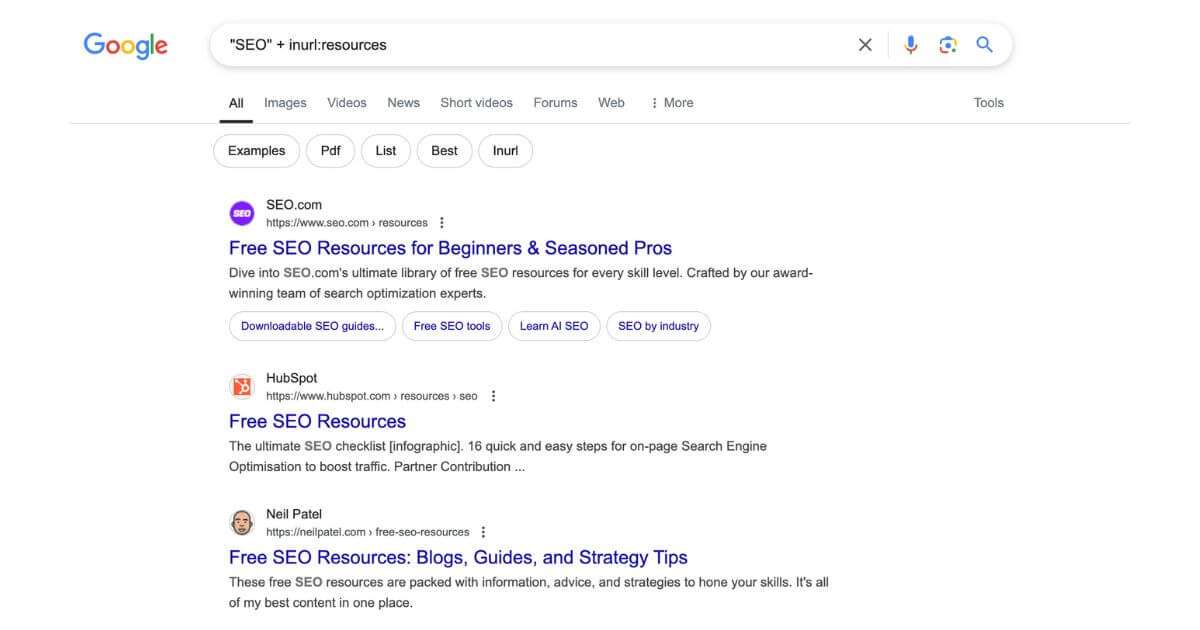
Similarly, you can try out the other search operators listed above, or tweak the phrases to match your niche better and see what brings up the most relevant opportunities.
2. Guest Posting
Guest posting is a classic outreach strategy where you write articles for other websites in exchange for a backlink. You should be looking for blogs that are open to guest contributions and actively publish content from external writers.
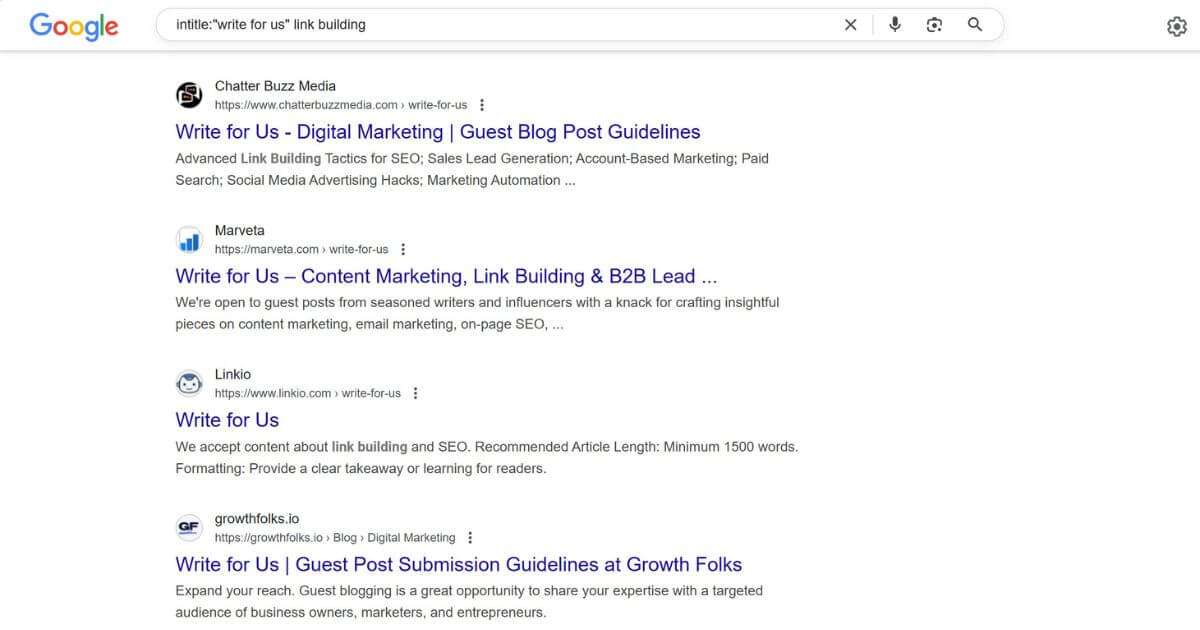
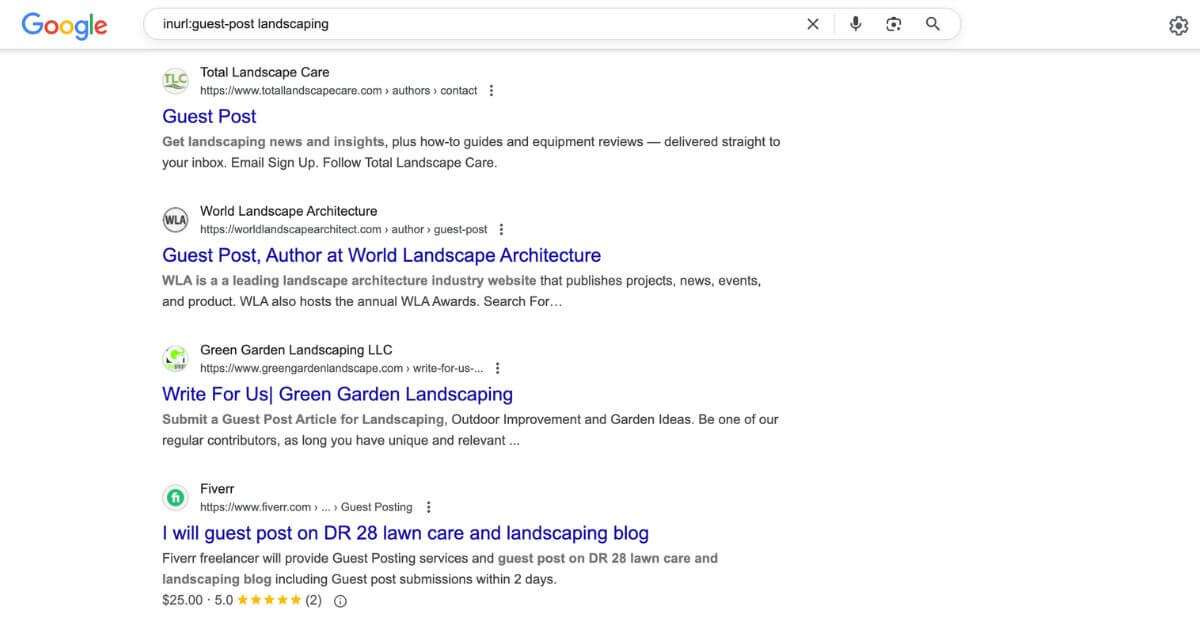
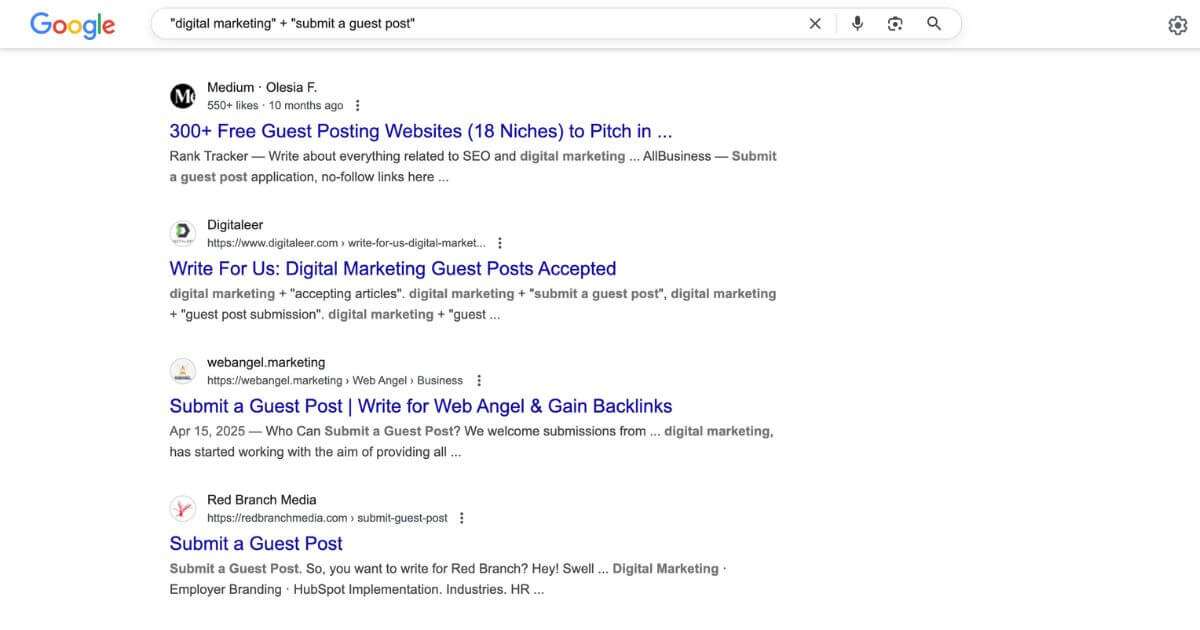
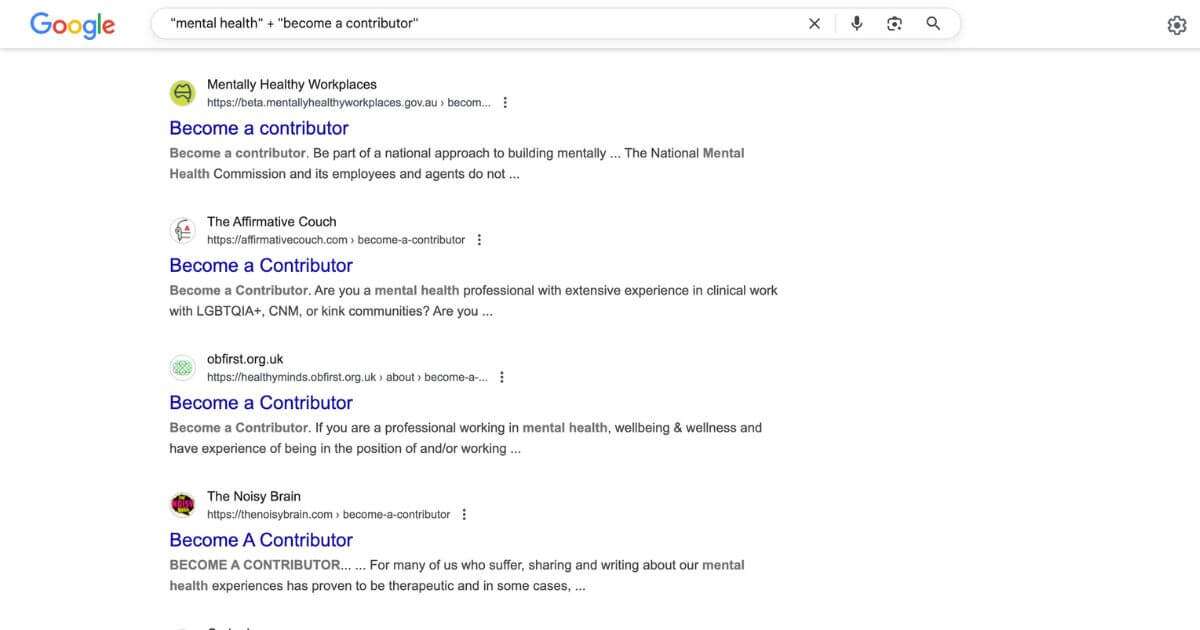
One of the ways to do that is to use Google search operators. You can find available opportunities using search strings like:
- intitle:“write for us” [your topic]: This shows pages that have “write for us” in the title, combined with your topic—for example, intitle:“write for us” link building. It’s a quick way to find sites inviting guest posts on a specific subject.
- inurl:guest-post [your niche]: This finds pages with “guest-post” in the URL and content related to your niche—for example, inurl:guest-post landscaping. Many sites use URLs like /guest-post-guidelines.
- “your keyword” + “submit a guest post”: This searches for pages that include both your keyword and the phrase “submit a guest post”—for example, “digital marketing” + “submit a guest post”. It surfaces submission pages relevant to your topic.
- “your keyword” + “become a contributor”: This helps you find sites that refer to guest posting as becoming a contributor. For instance, “mental health” + “become a contributor” will show blogs open to new writers in that field.
3. Skyscraper Technique
The Skyscraper technique gained popularity ten years ago and remains one of the most widely used strategies to this day. It goes like this:
- Find competitor content with a lot of backlinks.
- Improve on it and create something even better.
- Pitch your new article to websites that are linking to the original one.
4. Reporter Outreach Platforms
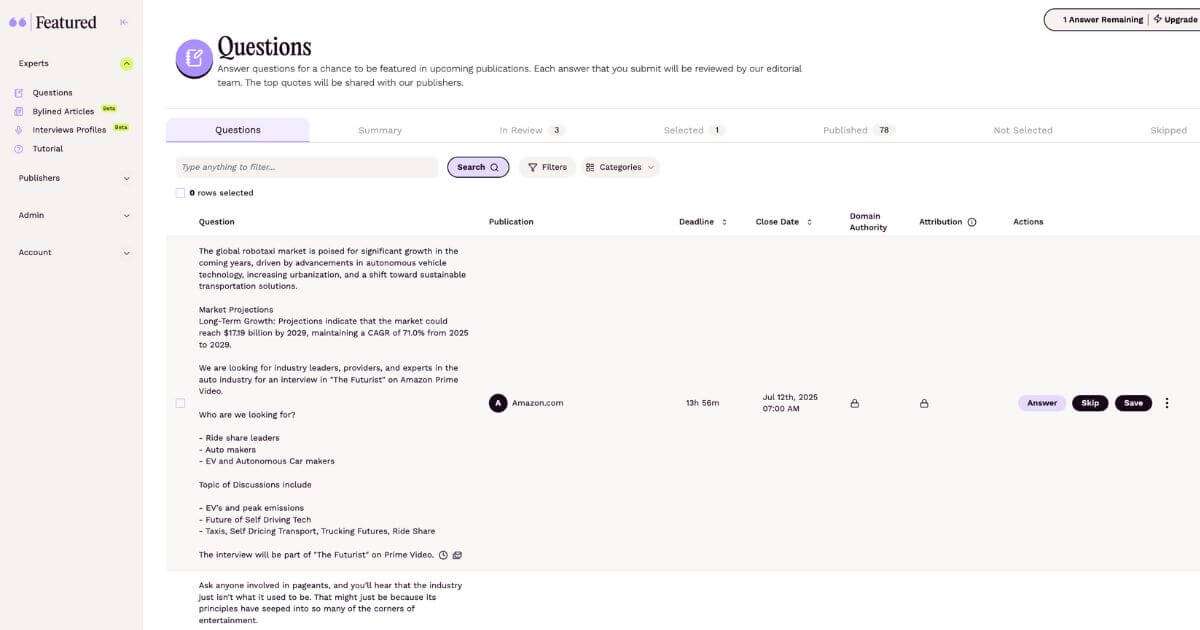
These platforms connect journalists with expert sources. Examples of such platforms would be Qwoted, SourceBottle, Featured, and Help a B2B Writer. You can pitch yourself for interviews or your expert opinion on specific topics journalists are writing about. And when your quote gets selected, you typically get a backlink to your website.
5. Proactive Digital PR
This strategy involves creating newsworthy content from scratch. It can be an industry report or aggregated data that is turned into a compelling press release. You then pitch your story to journalists to gain their attention and encourage them to cover it.
Compared to the other link building tactics, this strategy requires more time and effort; however, you are more likely to earn links from high-authority publications.
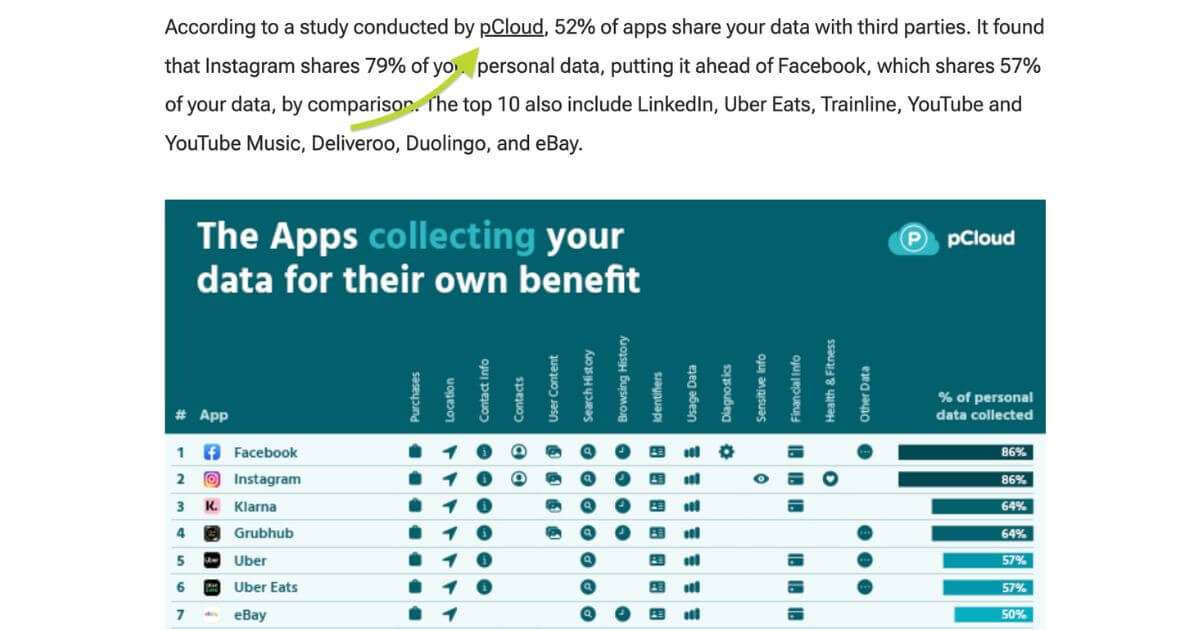
Here’s a great example: pCloud researched the topic of online privacy, and their article earned 397 media placements. One of those placements came from PCMag, shown below:
6. Niche Edits
Niche edits link building comes down to placing links within the existing content of another website.
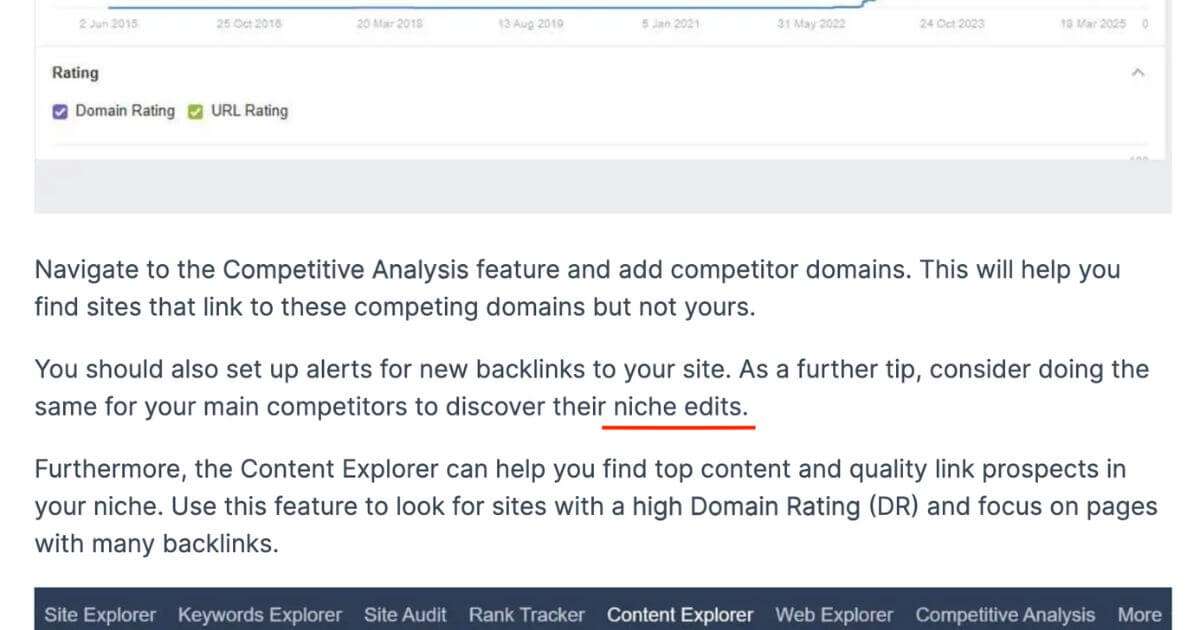
You can search for relevant phrases in their content that would serve as good anchor text for your page.
For example, if I wanted to link to our article about niche edit links, I’d look for a topically related article on another website. Here’s one I found called “Niche Relevant Backlinks: A Detailed Guide With Top Strategies and Best Practices.”
Below, underlined in red, is the anchor text I’d choose to link to my article from the other site’s blog post.
Alternatively, look for unlinked mentions of your brand and request backlinks where it is mentioned.
Step-by-Step Guide to Outreach Link Building
Outreach is used for almost every link acquisition strategy. Here’s what the typical link outreach campaign looks like:
Step 1: Identify the websites you want to target
This step involves prospecting websites that are a good fit for your content outreach link building strategy. Here is what I’ve found helpful:
- Using social media: Look for people who regularly share valuable content and have engaged audiences on platforms like X and LinkedIn. When they post articles or resources, check who’s linking to them and engaging with their content. These interactions often reveal potential outreach targets who are active in your space and open to collaborations.
- Analyzing competitors’ backlinks: Your competitors probably have an SEO outreach strategy in place. Run their websites through Ahrefs or Semrush to reveal their backlinks, and pay attention to websites that link to multiple competitors. They are more likely to be open to link collaborations.
- Prospecting potential partners from publications in your niche: If you come across a great blog post, take a closer look: who wrote it, where else that author publishes, and who’s linking to the article. Following that trail can uncover many possibilities for partnerships.
You will have better results if you use an SEO tool. I primarily use Ahrefs, but you can choose any tool you find easy to use.
How I use Ahrefs to find SEO outreach prospects
I’ll show you two methods you can use, depending on your goals:
- Finding content ideas you can create to attract backlinks
- Finding existing content where you can request your link to be added
Let’s start with the first one.
I begin by researching the backlinks of my competitors.
For the following example, I’ll be using a website of one of our competitors, linkbuilder.io, to see which pages attract the most backlinks.
In Ahrefs, I go to Best by links. You need to add the following filters:
- HTTP code: 200 OK—This shows the active pages of your competitor.
- DR from 30 filters—This removes low-quality websites that are linking back to them.
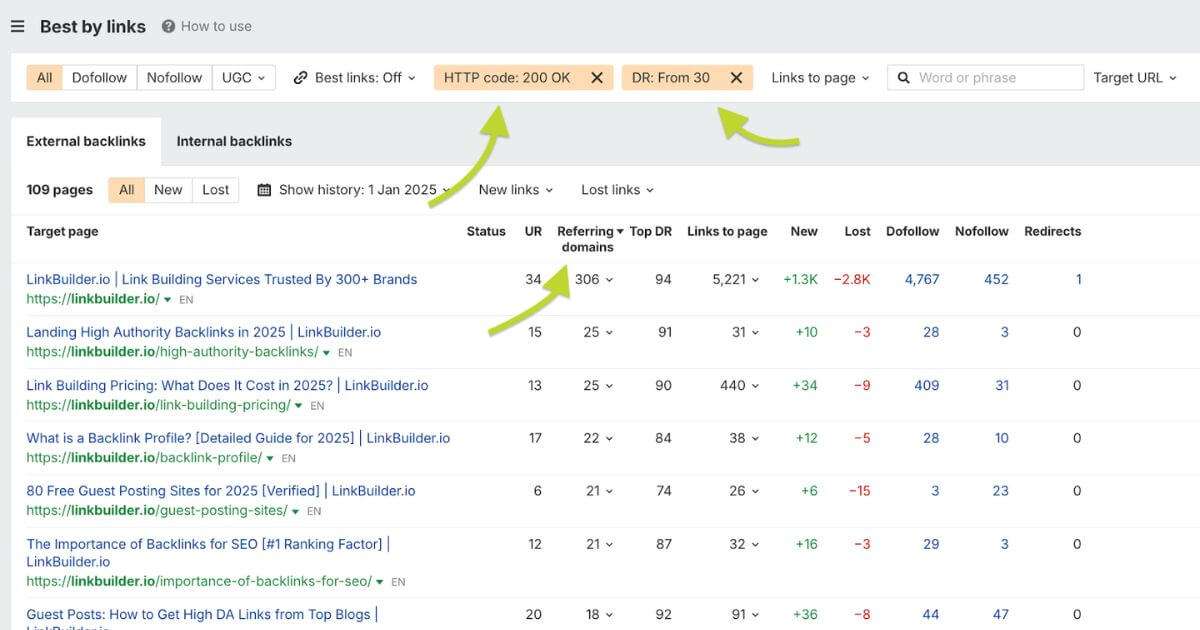
Once you sort them by Referring domains, you get to see the pages that get the most backlinks.
From there, I read through those articles, noting the clarity and quality of the writing, what could be improved, and what information is missing. This gives me a rough idea about the future content I will create. Later, you can pitch your improved version to the sites linking to those pages using the Skyscraper Technique.
Next, I will update the HTTP code filter to 404 not found to identify any broken links and review the referring domains. That’s where I can suggest our content as a replacement.
Now we move to the second goal—looking for potential link placements in existing content.
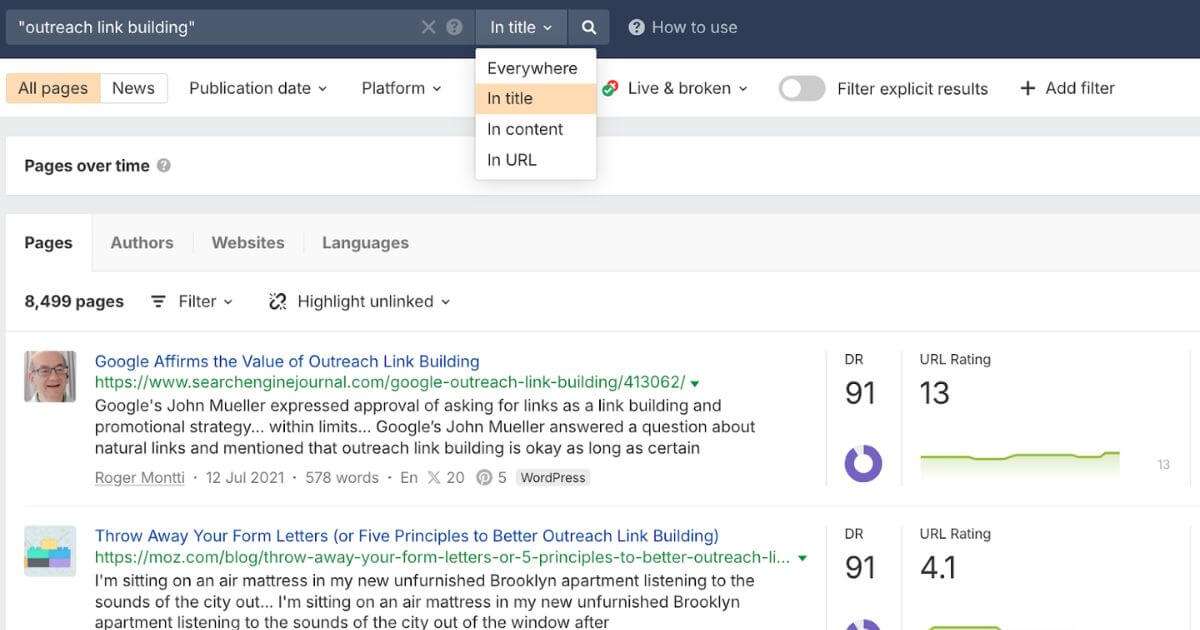
Here, we will be using Ahrefs’ Content Explorer. I look for keywords related to my content to see which websites come up, and I like to play around with different filters here.
For example, when I filter by content, I sometimes find websites that would be perfect for niche edits outreach. And when I filter by title, I can spot pages with strong backlink profiles that I might want to study and replicate.
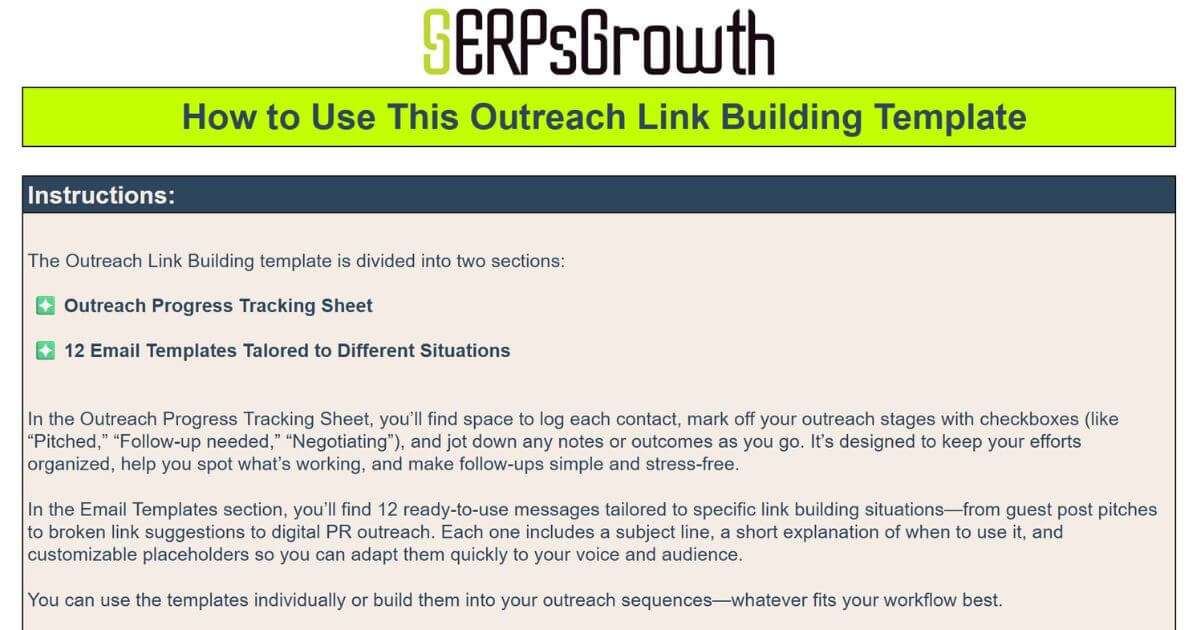
Once you have your prospects, put everything into a spreadsheet so you can track your progress.
I’ve created a template for you that includes all the columns you’ll need. Feel free to download it and customize it however you like:
Step 2: Find the Right People to Contact
Once you have a list of websites you want to pursue, it’s time to identify who makes decisions about content and backlinks outreach. Reaching out to the wrong person is a fast track to being ignored.
Based on my experience, it’s best to look for:
- Content editors and managers
- Authors and contributors
- Website owners
- Members of the marketing or PR teams
You might be wondering: But how do I find those people?
There are two main ways: using an email outreach link building tool or manually searching for contacts.
Often, this information is publicly available. Start by checking the website’s About Us or Our Team pages. Many companies list their team members along with roles and responsibilities.
LinkedIn is also highly useful for gathering data for outreach campaigns. Search by company name and filter by current employees. You can refine results further by adding relevant keywords to your search.
However, manual outreach is time-consuming.
Personally, I use Pitchbox—just upload your list of websites, and the tool will automatically find email addresses associated with each domain.
Whenever possible, avoid generic emails like info@ or support@, as these rarely lead to a response.
Step 3: Write Your Outreach Message
Your pitch is your first impression and often the only chance to grab someone’s attention. Unfortunately, most people approach it the wrong way.
My spam folder is filled with templated emails that show the senders haven’t spent more than 30 seconds writing them.
Here is an example:
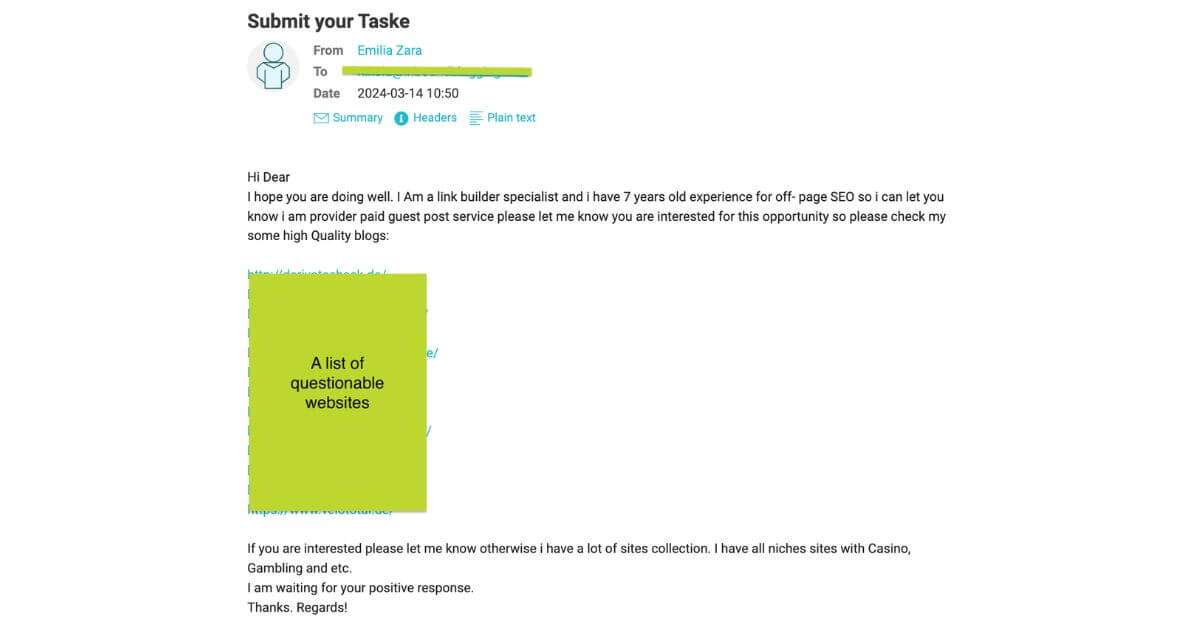
This pitch doesn’t exactly inspire confidence, does it?
Everything from poor phrasing and grammar to vague offers and sketchy-looking websites screams: Don’t trust this person.
You must approach outreach with intention, clarity, and a genuine value proposition. Otherwise, you’re just spam in someone’s inbox.
This means that your outreach email has to capture their attention immediately. Here are the essential elements of an effective outreach message:
- A direct and compelling email subject line: Keep it short, relevant, and specific. I also noticed that when a subject line introduces a little intrigue, people tend to open it more.
- Showing that you have done your homework: This is my pet peeve. Nothing shows low-effort outreach more than a generic I have good websites. First of all, such an email belongs in the spam folder. Second, messages like this suggest you’re mass-emailing a generic list and likely offering low-quality or link farm content. That’s a quick way to lose trust. Instead, take a few minutes to do some basic research. Mention something specific about the recipient’s content or recent work. It’s a simple way to earn trust and demonstrate that you’re not just sending the same email to 100 people.
- Clear value proposition: Your email should answer the What’s in it for me? question. Show how your proposition benefits the recipient.
- Short and sweet message: Three short paragraphs are more than enough to explain your offer. Walls of text might push the recipients away.
- Make your request clear: Don’t leave the recipient guessing about what you want from them. Whether you’re suggesting a link placement or sharing a resource, be specific about it.
- Finish with a professional signature: This is such an underrated point. You’re reaching out to people cold, and your signature allows them to do a quick background check. It doesn’t have to be overly formal—just ensure it includes your full name, role, and a link that verifies your identity (such as your website, LinkedIn profile, or company page). This builds trust and makes it easier for the person to understand who you are and why your message matters.
Step 4: Follow Up
People are busy, and it’s easy for an email to get overlooked or get buried in the dozens of emails they receive daily. So, don’t be afraid to follow up.
But there should be a limit to how many times you can do that.
I usually stick to two follow-up emails: the first one goes out 4 to 7 days after the original message, and if I still don’t hear back, I send a second follow-up about three days after that.
And most importantly, keep it short and polite.
Step 5: Negotiate for the Links
Once someone replies to your outreach, you’ve already cleared a major hurdle. Even if the response isn’t exactly what you hoped for, it shows there’s at least some interest, which gives you a chance to move the conversation forward.
Sometimes the path to a link isn’t linear. Maybe they’re not open to editing old content, or they expect something in return. Instead of pushing harder, pivot the conversation. Ask them:
- Can I contribute content you’d genuinely benefit from?
- Is there something you’ve published that I can promote or support in return for a link?
- Could we collaborate beyond this one-off request?
Treat every response as the start of a potential partnership, not just a transaction.
You might not always get the outcome you wanted, but you’ll often walk away with a connection that pays off in other ways: future content, partnerships, referrals, or even more outreach backlinks down the line.
My Pro Link Building Tips for Successful Outreach
After years of working in outreach link building, I’ve noticed a few important details that often get missed but can improve your results:
- Avoid using spammy tactics, such as buying email lists or sending bulk, generic emails.
- Always look for a way to personalize. This keeps your emails away from a spam folder and allows you to stand out from the crowd.
- Track metrics like open rates, response rates, engagement metrics like opening day and time, and links acquired to refine your future outreach campaigns.
- Use a recognizable sender name to add credibility and demonstrate that a real person is behind the email.
Always prioritize white hat link building methods to ensure long-term SEO success and avoid penalties.
Best Outreach Link Building Tools
The right tools can help you spot opportunities you’d never notice otherwise. Based on what’s worked best for me, here are my recommendations:
- Hunter.io—Find verified email addresses quickly.
- LinkedIn—Target and connect with decision-makers.
- PitchBox—Automate outreach and track responses.
- BuzzStream —Manage relationships and outreach campaigns.
- Ahrefs / SEMrush—Research backlink profiles and prospect relevant sites for links.
- Grammarly—Ensure clear, professional, and error-free emails.
- Google Sheets—Organize and track outreach progress.
Expert Opinions on Backlink Outreach
To get some real insights, I asked SEO and marketing experts to share their personal experiences with building links through outreach. Here’s what they had to say.
Question 1: How do you evaluate high-quality websites for outreach?
“When evaluating backlinks from a white-label link-building service, I focus on Domain Rating (DR) (ideally 60+), organic traffic (the site should have steady traffic, ideally 1,000+ monthly visits), and industry relevance to ensure the link comes from a related niche. I also check the spam score (should be below 5%) and anchor text relevance” — Ivan Vislavskiy, CEO and Co-founder, Comrade Digital Marketing Agency
“Instead of relying on DA we created a scorecard that evaluates publishing frequency, audience engagement and topical alignment. One week we skipped three top-tier sites in favor of a podcast’s companion blog. That one link brought in 800 highly engaged visitors.
Relevance is the new currency in link building. A smaller targeted site will always outperform a big one that is not aligned. If their readers would actually share your link that’s your perfect outreach match.” — Sahil Kakkar, CEO and Founder, RankWatch
Question 2: What’s worked for you in getting replies to outreach emails?
“A few years back, I handed outreach to a VA in Manila, without setting up SPF or DKIM records. Within 48 hours, our domain was blacklisted, and every cold email bounced into the void. That one mistake taught me everything I needed to know about scaling link building the wrong way.
These days at Pearl Lemon, we do things differently. We use burner domains for outreach, rotate sending IPs, and focus obsessively on ultra-specific personalization. If our emails even hint at “templated,” they’re binned. Our reply rate now sits around 14% not because we send more, but because we send better.
Link building in 2025 is less about DA and more about trust signals and relevance. Editors know when they’re being pitched by robots. So we don’t sound like one.” — Deepak Shukla, CEO, Pearl Lemon
Question 3: Can you share a time when your outreach or link building efforts didn’t go as planned, and how you adjusted your approach?
“One campaign failed because we were pitching a product-led blog post. It was informative but self-serving. Nobody wants to link to an ad in disguise. So we reworked it into a data driven guide with zero sales language. That single change boosted our placements by 40%.
The takeaway was to build link worthy content before you send a single pitch. Value attracts links. If your blog post doesn’t help their readers no amount of clever outreach will fix it.” — Vaibhav Kakka, CEO, Digital Web Solutions
Wrap Up
And that’s a wrap. I hope this article answered the “what is outreach link building” question for you.
When done correctly, outreach link building becomes incredibly rewarding. Not just because of the SEO benefits, but because you’re building genuine connections with people in your industry.
Start small. Pick 10–15 high-quality prospects, do your homework, and craft messages that show you are looking for a valuable partnership. Focus on building relationships, not just collecting outreach links.
And if something doesn’t work as planned or you need to scale faster, learn more about outsourcing backlink building.