Brands are turning to digital PR because traditional PR just can’t keep up—digital PR delivers faster visibility, stronger SEO through link-building, real-time audience engagement, and measurable ROI.
Unlike traditional PR, you don’t need to spend fortunes on campaigns and pray for positive coverage in local news outlets. Digital PR helps you control your story and build real thought leadership in your field in a memorable way.
I’m Bilyana, and for the past three years, I’ve been helping brands showcase their expertise and grow their reputation online through innovative digital PR strategies.
In this article, I’ll explain the main benefits of digital PR and how it can increase your brand’s exposure in a meaningful and positive way.
Highlights
- Digital PR helps build a brand’s online reputation using content marketing and SEO. It includes proactive and reactive strategies.
- It’s more cost-effective than traditional PR and provides concrete, trackable metrics to better identify the ROI.
- Digital PR supports SEO by providing high-quality backlinks and driving referral traffic.
- Media coverage can improve your website’s visibility in AI search engines, such as ChatGPT.
- It works best as a long-term strategy, not a quick fix or one-time campaign for instant results.
What Is Digital PR?
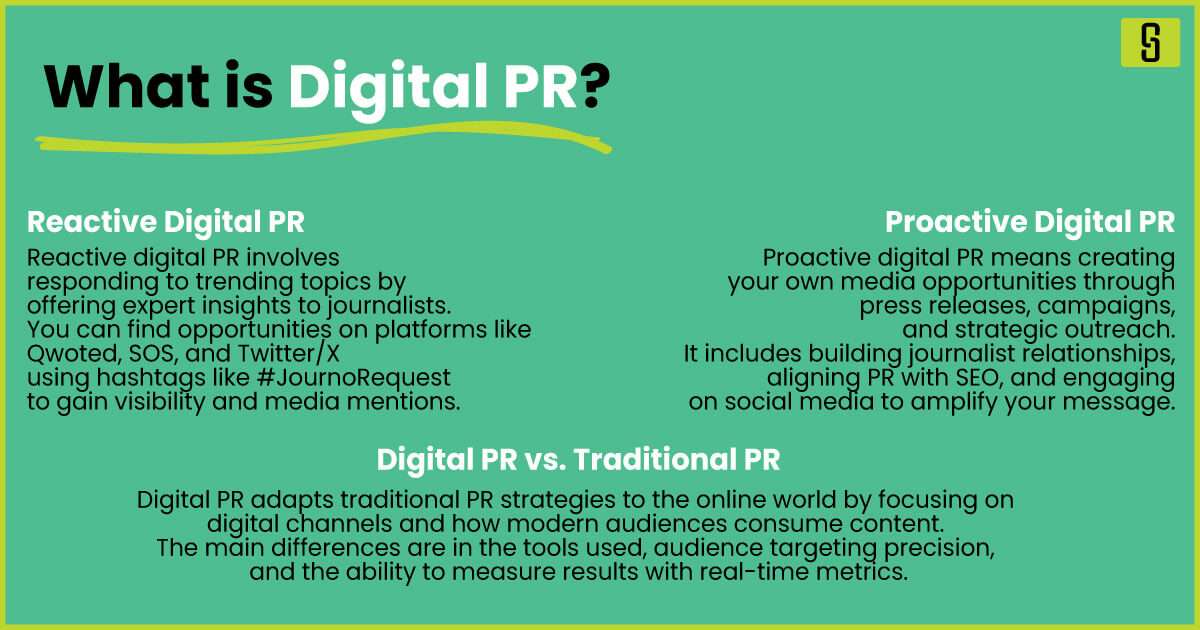
Digital PR, also known as digital public relations or online PR, is a strategy for building your brand’s reputation and visibility online. It combines content creation, media outreach, SEO tactics, and social media engagement to help you get seen in the right places by the right people.
There are two main approaches to digital PR: reactive and proactive.
Reactive Digital PR
Just like the name suggests, in this method, you react to trending topics in your industry.
How do you do that?
When journalists cover a story, they look for relevant insights to support their findings. Many of them post requests on specific online platforms for expert commentary.
For instance, platforms like Qwoted and SOS (Source of Sources) allow you to browse journalist queries and respond to the ones that match your expertise.
Moreover, journalists love X (formerly Twitter) because it’s often the place where news breaks. It’s also where they look for expert takes. A quick #JournoRequest search will reveal thousands of opportunities to choose from.
As you can see, reactive digital PR is all about sharing your perspective with the right audience and gaining visibility in places that might otherwise be inaccessible.
Proactive Digital PR
Proactive digital PR is a more hands-on and strategic approach to managing online publicity.
It involves actively creating stories and campaigns to secure media coverage, rather than waiting for opportunities to come to you. This includes:
- Writing press releases around recent or newsworthy topics
- Distributing them across multiple online channels
- Building relationships with journalists, bloggers, and content creators in your niche
- Aligning press releases with your overall SEO strategy to improve your chances of getting found
- Engaging on social media to spread your message and connect with important voices in your industry
Digital PR vs. Traditional PR
Digital PR takes what works in traditional PR and makes it work online. It uses digital media and public relations to connect with your audience in ways that match how people consume content today.
The easiest way to show you the difference between traditional and digital PR is through three main areas: channels, reach and targeting, and metrics and measurements.
| Dimension | Traditional PR | Digital PR |
| Channels | Submit press releases to newspapers, TV stations, and radio outlets. Response times can take weeks, and pickup isn’t guaranteed. | Pitch online publications, industry blogs, and podcasts. Faster response times and the ability to track engagement directly. |
| Reach and Targeting | Broad audience reach through general media—a local newspaper story reaches everyone in the area, regardless of interest in your business. | Targeted reach through niche publications and platforms where your specific audience already engages with relevant content. |
| Metrics and Measurements | – Estimated reach numbers and media mention counts. – Limited ability to connect coverage directly to business outcomes like leads or sales. | – Direct tracking of website traffic, engagement rates, and conversions from each piece of coverage. – Clear connection between PR efforts and business results. |
What Are The Benefits of Digital PR?
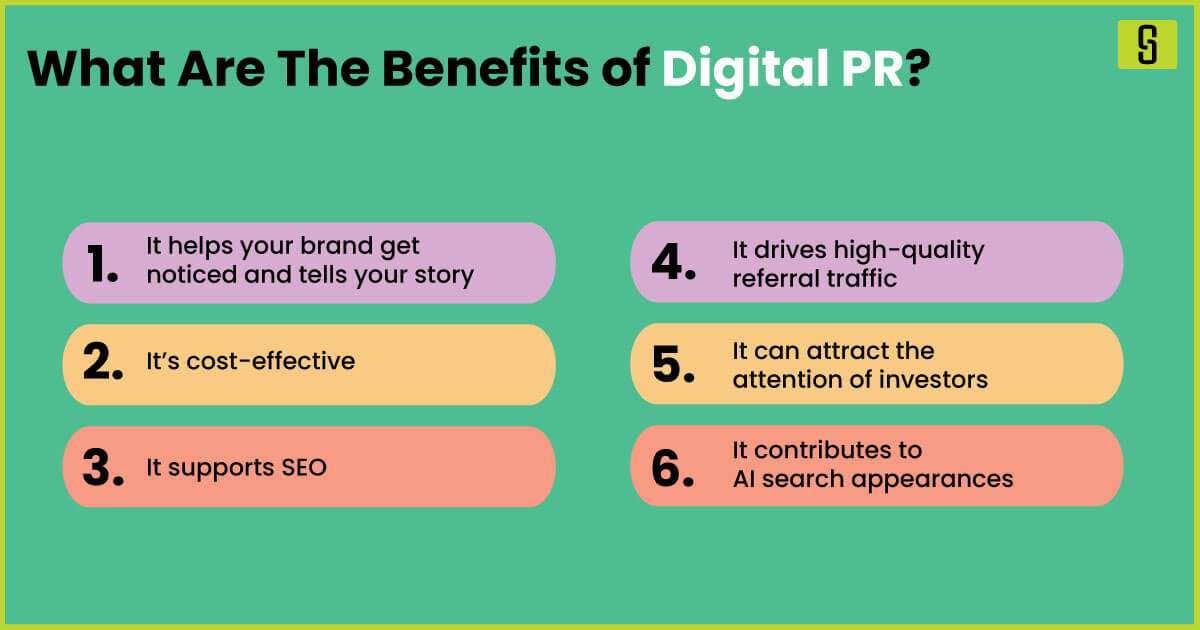
Digital PR is a strategy of its own. It blends creativity, technology, and strategic outreach to unlock advantages that other approaches simply can’t deliver.
1. It helps your brand get noticed and tells your story
Digital PR positions your brand as a thought leader and expert, not just a service provider. When people see your story in trusted publications, they are more willing to listen to why your brand matters and what makes you different.
Now, imagine a situation:
You’re reading an article and see a mention of a company that just released some interesting research with surprising findings. You’d want to know more about them, right?
When people discover your brand this way, it creates a powerful first impression. You’re not just another business trying to sell something—you’re the company that’s doing something innovative and leading important conversations in your industry.
2. It’s cost-effective
One of the most notable benefits of digital PR is that it’s undeniably cheaper than traditional methods. There’s no need for billboards, print space, or significant ad costs. Instead, you use content and digital media relations to create opportunities that work over time.
I know, it sounds a little too good to be true, but hear me out.
For the past three years, I haven’t used any tools other than what we already have in our marketing toolkit:
- Ahrefs for keyword research and tracking brand mentions
- Hunter.io for outreach
- Google Analytics to keep an eye on referral traffic
Honestly, there’s so much useful data just sitting out there; you just need to know what to look for. I often find ideas in news stories, things I stumble across online, or real industry trends that are both interesting and might be worth exploring further.
Additionally, a piece of content can deliver value way beyond a single digital PR campaign. You can repurpose it across different campaigns and continue generating backlinks and traffic long after its publication.
3. It supports SEO
As someone with an SEO background, I’d say that this is one of the biggest advantages of digital public relations. This is also why many people decide to engage with this practice.
Digital PR can land you links from reputable industry publications and news outlets, so digital PR and SEO go hand in hand.
You see, when trusted websites link to yours, Google’s algorithms view it as a signal that your content is reliable. They pass so-called “link juice” to your page, strengthening its position as a valuable source. The more of those links you have, the higher your website will rank in search results.
And SEO value isn’t something that expires; it continues to bring in results long after the initial effort.
4. It drives high-quality referral traffic
Remember when I said that you can easily track the performance of your digital PR campaign? Each campaign is created with a specific goal in mind, and driving quality traffic is one of the biggest ones.
The whole point of digital PR is to get people reading those articles so interested in your expertise that they want to learn more about what you have to offer.
And this type of traffic is entirely different from what you get through social media ads or general marketing campaigns.
Referral traffic from digital PR comes pre-qualified. These visitors arrive already knowing something about your expertise and credibility, rather than stumbling across your ad while scrolling through their feed.
5. It can attract the attention of investors
Have you ever noticed how investors often tend to focus on companies that receive media attention?
Here’s why:
When a company generates positive buzz, it can be a good sign for investors that the business has strong market potential and public appeal.
Media coverage always shows that a company is doing something noteworthy. Especially if the company attracts positive media attention and collects good reactions, it signals to them that the investment might pay off.
6. It contributes to AI search appearances
While generative engine optimization (GEO) is a relatively new term in marketing, savvy marketers are already looking for ways to get featured in AI search engines.
We already know that AI models, like those used in ChatGPT or Google’s generative search, learn from the information available on the web, including brand mentions. That’s why digital PR campaigns can help improve your brand’s visibility in AI search engines.
Common Misconceptions About Online PR
Understanding the advantages of digital publicity is a great first step. However, alongside the benefits, I often encounter a few persistent myths that can hinder the effectiveness of online PR in digital marketing.
Based on my experience, here are some of the most common misconceptions:
- One viral press release equals instant fame: I’ve met many business owners who expect a single press release to take off overnight. I understand the hope, but in reality, results take time. Like any thoughtful content strategy, digital PR is most effective when it’s consistent and carefully developed over time.
- Digital PR is only about link building: This is one of the most common misconceptions I come across. While digital PR is beneficial for link building, it’s really about much more. It helps strengthen brand credibility, increase visibility, and build genuine relationships with your audience. Links are often the result of good coverage, but they’re not the main goal.
- Every milestone (big or small) is newsworthy: I often see companies treat every internal achievement as if it were pressworthy. The truth is, journalists are looking for stories that resonate with their readers, not just announcements. In my experience, you need to present news that’s relevant beyond your own organization.
- Digital PR and social media marketing are the same thing: There’s some overlap between them, but ultimately, they serve different purposes. Social media can support PR and digital marketing efforts, but online PR involves a more comprehensive strategy. You build relationships with the media, craft stories that connect across platforms, and pitch with intention. Social media and digital PR complement each other, but neither one replaces the other.
- Digital PR is a one-time solution to our marketing challenges: I often see business owners wish for a single campaign to solve all their struggles with online marketing, especially when time and resources are limited. But digital PR is most effective when it’s integrated into your broader marketing strategy. It’s a long-term approach that works best when it aligns with your overall goals.
Examples of Successful Digital PR Tactics
I’ve covered why digital PR works so well, but nothing speaks louder than real case studies. Let’s explore examples of digital public relations success stories:
“We’ve seen 40+ backlinks from top-tier publications, a 120% surge in organic traffic, and noticeable improvements in keyword rankings within a few weeks. The compounding value of these links also leads to long-term SEO benefits.” — Sanjay Prajapat, Tech Content Writer, igmGuru
“In one campaign, we published a guide on how to optimize your Google Business Profile for voice search, timed around a major Google update. It got picked up by three niche industry blogs and two local news outlets. That single piece generated:
– 15+ high-authority backlinks
– A 47% spike in referral traffic over 30 days
– Multiple keyword lifts, including top 5 rankings for “voice search optimization for local business.”
— Robert Downey, Co-Founder, Simply Be Found
“Recently, I ran a digital PR campaign for an appliance repair client in Tennessee. Within 4 weeks, we secured eight dofollow links from big names like Family Handyman and Apartment Therapy. The impact was quick: organic traffic jumped by 28%, and we saw an average 12-position boost across nine competitive keywords that we were tracking in three months.” — Kumar Vaibhav Tanwar, Founder and Digital Marketing Expert, Clickworthy
Wrap Up
When I began working with brands on digital PR, I quickly realized that most people misunderstand this strategy because the industry treats it like a shortcut to high-quality backlinks.
That’s definitely one of the benefits of digital PR, but here’s the thing: digital PR does much more than that.
It builds your reputation, brings in the right kind of traffic, and actually makes people want to hear what you have to say. And that’s particularly important right now with AI changing how people consume content and brands fighting for attention online.
That’s why I encourage you to think beyond links and think about brand impact.