Not everyone’s sold on traditional link building—and honestly, I get it. Endless outreach, low reply rates, and links from sites no one’s heard of.
That’s where digital PR link building comes in.
I’m Bilyana, and I’ve spent the past 3 years helping brands land backlinks through digital PR campaigns that get covered by real journalists, not link farms.
In this guide, I show you:
- How digital PR works.
- Why it beats traditional link building.
- And how to run a PR campaign that earns high-authority links at scale.
Let’s get into it.
Highlights
- Digital PR link building is a method for earning links from trusted, high-authority publications.
- Start with strategy. Determine your goals, audience, and the right story.
- Short, personalized journalist pitches get the best response.
- Use the right format for your campaign—surveys, rankings, visuals, and timely commentary tend to work best.
- Good campaigns boost search engine rankings and build authority over time.
What Is Digital PR Link Building?
Digital PR link building is a method of earning backlinks through digital PR strategies.
You create something newsworthy, like original data, expert commentary, or a unique campaign, and pitch it to journalists. When they cover your content, they link back to your site.
In short: It’s PR with backlinks as the goal.
Digital PR vs Traditional Link Building
So how’s this different from traditional link building?
And is link building the same as digital PR?
Traditional link building means asking for placements directly, usually through popular link acquisition techniques, like guest posts and link swaps.
Digital PR still involves outreach, but with a different goal.
Instead of asking for a link, you’re pitching a story. If it’s strong enough, journalists and editors decide to cover it and link back naturally. Therefore, digital PR link building strategies carry more weight with Google.
PR backlinks are harder to get, which makes them more valuable when you do.
Here’s a quick side-by-side comparison:
| Attribute | Traditional Link Building | Digital PR Link Building |
|---|---|---|
| Links are placed manually | Yes | No |
| Comes from high-authority media and trusted publications | Not always | Yes |
| Builds long-term domain authority | Sometimes | Yes |
| Risk of devaluation in Google updates | Yes | No |
| Risk of getting issued a manual action against your site | Yes | No |
| Requires newsworthy or creative assets | Sometimes | Yes |
| Scales through media coverage (not 1:1 outreach) | No | Yes |
How Effective Is Digital PR at Driving Link Building Results?
A well-executed digital PR campaign can earn dozens of high-authority backlinks, often with a domain rating (DR) of 70+.
And unlike traditional link building, you don’t need to send hundreds of cold emails asking for a link.
So, how does digital PR work for link building?
- Media coverage: Journalists need sources. You pitch them data, commentary, or a story. They publish it and link to you.
- Thought leadership: When your brand consistently adds value to the conversation, people start referencing its success naturally.
And because the content is promoted through media, other publications can also pick up that story, creating a snowball effect.
That’s what makes digital PR so effective.
What’s more, it scales.
Once you’ve locked in the process, you can run similar campaigns across new topics and keep earning links from media publications.
Read my article about the benefits of digital PR to learn more about the perks of this highly effective link building method.
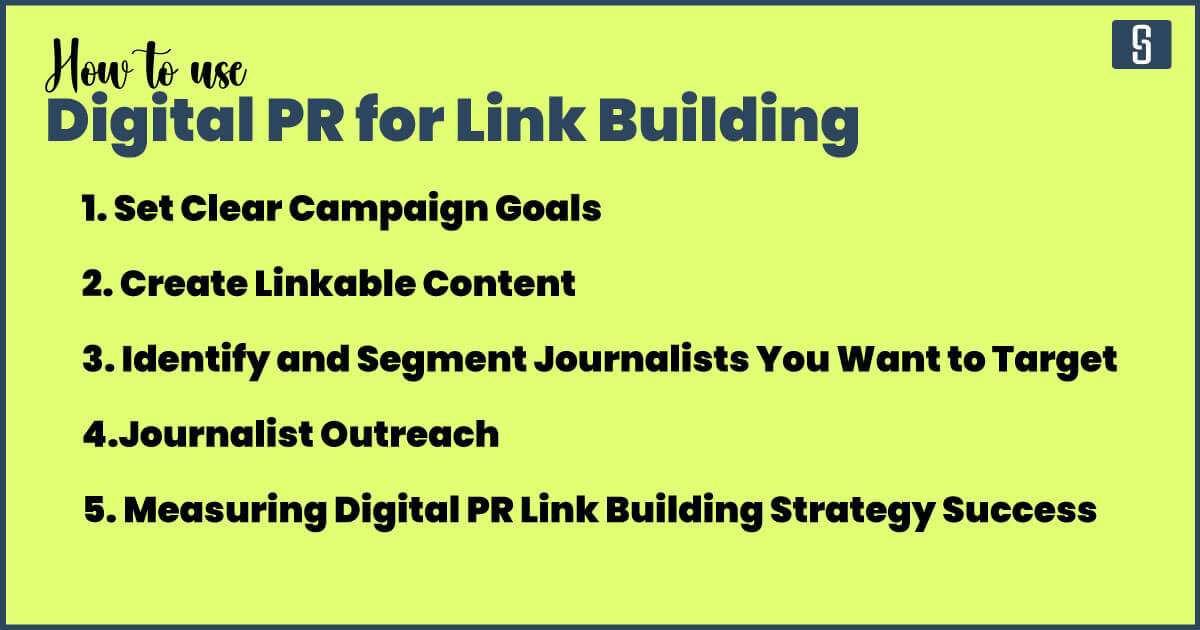
How to Use Digital PR for Link Building (In 5 Steps)
The best digital PR link building campaigns don’t start with content. They start with a strategy.
Here’s my process of building campaigns that earn links:
Step 1: Set Clear Campaign Goals
Before you write a story, ask: What are we trying to achieve?
When I plan a campaign, I usually set these goals:
- Get high-authority PR backlinks with a DR over 60.
- Drive referral traffic from niche-relevant audiences.
- Increase brand visibility or mentions in your industry.
The numbers will depend on your niche and campaign, but the point is:
No vague KPIs, like “boost authority” or “get coverage.”
Step 2: Create Linkable Content
After you’ve set goals, it’s time to start brainstorming ideas for your future campaign.
Great digital PR content usually falls into one of three buckets:
- Original data—surveys, studies, internal metrics.
- Newsworthy angles—expert comments on trending topics or timely campaigns.
- Creative campaigns—visual stories or stunts designed to spark curiosity and media coverage.
Your ultimate goal is to get the coverage, so think: Would a journalist find this useful or interesting enough to publish?
Step 3: Identify and Segment Journalists You Want to Target
Not all journalists are the same, and not all publications will care about your topic.
You need to know:
- What type of journalists cover your niche?
- What kinds of stories do they usually cover?
- Are there forums, blogs, or subreddits where your content could reach journalists?
Create a segmented outreach list based on:
- Industry (tech, health, travel, etc.)
- Role (news reporter, features writer, editor)
- Tone (data-driven vs. human interest)
This helps you craft pitches that land.
Pro tip:
A lot of journalists list their email in their bio—either on the outlet’s site, their Twitter profile, or even LinkedIn. Some show up in the free version of Muck Rack, too. It might take some digging. I’ve found email addresses in places most people overlook, but if you look carefully, you will definitely find something.
Step 4: Journalist Outreach
Once you have your list, it’s all about the pitch.
Craft a pitch that’s short and tailored to the journalist’s interests. Focus on the angle of your story, not just the brand.
From my experience, journalists like short and descriptive pitches. They don’t want to read walls of text just to find a helpful “nothing” inside.
Here are some things that help my pitches stand out:
- Personalized intro (reference their recent work related to your topic)
- Highlighting my story’s key points in the first sentences
- Including a clear link to my asset or press page in case the journalist wants to read the whole story
- A short and sweet follow-up email with emphasis on the most interesting insight. Just one!
Timing matters too. Avoid pitching late on Fridays or during major news cycles unrelated to your story.
Tuesday and Wednesday mornings usually perform best.
Insider tip:
Once you start building relationships with reporters, many will let you know how and when they prefer to receive pitches. If you become a source of exclusive stories, journalists will start opening up to you. However, it takes time and consistency. That’s why digital PR link building service is so effective—we’ve been building our contacts for years.
And finally—play the long game.
Don’t just show up when you need a link. Engage with journalists even when you’re not pitching.
Share their articles, comment on their work, and offer insights without expecting anything in return.
The more helpful and consistent you are, the more likely they’ll come to you the next time they need a source.
Step 5: Measuring Digital PR Link Building Strategy Success
Once your campaign is live, track how it performs—both for links and overall impact.
Here’s what I monitor:
- Link placements: Where did my campaign earn coverage? How many referring domains?
- Traffic: Is the content driving referral visits?
- Brand mentions: Are people talking about the brand in relevant spaces? And if they are, can we contact them to include a link to our website?
- Key search terms positions: Are the links helping the overall SEO goals?
You’ll need marketing tools to track all of this properly. But don’t worry, you don’t need a lot:
- Ahrefs or Semrush will help you monitor your backlinks, referring domains, and keyword movements.
- Google Analytics shows how much referral traffic your campaign generates and where it’s coming from.
- Google Alerts helps keep an eye on brand mentions. This is an entirely free tool; however, it has limitations. For more efficient brand mention tracking, you might benefit from tools like Mention or Brandwatch.
With the right tools, you can see what’s working, what’s not, and what to double down on next time.
Types of Linkable Content For Digital PR Link Building
The best digital PR campaigns are built around assets that are:
- Unique
- Data-driven
- Visually engaging
- Relevant to something timely or topical
Journalists aren’t looking for “just another blog post.” They need credible sources and fresh data for their stories.
If your content makes a journalist’s job easier, you earn the link.
Core Campaign Types
Most digital PR campaigns fall into one of two categories:
- Research-based campaigns: Built around surveys, studies, or internal data that reveal new insights. These campaigns are designed to position your brand as a source.
- Product-led campaigns: Centered around the product itself—its features, user behavior, or creative angles that make the product part of the story.
Proven Content Formats That Earn PR Links
Both campaign types can use a variety of content formats. Here are the ones that consistently get results:
- Original research and surveys: Publish new data that hasn’t been reported before. If you’re the first to share it, you become the source.
- Index and ranking studies: Comparative content that organizes information into lists, rankings, or scores. Easy to reference and often cited.
- Visual content (charts, maps, infographics): Helps journalists explain complex ideas quickly. Also increases the chance of being embedded.
- Expert commentary: Quick, authoritative insights tied to trending topics. Useful for journalists looking for credible quotes.
- Newsjacking and timely takes: Leverage breaking news or hot topics with a fast, relevant angle that positions your brand as part of the story.
- Campaigns built around trends or seasonal events: Tie your content to recurring themes (holidays, annual reports, awareness days) for better timing and media interest.
Want to create a digital PR campaign that actually earns links? Check out my PR backlinks article, where I break down the best digital PR link building strategies and share how to brainstorm winning ideas step-by-step.
Prominent Digital PR Link Building Campaign Examples
Now, let’s take a look at the real campaigns in action. These should give you a better feel of how digital PR and link building work together and spark some ideas for your own campaigns.
Product-Led PR Campaign Example
Amid the Paris bed bug craze in 2024, pest control company Orkin published a list of the top 50 cities in the world with the most bed bugs.
The campaign immediately caught the attention of the media. Today, the article has backlinks from 431 domains (Ahrefs data).
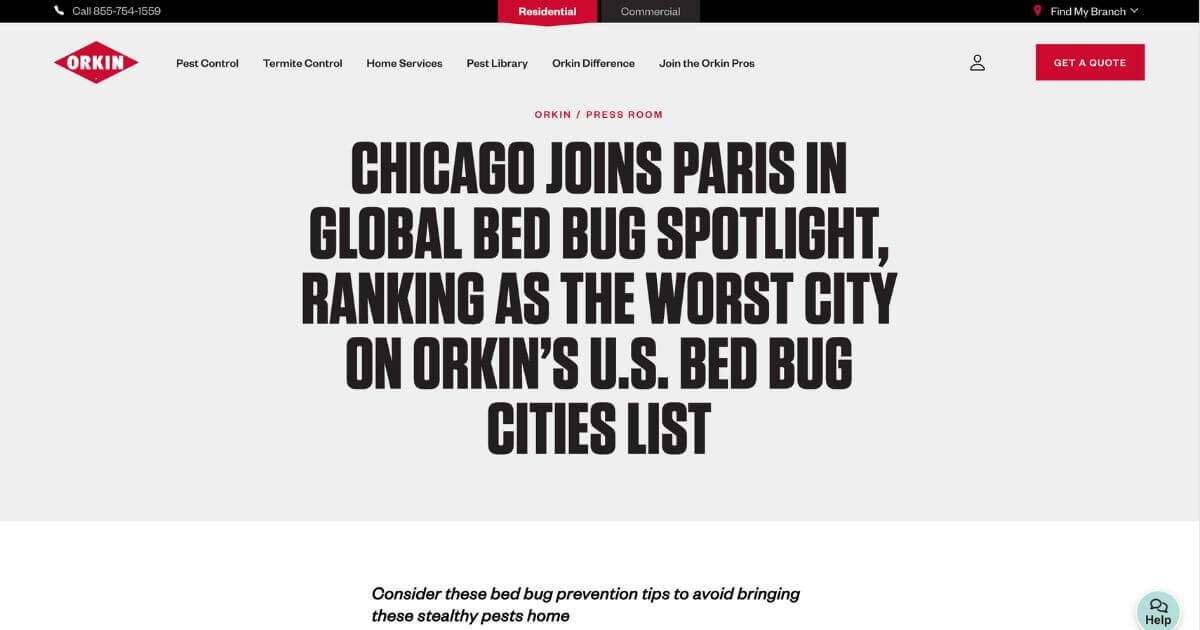
At first glance, this campaign might look like just another data-led piece. But if you take a closer look, it ties directly into what the company actually does—pest control. On top of that, it uses the internal data to draw the conclusions.
That makes it perfect for repurposing on location-based service pages.
What I love about this campaign, and why I think it went viral, is that they tapped into a hot topic at just the right moment.
Data-Led PR Link Building Example
The next campaign I want to share with you attracted backlinks from 623 domains, according to Ahrefs.
Meet Bankrate’s Job Seekers Survey from 2023.
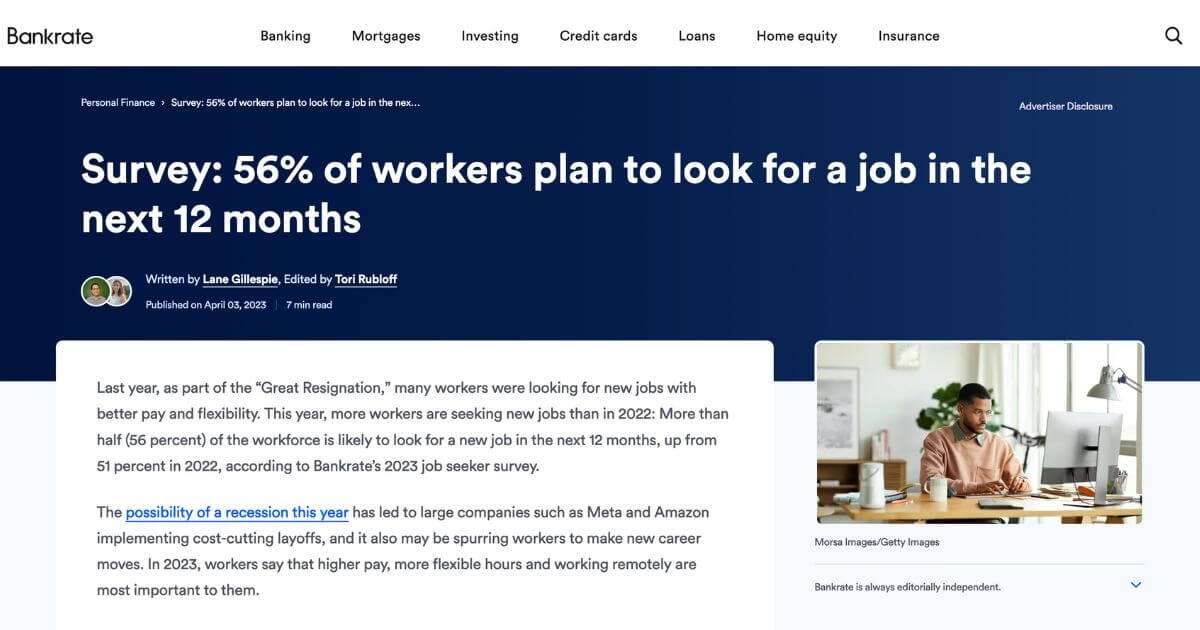
When I look at this campaign, a few things immediately stand out.
First, it’s built on strong proprietary data. The numbers reflect real trends and demographic insights.
Second, the survey is perfect for digital PR link building. Journalists are usually looking for stories backed by evidence, and this campaign gives them precisely that. These insights are credible and show a bigger picture around workplace trends.
Finally, it’s evergreen with momentum. Topics like “job search trends,” “why workers quit,” or “how many people are asking for raises” tap into ongoing conversations that resurface year after year. They reflect genuine curiosity in the workplace and economy.
Even if a journalist is covering new data, they might still reference this study to show how trends have changed over time. That kind of long-term relevance is what keeps the links and the traffic coming.
And, as more trusted sites link to it, the domain gains authority and the brand ranks better across related topics in the long run.
Future Trends in Digital PR Link Building According to Experts
To get a pulse on where digital PR is headed, I asked a few industry experts to share what trends they’re watching and what smart marketers should be doing next.
Here’s what they shared:
“The biggest trend I’m seeing in the PR world is the increasing need for human written and personalized content. With AI becoming so entrenched in our society, the thing that separates you from the crowd is being authentically yourself. I’ve met journalists who’ve said they would prefer a brief response from a relevant expert who writes informally and includes multiple typos over the overly polished AI slop they are used to receiving.
Although AI has helped increase efficiency, I think we’re living in a unique time where realness is what matters most. In an era where the market is so saturated with generalized, perfectly written professional insights, there’s a space for real people to flourish. Since being real is so rare now, those who once felt at a disadvantage for not being able to articulate their thoughts professionally and concisely are now being sought after for their ‘realness’.
Overall, I think link building will change in that the mass production of quotes with the ‘spread and spray’ tactic has become obsolete. We’re seeing a shift where becoming niche and targeting 2 or 3 publications that directly align with your expertise will prove more valuable in the long run. Not to mention the personal relationship building with journalists. If you can get one solid placement in a publication that directly matches your niche, I’d bet money that they will come back to you for future stories.
It’s getting difficult to vet experts these days, so stand out by being real and providing your first person experience while backing it up with public proof.” — Ana O’Neill, Account Executive, Featured
“With many changes expected in the next 12 months, from Google AI view to ChatGPT becoming a main search platform, I think we will begin to see strategies become more consumer-focused than ever before. PRs will need to think more about what their consumer is searching for to enable them to land within those AI-driven results. Whilst this approach may seem more ‘boring’ or ‘functional’, it’s important PRs still approach campaigns with creativity and relevance but work backwards when creating strategies and ideations. For example, if consumers are regularly searching for information around car breakdowns, a motoring brand’s PR strategy should start there and identify campaigns that can encapsulate the answer to their queries, heightening their chances of ending up on AI-driven results. To conclude, strategies should start with search.” — Leah de Gruchy, Digital PR Lead, MRS Digital
Wrap Up
Digital PR link building isn’t just another SEO tactic—it’s a strategy that builds real authority.
You’re not trading links or chasing quick wins. You’re earning coverage by offering something valuable: original insights, timely stories, and content journalists want to share.
That’s why it works. When done right, digital PR campaigns:
- Attract high-authority backlinks at scale.
- Improve your site’s trust and relevance in Google’s eyes.
- Drive referral traffic from audiences that actually care.
- Build a brand people start to recognize—even before they hit your site.
But here’s the kicker: You don’t need to go viral.
You just need the right idea, the right journalist, and the right pitch.
So before you launch your next link building campaign, ask yourself: Is this something the media would cover?
If the answer’s yes, you’re on the right track.
FAQ
How does digital PR improve search rankings more effectively than traditional link building methods?
Digital PR earns editorial links from real publications—links that Google actually trusts. Instead of link swaps or guest posts, you’re getting cited by authoritative sources. These links boost your domain authority, build topical relevance, and drive organic traffic—faster and more sustainably than traditional methods.
What innovative tactics are most successful in securing high-authority backlinks through digital PR?
The most successful tactics are built around original data (like surveys or studies), timely commentary on trending news, and visual assets that are easy to cite. Proactive media outreach, reactive newsjacking, and building campaigns around seasonal trends all help land high-DR backlinks.
Why do Google’s recent updates favor digital PR strategies over other link building approaches?
Google’s core updates continue to reward authority, credibility, and originality. Digital PR aligns with all three. Because these links come from editorial decisions—not manual placements or link schemes—they signal real trust and relevance. That’s exactly what Google is looking for.
What are common misconceptions about digital PR link building that I should avoid?
“It’s just about press coverage”—No, the goal is links, not just mentions. Your campaign should be built with SEO in mind.
“It’s only for big brands”—Smaller brands can win with the right angle and targeting.
“It replaces SEO”—Digital PR supports SEO, but doesn’t replace on-page strategy, keyword targeting, or technical work.
“You need to go viral”—You don’t. You need to be relevant, useful, and timely to the right audience.