PR backlinks are links from news sites and high-authority publications earned through real stories, not paid placements.
Most brands waste months chasing mediocre links, while a single PR backlink can deliver more SEO value than their entire link building budget.
I’m Bilyana, and after three years of running digital PR campaigns, I’ve seen this play out countless times. When major publications link to your content, search engines and AI systems take notice in ways that traditional link building simply can’t match.
Sounds intriguing? Read on to discover more about PR link building and how it can deliver measurable results for your business.
Highlights
- PR backlinks from trusted media outlets carry more SEO weight than other link building tactics.
- Build genuine relationships with journalists. They can tell when you’re just using them for links.
- Create unique content, such as original research or timely commentary, that journalists actually want to cover.
- Monitor brand mentions and request links when outlets reference you without providing a link back.
- Focus on long-term brand building, not quick SEO wins. The backlinks will follow naturally.
What Are PR Backlinks?
PR links, also known as press links, are backlinks that originate from reputable media outlets, established publications, and credible journalists.
Link building aside, this is the type of coverage that any brand aspires to get. I’m talking about big websites, such as BBC, Independent Weekly, Forbes, Wall Street Journal, and others.
Here is an example of a digital PR campaign by the marketing firm Yard, which was featured in a story by The Guardian:
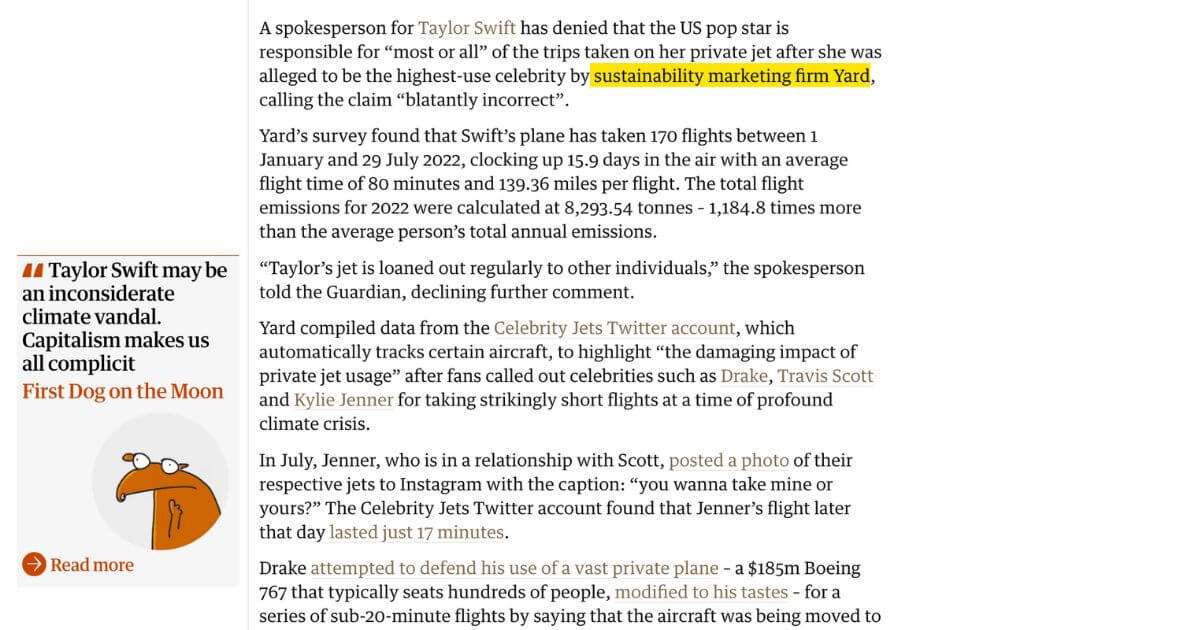
What makes digital PR backlinks even more special is that they are editorially placed. This means that the decision to include a link comes from a journalist or an editor as part of their reporting process. Usually, the links are included when they reference a brand, person, quote, or data point in their stories.
So, as you might have guessed, to get featured, you need to create newsworthy content with unique insights.
What Are the Benefits of Digital PR Links?
So, what do PR backlinks do for your business, and why do marketers get so excited about brand mentions from media over other link acquisition strategies?
Let me break it down for you.
1. Digital PR Links Contribute to a Natural Backlinks Profile
The best links are the ones that are earned organically, without any manipulations and link schemes. When journalists find content that is worth referencing, they naturally cite the original source.
What’s more, news outlets often pick up the same stories, especially if they see that it grabs attention and resonates with readers. This results in multiple mentions across the web and a high-quality PR backlink profile for your website.
2. PR Link Building Focuses on Obtaining Authoritative Links
News websites have a long-standing reputation and credibility with Google. Think about it, those domains have been building public trust for decades, and continue doing so.
Why does it matter?
Because media websites often have domain authority (DA) scores above 80, a metric that measures how trustworthy a website is to search engines.
When your brand is mentioned and linked within multiple such publications, Google automatically counts it as a strong trust signal.
As a result, PR backlinks lead to improved search rankings and increase the overall brand recognition by search engines.
3. Digital PR Backlinks Improve AI Search Visibility
People are increasingly using AI-powered search engines like ChatGPT, Perplexity, and Google AI Overviews to find information online.
Here is what’s interesting:
These AI systems generate their results from already existing sources across the web. To provide the most reliable information, they prioritize data from trusted places, such as news outlets.
The more PR links and mentions your brand has, the more likely AI assistants will reference it in their answers. So, you get a chance to take advantage of a new traffic source.
4. Digital PR Links Contribute to Long-Term SEO Value
Digital PR isn’t a one-time strategy to get high-quality PR backlinks. It continues to attract natural links as other websites reference the original source, journalists cite your previous mentions in their new articles, and more media outlets pick up on your story.
This also creates a backlink profile that your competitors simply can’t replicate.
Think about it for a minute:
While anyone can reach out for guest posts or pay for links, you can’t buy your way into genuine news coverage. PR backlinks are earned when journalists find your story worth telling, making them naturally more valuable and harder for competitors to duplicate.
5. Links From Recognized Media Create Real Business Impact
First and foremost, digital PR is a promotional tactic. Marketers use it to increase a brand’s online presence, not just to attract SEO-friendly backlinks.
Digital PR is a measurable and tangible strategy designed to raise brand awareness with clear business outcomes.
It results in:
- increased website traffic
- improved organic search rankings
- greater social media engagement
- and, most importantly, higher sales conversions
How Do PR Backlinks Integrate Into SEO Strategies?
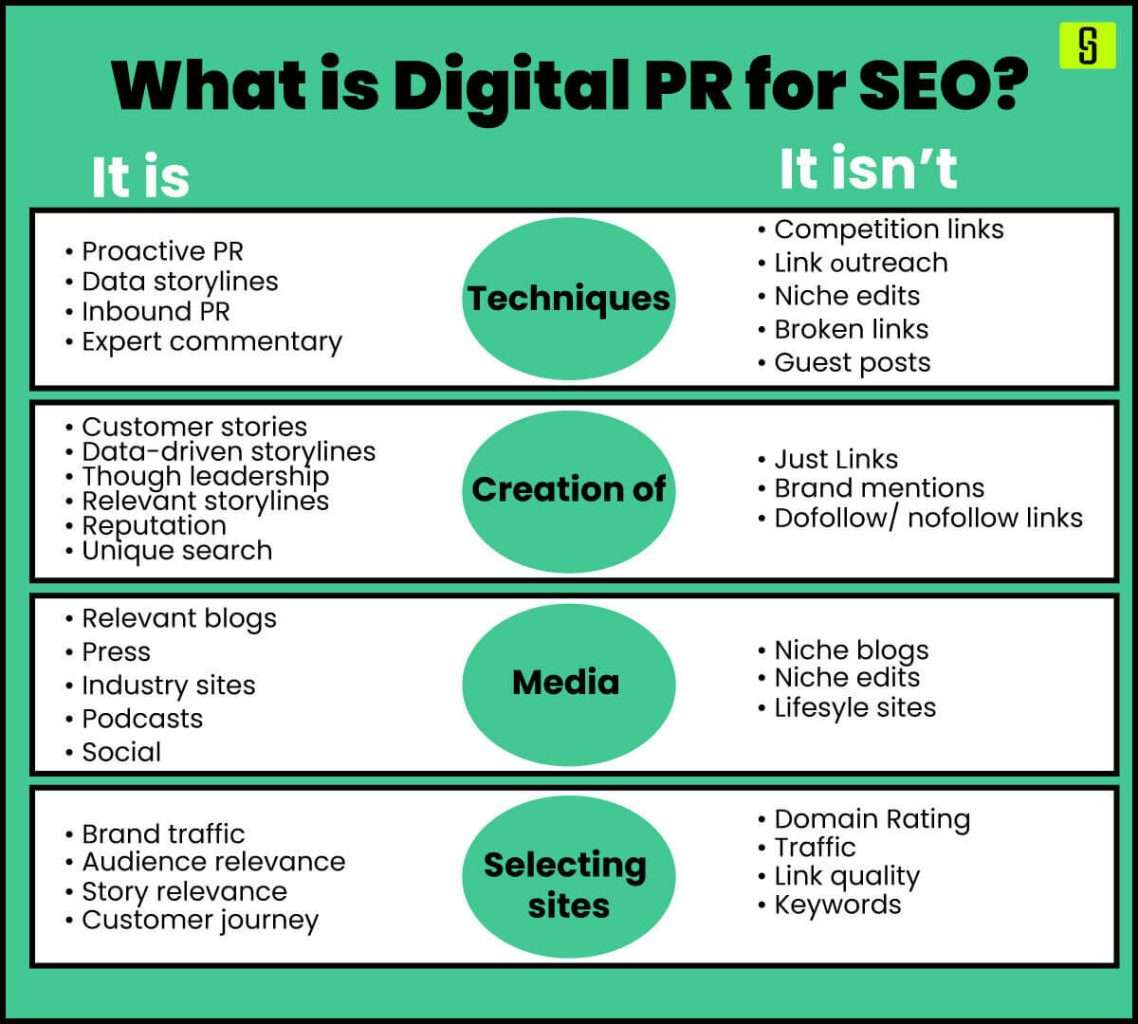
As we’ve already established, digital PR earns high-quality PR links. But that’s just one part of the SEO equation, and limiting online PR to link building misses the bigger picture.
Modern SEO is changing. Brand reputation is becoming a core part of the strategy, and PR backlinks help build the reputation that SEO increasingly relies on.
With Google’s algorithms using AI to evaluate content in a more human-like way, your brand’s credibility and authority matter more than ever.
This is where PR and SEO start to overlap. The content you publish, the tone you use, and the links you earn all shape how people perceive your brand. And so do search engines.
Key Strategies to Get Digital PR Backlinks
Now that you understand all the benefits of digital PR, you might be curious about how to get backlinks from high-quality PR sites.
I’ll be honest: It’s not easy. But I’ve tested a few methods, which I share below.
Creating Data-Driven Content
Your PR campaign starts with a story. How you choose to tell that story is entirely up to you. It could be an insight drawn from original research or an industry report—something journalists can’t find anywhere else.
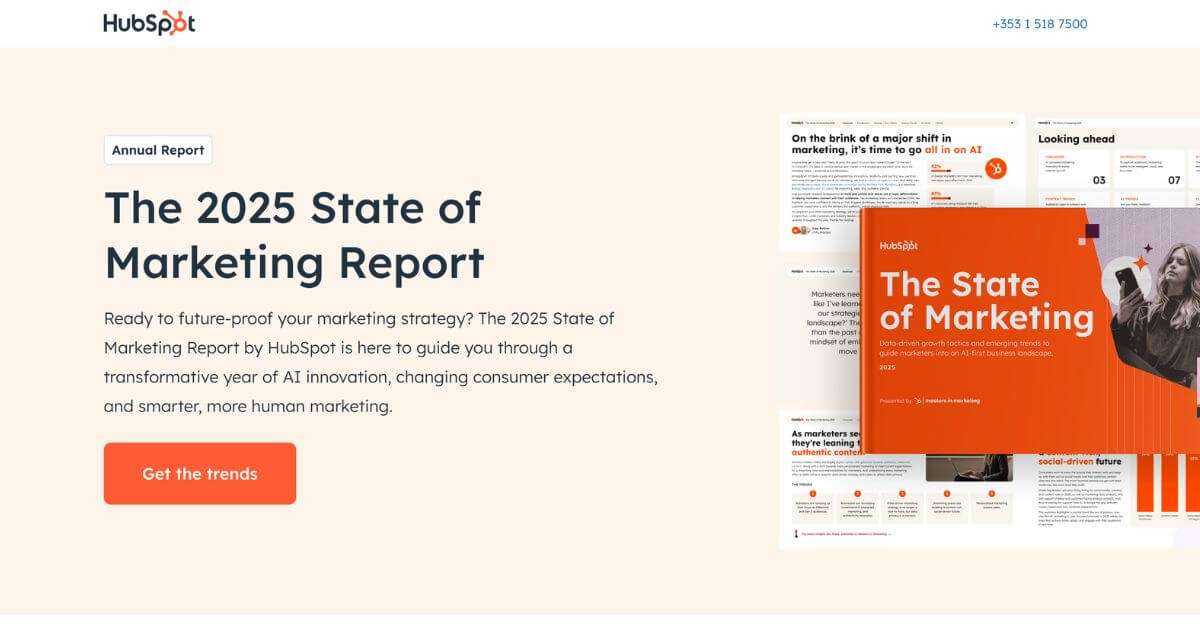
And since you want your story to be shareable, make sure to include elements that journalists can easily latch onto, such as an infographic highlighting key takeaways or a downloadable white paper that makes their research easier.
Newsjacking
Newsjacking is a fun strategy that can help you stand out as an expert in your field.
It requires constant monitoring of breaking news and industry trends. You can play along with the narrative, provide sharp commentary, or simply do a more in-depth analysis of what that news means for your industry.
Staying on the wave of trends can be challenging, but fortunately, we have so many tools that help with that.
Here’s how I do it:
- Google Alerts: For industry keywords, trending topics, or journalists’ names to stay updated on the latest reports.
- Google Trends: I check the Trending Now section daily. When news breaks, people start googling it, and Google Trends shows the results in real-time. It also shows you search interest over time, making it particularly helpful for planning seasonal campaigns.
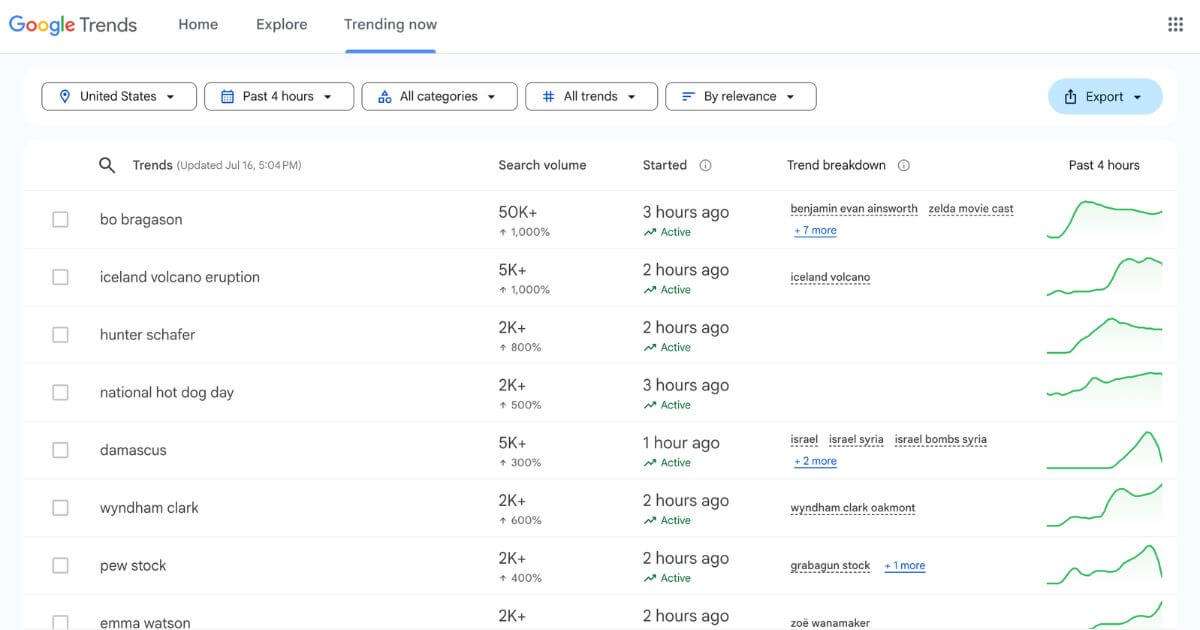
- Social media, Reddit, and niche forums: These communities often discuss industry developments before they reach traditional media, giving you an early heads-up on potential stories.
Surveying People for Unique Insights
When you can’t find the data you need, create it. Journalists love fresh insights, and surveying your audience, or even a larger demographic, is one of the ways you can provide them with that.
The secret to success is to ask the questions that matter today.
What are people debating right now? What’s a misconception you can challenge?
Structure your survey to answer those questions, and you’ll have a hook reporters can’t resist.
Tools like Typeform, SurveyMonkey, and even social media polls can get you quick responses. Just remember to sample thoughtfully—credibility matters.
Reactive PR
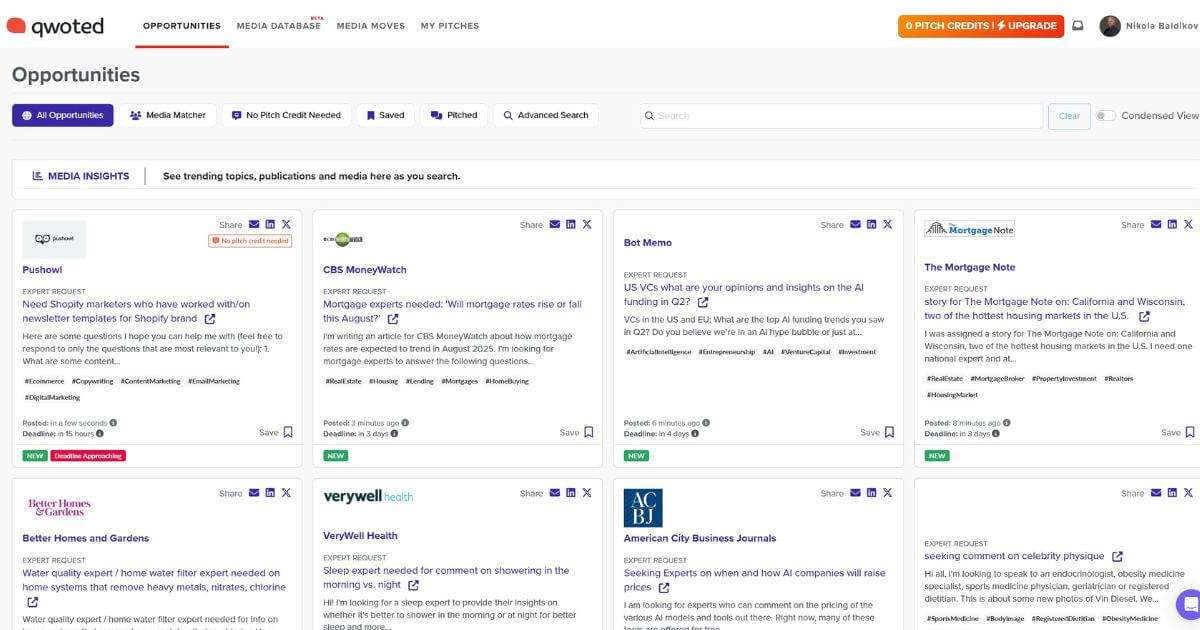
Reporters frequently seek credible sources to include in their stories. Platforms like Qwoted, Featured, and even X make it more convenient to spot real-time opportunities and jump in with an insightful commentary. This strategy is most effective when you already have a clear understanding of your niche.
Creative Campaigns
This is where you can get imaginative with your digital PR campaign for link building. A creative campaign might involve a bold stunt, an interactive microsite, a quirky product drop, or even a viral social media experiment.
The goal here is to evoke an emotional response. Surprise, delight, even a little controversy (if it aligns with your brand)—these are the emotions that fuel shares and media attention.
What makes a creative campaign successful is the execution. Tie it back to your message, make it timely, and give journalists an apparent reason to cover it.
Want to learn all the details? Here’s my post on how to pitch your story to the media.
Building Relationships With Journalists and Media Outlets
Building genuine connections with reporters who cover stories in your industry is, in fact, the most challenging part of any digital PR campaign. However, this is important for securing any link, as they ultimately decide whether to include it.
Here are a few ways you can build relationships with journalists:
- Follow them on social media like X and LinkedIn to see what stories they work on and what they share.
- Many journalists prefer not to be contacted in any other way than via email—respect that.
- Research their recent work to understand their beat and audience before reaching out.
- Provide helpful resources, such as data, expert insights, and story ideas, to demonstrate your value.
But the work doesn’t end with your initial outreach:
- Be respectful of their time by limiting follow-ups to just one after your initial pitch.
- Send a simple thank-you note after they publish a story or interview.
- Engage with their content by liking and commenting on their posts, even when it’s not directly related to your company.
- Attend industry events and conferences to meet them face-to-face when possible.
Monitor For Unlinked Brand Mentions
After your story has been published, look for publications that republish content or aggregate their articles from the original media coverage.
It’s helpful to use monitoring tools to track when publications mention your brand without linking back to it. Then you can politely reach out to request that they add a proper link to your website.
Methods for brand mention monitoring that I find helpful:
- Google Search by brand name: Around the time of publication, I regularly monitor mentions using the quotation marks search operator—“brand name”. This ensures that pages contain the exact brand name I’m looking for. I also apply advanced filters and sort by recency.
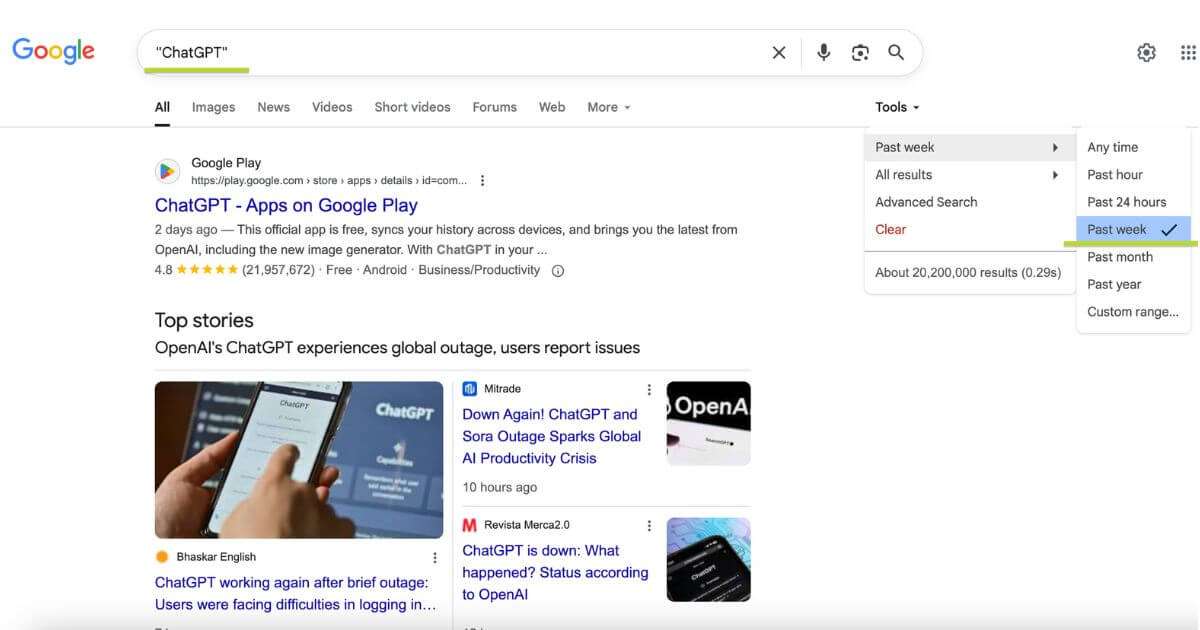
- Google Alerts: A free alternative to paid brand monitoring tools. The only downside is that it doesn’t always report accurately.
- Ahrefs Brand Radar: This tool, available with an Ahrefs subscription, is handy for monitoring mentions in AI chatbots.
Of course, there are more useful media monitoring tools you can test. Some of the notable ones are:
- Semrush’s Brand Monitoring tool
- SocialSprout
- Brandwatch
- BuzzSumo
- Mention
Common Mistakes People Make With PR Links
After running numerous digital PR link campaigns, I’ve seen the same mistakes derailing otherwise solid strategies and undermining the final results.
- Focusing your entire campaign on links: PR backlinks are a byproduct of a digital PR campaign, not the primary objective. When you’re obsessed with link metrics, you miss out on building brand awareness. What’s more, journalists can tell when you’re just using them for links, and they’ll stop responding to your pitches.
- Targeting irrelevant publications: Don’t go after any website that will link to you. Chase the industry-relevant ones instead.
- Buying links: The news links that are sold on the vast web are usually fake. They may look like real press links, but they’re often placed on low-quality sites or part of shady link schemes. You can’t buy real high-quality PR links.
- Paying for press release distribution: My experience shows that they don’t work. Even if your story is chosen, it will likely appear on a low-quality website unless you are an industry giant.
- Expecting immediate results: Digital PR is about building relationships, not a quick hack. The best backlinks come from journalists who know and trust you, and that takes time to develop.
Real-Life Examples of High-Quality PR Backlinks
I asked marketing experts to share their most successful experiences with digital PR link building.
Here’s what they had to say:
Dorian Menard, Founder and Business Manager at Search Scope, led a data-driven campaign for a home renovation brand, tying weather trends to seasonal demand. By leveraging original research and local media outreach, the campaign secured national coverage, acquiring 140 referring domains in just 30 days, and generated 740 new contacts through a lead magnet, with 64 of them converting into paid consultations within six weeks.
He shared the following:
“The campaign that delivered the most value started with weather data and ended with national coverage. I worked with a home renovation brand that wanted higher search visibility for terms linked to seasonal demand. We collected weather trends across Australian states and mapped them to renovation lead volume over five years. The data showed clear spikes tied to temperature drops and daylight changes.
We built a landing page around the findings and pitched the story to local newsrooms. The hook was simple. Timing your renovation around weather trends saves money and stress. That angle pulled in regional attention, which then snowballed. The piece was syndicated across seven digital outlets and picked up by a major trade association’s publication. All of them linked back to the source page.”
Victor André Enselmann, Founder of the Danish marketing agency Modeva, ran a single digital PR campaign that earned over 20 high-authority links from local media. These backlinks played a key role in helping his client rank #1 for competitive personal loan keywords and significantly grow organic traffic over 1.5 years in the Danish market.
Here is what he shared:
“When we did digital PR outreach for Bankly, I learned quickly that the list matters more than the pitch. At first, we were blasting big national outlets – everyone wants a mention in top-tier press. But the real wins came from going local and hyper-relevant. We started looking for local business news sites and regional financial blogs in Denmark that had previously covered personal finance topics. Smaller audiences, but they were actually willing to engage.
What worked for replies was being direct and making the journalist’s job easier. We’d send a pitch with a clear local hook, a short snippet of data they could quote without rewriting, and even suggested headlines. It wasn’t a long story, just a sharp angle they could run with.”
Final Thoughts
The difference between brands that get consistent media coverage and those that don’t isn’t luck—it’s strategy.
This blueprint will help you move beyond basic link building tactics and start earning PR backlinks that genuinely impact your business.
I encourage you to pick one strategy from this guide and create compelling content that journalists will want to cover.
If you need help implementing these strategies or want expert guidance on your digital PR campaigns, we’re here to support you. Sometimes, having an experienced team can make all the difference between a campaign that gets ignored and one that generates real media coverage.