Commercial intent keywords are the search terms people use on Google when they are actively looking to buy something.
After more than a decade in the SEO game, I’ve seen firsthand that targeting these specific phrases is a direct path to increasing sales and growing a business.
With commercial keywords, people aren’t just searching for information but are ready to make a purchase.
This guide is your roadmap to finding them.
So, let the journey begin.
Highlights
- Commercial keywords signal a user is close to making a purchase.
- Focusing on buyer intent leads to higher conversion rates.
- Use Google’s tools to find keywords your competitors miss.
- Analyze the search results page for clues about user intent.
- Match your content directly to a specific commercial search query.
What Is Commercial Intent?
Commercial intent is the motivation behind a person’s search query that indicates they are looking to make a purchase.
When people use commercial intent keywords, they’re not just browsing. They’ve moved past the initial research phase and are now evaluating their options to buy a product or service. This is a critical distinction in understanding what is keyword intent.
Types of Keyword Search Intent
To truly appreciate the power of commercial search intent, you need to understand its siblings.
Every Google search falls into one of four main categories. Knowing them helps you create a well-rounded content marketing strategy that meets people at every stage of their journey.
Here are the four types of keyword search intent:
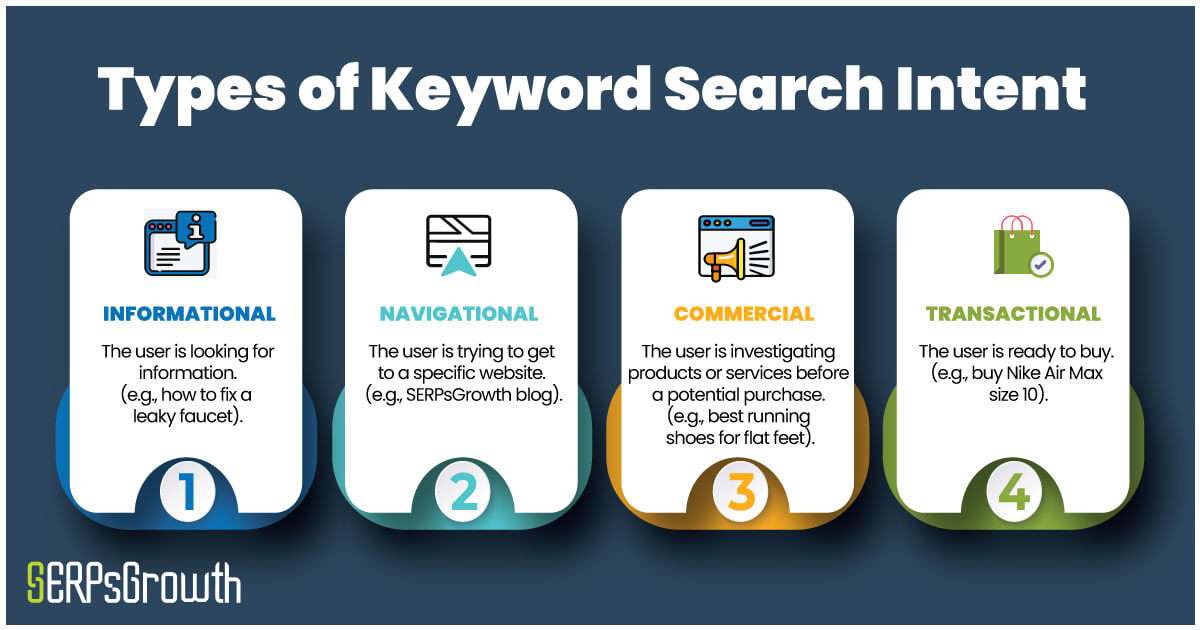
- Informational: The user wants to learn something. They are looking for answers, guides, and information. Examples include what is SEO or how to bake a cake. This is often the top of the marketing funnel.
- Navigational: The user wants to go to a specific website. They already know the brand name and are just using the search engine to get there faster. Examples include Facebook login or SERPsGrowth.
- Commercial: The user is investigating products or services with the intent to buy in the near future. They are in the consideration phase. Examples include Ahrefs vs Semrush or best running shoes for flat feet. These are high-intent commercial keywords.
- Transactional: The user is ready to buy something right now. These keywords often include terms like buy, discount, deal, or specific product names. Examples include buy iPhone 15 Pro or Ahrefs subscription discount. These are often considered the highest buying intent keywords.
While all four are important, commercial and transactional keywords are where your sales will come from. They are the phrases that bring in hot leads and drive revenue.
Why Your Business Can’t Ignore Commercial Intent Keywords
Focusing your content and Google Ads campaigns on keywords with commercial intent is a way to drive conversions.
Here’s the bottom line:
When you target people using commercial keywords, you get your message in front of an audience that is already qualified. They have a problem and are actively looking for a solution you provide. This makes your job much easier.
Consider these benefits:
- Higher conversion rates: You’re reaching people at the bottom of the marketing funnel who are ready to act.
- Better ROI on ads: Bidding on keywords with commercial intent in Google Ads costs more, but the return is significantly higher because the clicks are from potential buyers.
- More qualified organic traffic: Your content marketing efforts attract visitors who are more likely to become customers, not just readers.
Ignoring this segment of searchers is like setting up a shop and ignoring the people who walk in with cash in their hands. You simply can’t afford to miss out on this valuable traffic.
How to Find Keywords With Commercial Intent Like a Pro
Now, moving on to the practical part.
How do you actually find keywords with commercial intent?
It’s a mix of using the right tools and, more importantly, understanding how real people think and search.
I’ll walk you through the exact methods I use.
Start With Google Search Itself
Before you even open a fancy keyword tool, go to Google. The Google search bar is your first and best resource.
Start typing a phrase related to your product.
For example, if you sell email marketing software, type “email marketing software” and see what Google suggests.
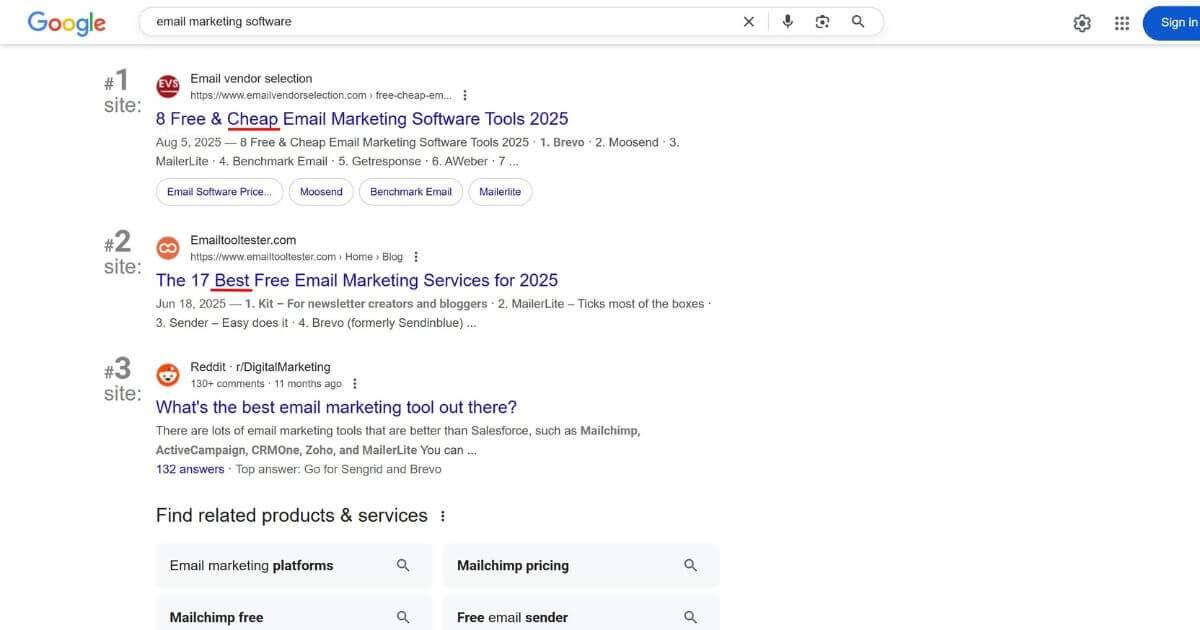
These are real searches people are performing. Look for modifiers that suggest commercial intent, such as:
- Best: best email marketing software
- Vs / versus: Mailchimp vs Constant Contact
- Review: HubSpot review
- Comparison: email marketing software comparison
- Affordable / cheap: cheap email marketing software
Also, scroll down to the People also ask and People also search for sections on the results page. This is a goldmine for understanding the questions and comparisons on your customers’ minds.
Use Google Keyword Planner
The Google Keyword Planner is a powerful, free tool inside your Google Ads account. I use it to get data-driven ideas. Go to Discover new keywords and enter a product or service. The tool will give you a long list of related keywords.
Pro tip:
Look at the Top of page bid (high range) column. A high cost-per-click (CPC) bid is a strong signal that a keyword converts well. Advertisers are willing to pay a premium for that traffic because it turns into sales. This is one of the clearest indicators of a commercial intent keyword.
Analyze Your Competitors
Your competitors have already done a lot of the work for you. Using keyword research tools like Ahrefs or Semrush, you can see exactly which keywords are driving traffic and sales for them.
Here’s an example of using Ahrefs to analyze competitors’ keywords:
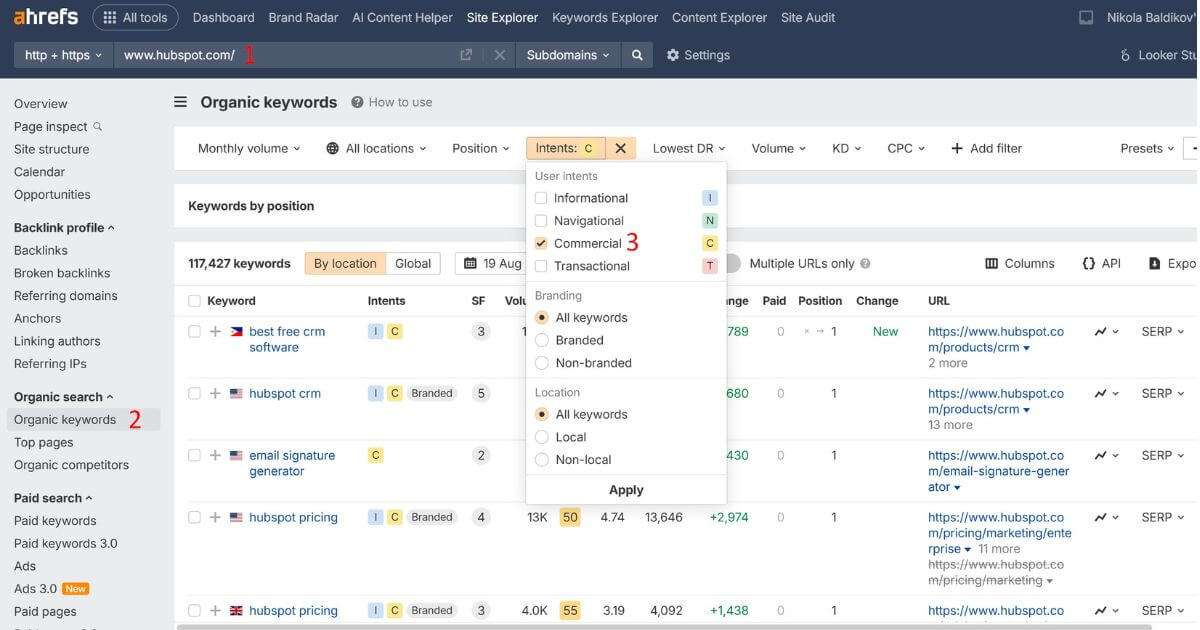
- Enter a competitor’s domain into the tool and look at their top organic keywords.
- Filter the list to find keywords that include commercial modifiers. This will give you a ready-made list of buyer intent keywords that are already proven to work in your industry.
- Pay attention to the pages that rank for these terms; it gives you a blueprint for the kind of content you need to create.
A Decade in SEO: My Secret for Finding Untapped Keywords
After so many years in this field, you learn to look where others don’t. While everyone is fighting over the same keywords, I’ve found success by digging into community forums and review sites.
Think about it:
Where do people go to ask detailed questions before they buy something?
- Quora
- Industry-specific forums
- Product review sites
I spend time searching these sites for mentions of my clients’ products or their competitors. What I’m looking for is the exact language people use when they’re deep in the decision-making process.
Here’s an example from my personal experience:
For instance, I once worked with a company that sold high-end coffee grinders. Standard keyword research gave us terms like “best conical burr grinder.”
But on Reddit, I found a thread where people were debating a specific feature: low retention coffee grinder. That phrase had a low keyword difficulty and almost no competition. We wrote a detailed article titled “The Ultimate Guide to Low-Retention Coffee Grinders,” and it became one of their top-performing pages, attracting serious coffee enthusiasts ready to invest in premium gear.
This is a commercial intent keywords example that you won’t find in most tools. You find it by listening to your potential customers.
Building a Content Strategy Around Your Keyword List
Once you have your buyer intent keywords list, you need to build content around it.
Don’t just stuff the keywords into existing pages. Your goal is to create the best possible resource for that search query.
Here’s a simple framework:
- For “best X” keywords: Write detailed listicle posts. Review the top 5–10 products, outlining the pros and cons of each. Be honest and build trust.
- For “X vs Y” keywords: Create a head-to-head showdown. Dive deep into the features, pricing, and use cases for two competing products.
- For “X review” keywords: Write a comprehensive, hands-on review of that specific product. Use original photos and be completely transparent.
- For “cheap/affordable X” keywords: Create a listicle focused on budget-friendly options. This shows you understand different segments of the market.
This approach ensures your content marketing strategy directly matches the search intent of the user.
When a person searching for a commercial intent keyword lands on a page that perfectly answers their question, they are far more likely to convert. This is how you turn your website into a powerful tool for generating leads and sales.
Wrap Up
Ultimately, success in SEO and content marketing comes down to understanding people.
Targeting commercial intent keywords is about meeting your customers in the final, critical moments of their buying journey.
By using the methods I’ve outlined, you can move beyond chasing vanity traffic and start attracting visitors who have a genuine interest in what you sell. It requires a thoughtful approach to keyword research and a commitment to creating valuable content, but the impact on your bottom line is undeniable.
FAQ
How do I know if a keyword has commercial or informational intent?
Look for specific modifiers in the keyword phrase. Words like best, review, top, vs, and comparison strongly suggest commercial intent. Also, analyze the Google search results page. If it’s filled with product pages, shopping ads from the Google Merchant Center, and review sites, the intent is likely commercial.
Can a keyword have more than one type of intent?
Yes. This is known as mixed intent. For example, the keyword CRM software could be used by someone looking for a definition (informational) or by someone looking to compare options (commercial). Google’s algorithm does its best to determine the dominant intent and show results accordingly.
Should I ignore informational keywords completely?
No. A good content marketing strategy includes content for every stage of the marketing funnel. Informational content is great for building brand awareness, establishing expertise, and capturing email subscribers for your email marketing list. Just be aware that its primary goal is not direct sales.
How long does it take to rank for commercial intent keywords?
This depends on the keyword difficulty and your website’s overall authority. Highly competitive commercial keywords can take many months, or even years, to rank for. However, by targeting long-tail, less competitive commercial keywords, you can often see results much faster, like in 3–6 months.
Are there any other tools besides Google’s that are good for finding these keywords?
Yes, several paid keyword research tools are excellent for this. Ahrefs, Semrush, and Moz are industry standards that provide deep insights into keyword data, competitor performance, and search intent classification, which can be a huge help when you need to find keywords.