If you want your SaaS site to rank on Google, you need backlinks. But the game is different for SaaS businesss—more competition means faster moves and smarter strategies.
I’m Elena, and I’ve been doing link building for SaaS for more than five years. By now, I don’t just know the SaaS game—I win it.
So, keep reading to find out:
- What makes SaaS backlinks different from other industries.
- The type of links that have the most impact for SaaS companies.
- Proven strategies I use; no shady techniques.
Highlights
- Successful link building strategies for SaaS focus on authoritative backlinks, not volume.
- Mix tactics: guest posts, linkable assets, niche edits, PR, and partnerships.
- Listicles and mentions matter more as AI reshapes search.
- Avoid quick fixes and black hat tactics that risk penalties.
- Trust and credibility matter more in SaaS than in other industries.
Why Link Building Matters for SaaS Companies
Let’s start with the basics of SaaS link building—why your website needs a solid backlinks strategy in the first place.
If you have a SaaS business, you want people to find your website on Google.
Simply having a website is not enough. Google needs a reason to show your site at the top of search results.
Think of a backlink like a recommendation. The more authoritative websites recommend you, the more Google trusts your site, and the higher it’ll show up in search.
Link building is especially important for SaaS businesses because:
- The competition is tough, and a diverse backlink profile helps your site stand out.
- People research before they buy, so you need to be at the top of the search results.
- Unlike paid ads, good SEO continues to generate organic traffic for months and even years ahead.
How Does Link Building for SaaS Work?
When a relevant page links to your SaaS site, it passes authority. In SEO, we call it link juice.
However, not all links are made equal. Backlinks are either dofollow or nofollow.
- Dofollow links pass link juice and help your SEO.
- Nofollow links don’t pass the same amount of value, but they still bring traffic.
All links are dofollow by default unless they have a rel=“nofollow” attribute in the HTML code.
Here is an example: <a href=“http://example.com” rel=“nofollow”>Example</a>
To measure the authority of pages, SEO tools use metrics like domain rating (DR). Theoretically, links from high-DR websites carry more weight than those from low-DR websites.
Well-rounded SEO link building strategies take into account the relevance of the websites the links are coming from and how closely their content aligns with your own. Good backlinks are both authoritative and contextually meaningful.
Core Principles of SaaS Link Building
Before we explore the specific methods, I’d like to share the guiding principles behind our link building approach for SaaS companies. These are essential for obtaining backlinks that deliver lasting results, so use them to guide your own strategy.
- Focus on quality over quantity: Although quantity matters, quality should always come first. Your strategy should prioritize relevant and authoritative links. These websites carry more weight with Google and impact the rankings. So, it’s better to have a few strong links than dozens of irrelevant ones.
- Be consistent: SaaS link building results don’t happen overnight. It’s a process that grows through steady and intentional work. I know consistent outreach and follow-up can seem like they’re going nowhere, but what helps me stay on track is simply tracking the progress in a spreadsheet.
- Authority and trust matter even more for SaaS websites: This industry relies heavily on recommendations and what others have to say about your product. So, when it comes to link building for SaaS websites, it’s best to have links on sites that hold trust in your niche. High-authority links enhance your search rankings and help establish credibility with potential customers.
- Sustainability over quick wins: I understand that fast link opportunities can be tempting. But I’ve seen too many cases where quick fixes don’t work or cause even more problems down the road. Especially when Google rolls out yet another algorithm update. All the best backlink building strategies revolve around building genuine relationships and creating a backlink profile that will serve you for years ahead.
- Synchronize your link building and content strategies: Strategically placed backlinks help create a smoother path for your audience to find your SaaS site. Your links should naturally support the content you create, whether it’s a helpful guide or a detailed product page.
Top 10 Link Building Strategies for SaaS Businesses
Over the years, I’ve tested many link building methods. Some were successful, while others didn’t quite hit the mark.
In this section, I walk you through the best link building techniques that I use for SaaS.
1. Guest Posting on Industry-Relevant Sites
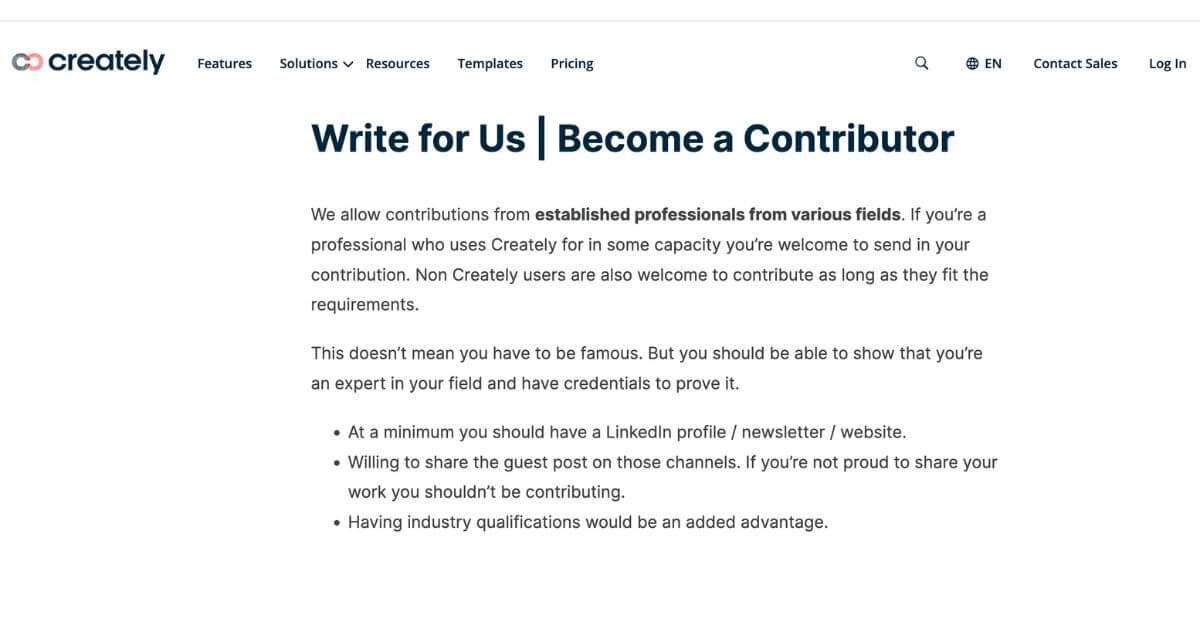
Guest posting is one of the classic ways to build links.
This is an exchange-based strategy where you provide free content to a website that accepts guest contributions. In return, they include a link back to your website.
Depending on the content policies of the receiving website, your link may be placed in the author’s bio or added contextually within the article.
To learn more about guest posting and how to find relevant opportunities, check out my article: What Is Guest Posting in SEO?
2. Creating Linkable Assets
Linkable assets are helpful resources designed to attract backlinks. They come in many formats:
- infographics
- long-form guides and resource hubs
- online tools and calculators
- data-driven case studies
- original research
- white papers
- trend reports
Well-written, original resources tend to attract backlinks naturally; however, you can also use them in your outreach efforts.
A clear example of this approach in action is HubSpot’s State of Marketing report.
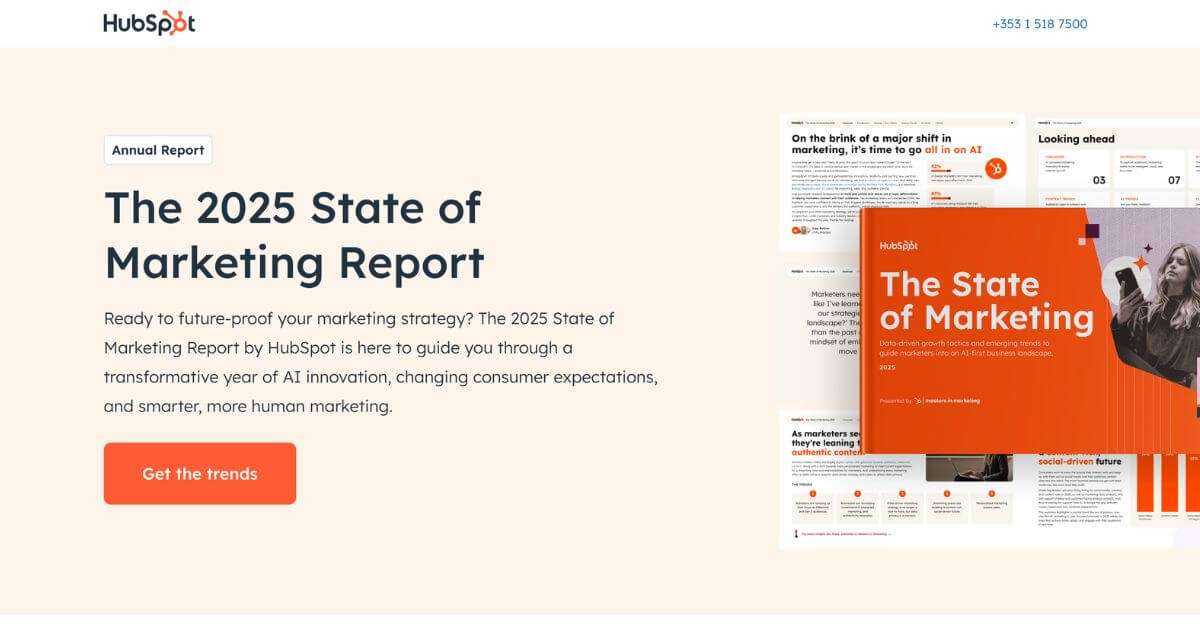
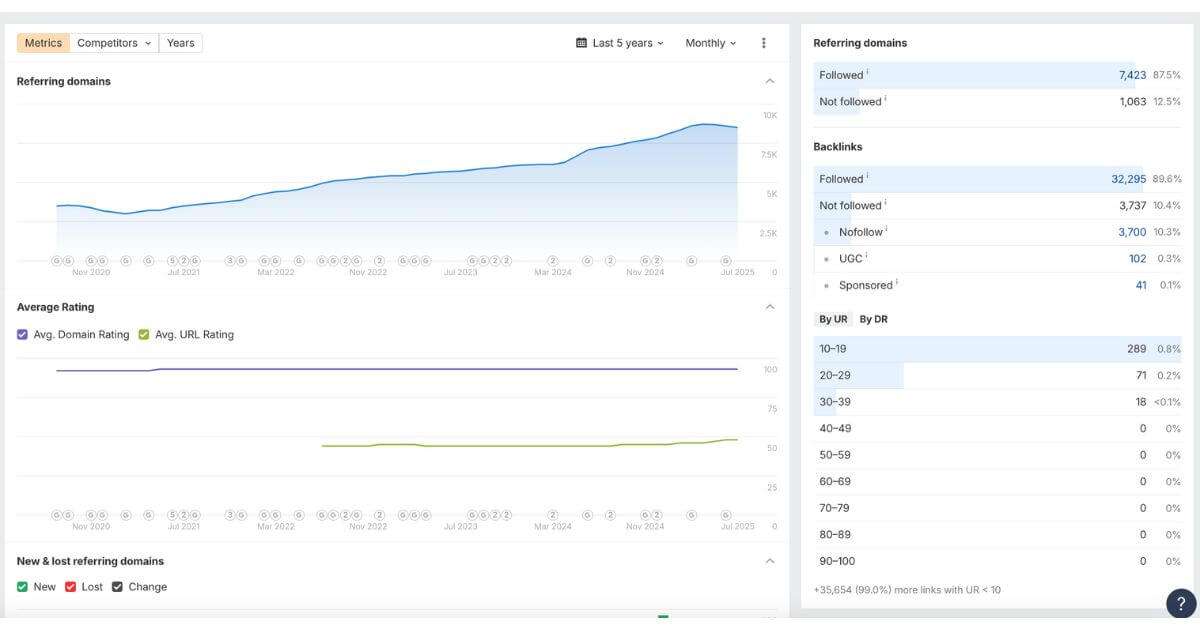
Every year, they release an in-depth report on the latest industry trends that attracts hundreds of backlinks from across the web. Take a look at the consistent upward trend in backlinks to the report’s landing page (Ahrefs data)—steady growth without any major dips. And nearly 90% of the links are dofollow links:
3. Leveraging Niche Edits Link Building
From what I’ve seen working for SaaS websites, niche edits have become the most popular SEO link building strategy, and for a good reason.
The idea is pretty straightforward:
This is a targeted link building strategy. Instead of asking someone to create entirely new content, you’re reaching out to sites that already have published articles and suggesting they add a link to one of your pages.
You need to find content that’s relevant to what you do, so when they add your link, it feels like a natural fit rather than something forced.
The most popular niche edits methods are:
- Broken link building: Find broken (404 Not Found) links on relevant websites and suggest replacing them with a link to your content.
- Unlinked brand mentions: Look for instances where your brand is mentioned but not linked, and request that the site owner add a link.
- Resource page links: Reach out to websites that list useful resources and request the inclusion of your content as a valuable reference.
Because this strategy can be tricky, I’ve crafted a clear, step-by-step niche edits link building guide to help you navigate and understand this advanced strategy.
4. Affiliate Marketing
Affiliate marketing is another strategy that many SaaS companies use. While it’s not necessarily an SEO backlinking strategy, it can still bring you valuable links in an authentic way.
The goal is to provide access to your tool for an industry influencer or tech blogger in exchange for an honest review of your product. In the published review article, they include a link back to your website. This method is often referred to as product review link building.
Just like in this article I stumbled across online. The blue link you see below is an affiliate link.
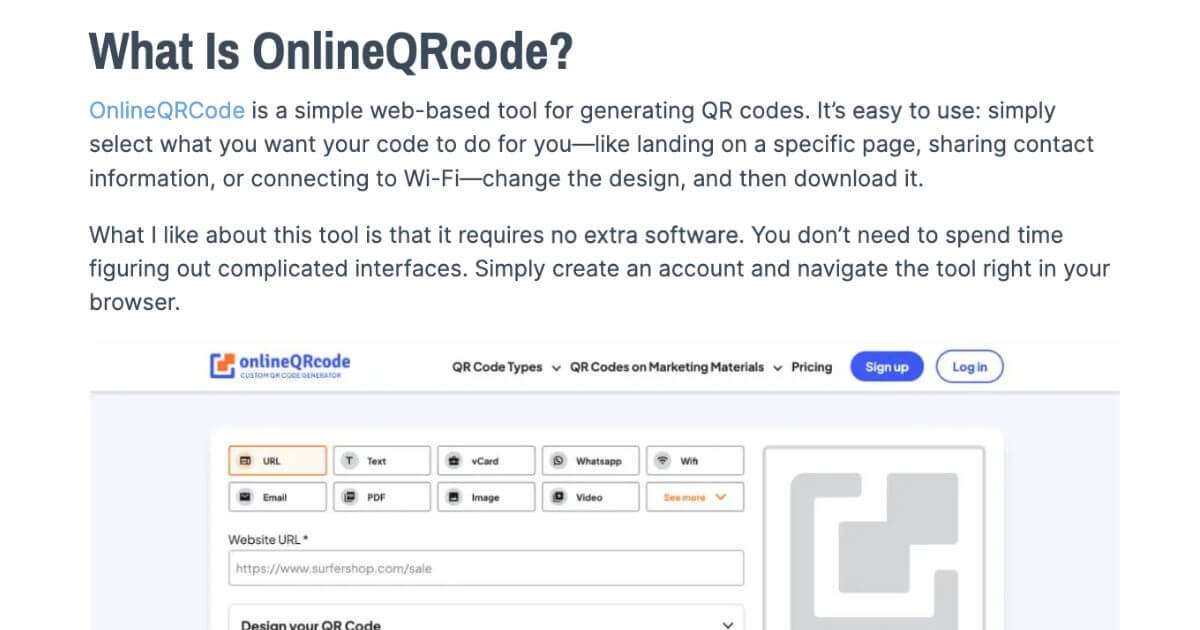
What I like about this approach is that it feels natural. The backlinks come from genuine insights from someone who has tried and tested your product, which means they carry certain topical relevance and credibility.
If you are already doing affiliate marketing, here’s a tip:
Make sure your marketing team keeps track of those links. They are often more valuable than people realize.
5. Directories and Review Websites
The “try before you buy” method doesn’t always apply to SaaS products. Therefore, your potential customers rely on social proof to feel confident about their choice.
For instance, take a look at this Semrush profile from G2:
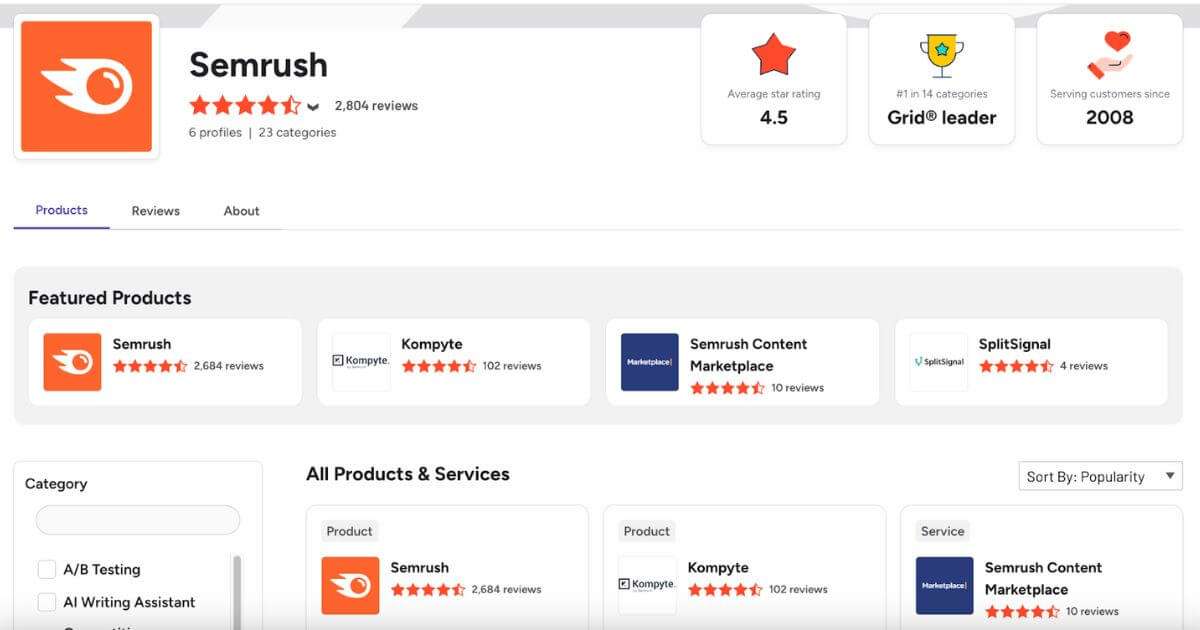
Nearly three thousand reviews and an average rating of 4.5 stars. It gives you confidence that the product is solid, right?
I always found it fascinating how this mirrors the way Google evaluates websites. Just like your prospects look for trusted reviews and testimonials, Google looks for signals from authoritative sites to determine how much to trust your site.
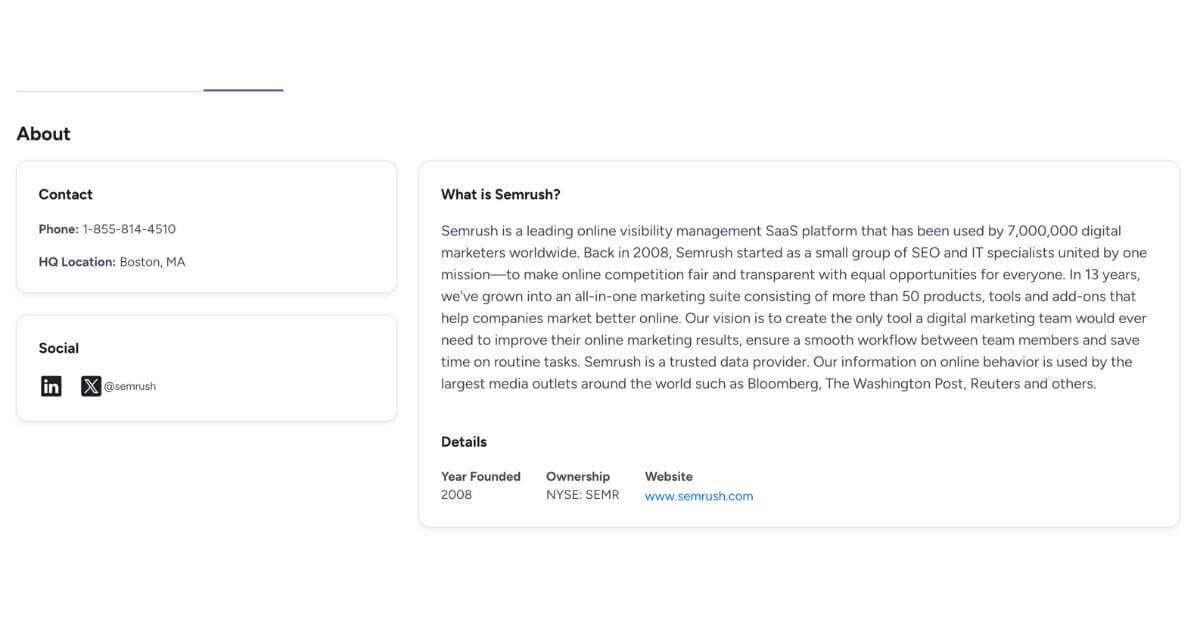
That’s why getting featured on websites like G2, Capterra, GetApp, and Product Hunt should be part of your link building ideas. They serve as that crucial “social proof” for both your customers and search engines, and almost always include a backlink pointing to a business website.
Here’s an example from the About page on G2:
Besides, these review sites often rank high in search results themselves. So, having a strong presence there means more visibility with prospects researching solutions in your space and valuable referral traffic.
6. Digital PR
Digital PR link building is an effective method for securing backlinks from high-authority media outlets. The benefits of digital PR go beyond backlinks, as you become a trusted expert quoted by reputable sources.
There are two main ways to approach digital PR:
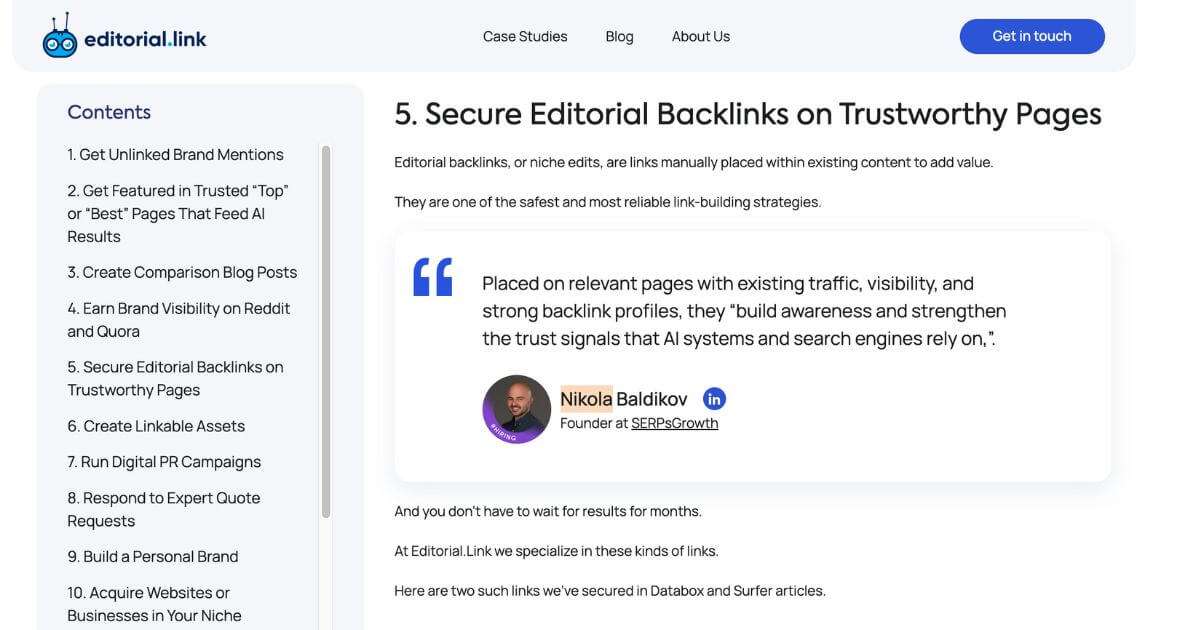
- Reactive PR is where you respond to journalists’ queries through platforms like Qwoted, Featured, and Help a B2B Writer. These platforms connect you directly to the writers who are looking for expert opinions, and it’s a great way to earn high-authority backlinks. Here is a quick example for you:
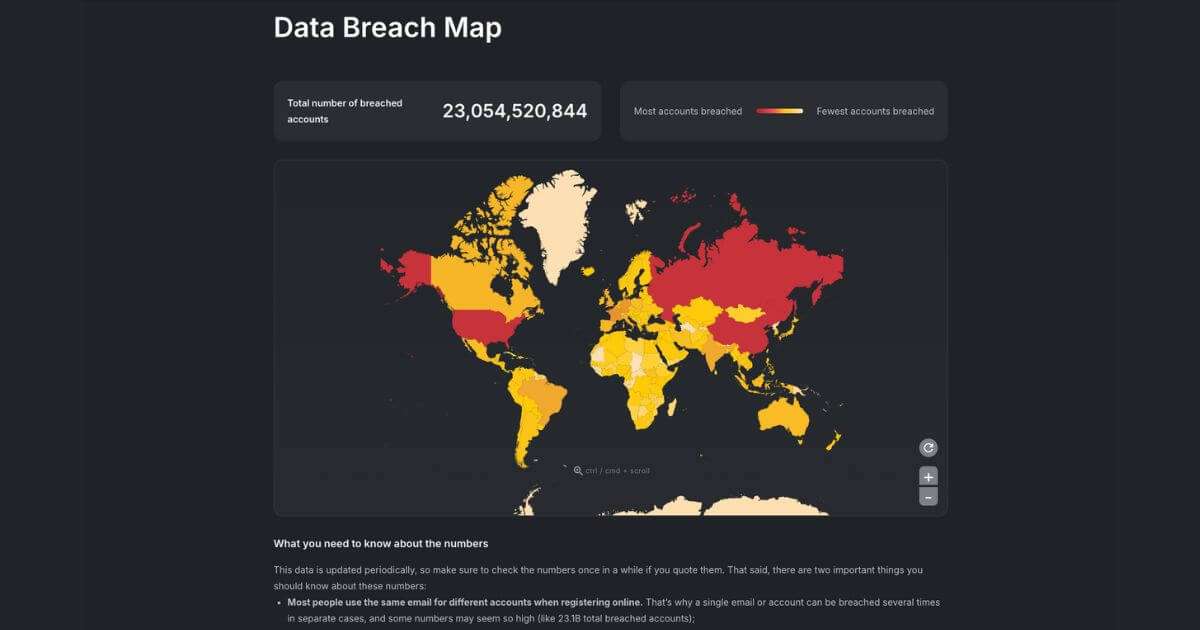
- Proactive PR, on the other hand, involves taking the initiative and pitching a newsworthy story to journalists. This could be unique insights, a fascinating industry observation, or some other report that journalists can’t say No to. Take this campaign by Surfshark, for example: Data Breach Statistics. This single page generated backlinks from 684 referring domains, according to Ahrefs:
Both link building methods work exceptionally well for SaaS websites, but it’s important to find the right journalists who will be interested in your insights.
For this reason, you might consider working with a SaaS link building agency that specializes in digital PR.
SaaS Company Success Story
Over 10 months, we helped a SaaS client earn 60 editorial placements and brand mentions through a targeted HARO campaign. We sent 396 pitches and secured 33 dofollow links, 4 nofollow links, and 23 brand mentions, including 9 DR 90+ placements on sites such as Forbes, GoDaddy, Fast Company, Entrepreneur, and HubSpot.
The campaign achieved a 15% pitch selection rate and strengthened the client’s backlink profile, brand visibility, and online authority.
7. Strategic Partnerships and Co-Marketing
This approach is a great example of B2B link building strategies for SaaS, especially for companies looking to build meaningful, long-term relationships. At the same time, this strategy may not be suitable for all SaaS businesses, as it requires a more integrated marketing approach and collaborations. However, when done right, it can earn you high domain authority links.
The idea is to partner with a complementary SaaS provider. Think about the companies that serve the same audiences but are not necessarily your direct competitors.
When you collaborate on joint initiatives, like co-authored guides or shared webinars, you create opportunities for others to link to you. Moreover, these partnerships are effective because they don’t feel transactional. Instead, they create a natural interest around your collaboration, resulting in completely organic backlinks.
8. CEO Interviews and Podcasting
Sharing your expertise through interviews and podcasts not only helps develop your personal brand but also earns valuable links.
What I like about this method is that it generates links from several sources. You’ll typically get a link from the host’s website when they publish episode notes. Additionally, episode descriptions on major podcast platforms, such as Apple Podcasts and YouTube, often include links back to your company.
9. Outreach and Relationship Building
Reaching out to website owners or site managers is the foundation of 90% of all link building, which is why it’s so important to focus on building long-term relationships. This directly influences the success of your SaaS backlinks placements.
In fact, the majority of the links I obtained over the years were due to the network of contacts I’ve built throughout my SEO career. I always prioritize a personal and value-driven approach over a generic mass email sendout, and this is what drives sustainable results for me.
10. Listicles
Listicles have become increasingly important in today’s SEO landscape, especially with the rise of AI search results. When people ask AI tools questions like What are the best project management tools?, these systems often pull information directly from the web.
This AI Overviews result demonstrates my point:
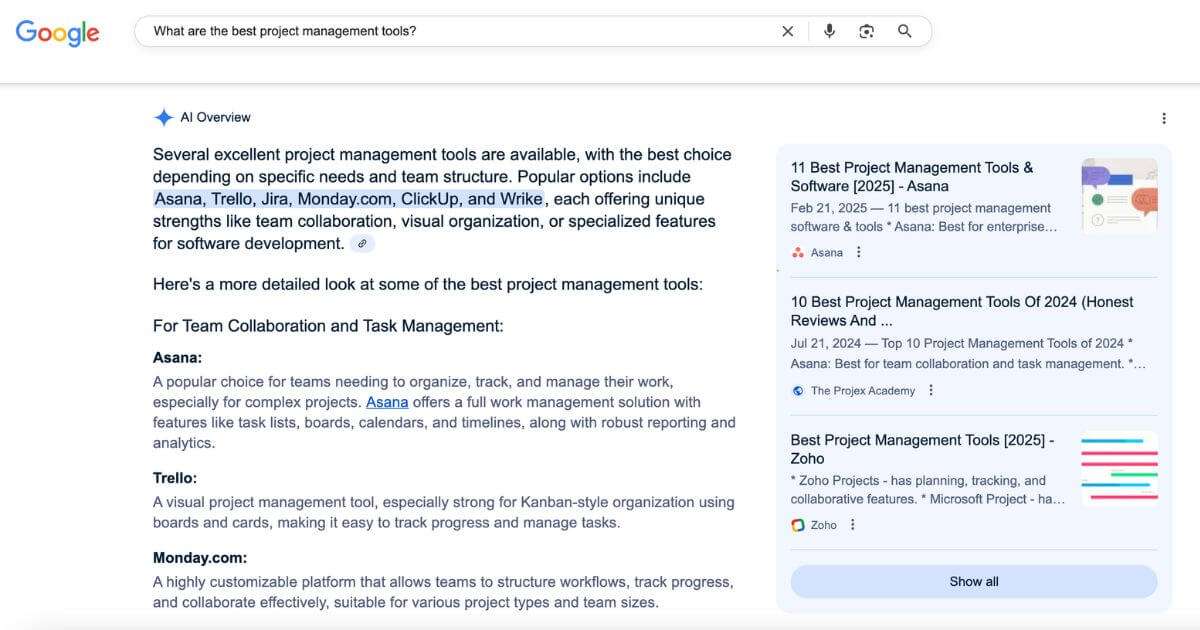
If you look at the blue content boxes, it even shows the listicles the AI used to generate the results.
For getting the best out of this SaaS backlink building strategy, your focus should be on getting included in listicles on authoritative sites within your industry.
These link placements work particularly well because they provide context around your product, explain why you’re valuable, and often include direct links to your website. Additionally, when AI systems reference these lists, they amplify your reach to new traffic sources.
Common Mistakes and Pitfalls to Avoid
Even experienced marketers can fall into link building traps that hurt their SEO efforts. Here are the most common mistakes I see SaaS companies make:
- Over-reliance on outdated tactics: What worked in the past might harm your rankings today. I’m referring to tactics such as forum comment spam, keyword-stuffed anchor text, and blog networks. Search engines constantly evolve their algorithms, so sticking to old playbooks can backfire.
- Ignoring relevance in favor of DR: It’s tempting to chase numbers, but 10 high-quality, relevant links will always outperform 100 random, low-quality ones.
- Building links only to the main page: Your homepage shouldn’t get all the attention. Product pages, blog posts, and resource pages often convert better and feel more natural to link to.
- Using private blog networks (PBNs) and link farms: PBNs are networks of sites owned by one entity, built to link to a main site and boost its search rank. Link farms are low-quality sites that heavily link to each other to manipulate search results. These black hat tactics might seem like shortcuts, but they carry serious risks. Search engines can detect them and apply penalties that damage or even wipe out your rankings.
- Focusing only on one link building tactic: Putting all your eggs in one basket makes your link profile look unnatural and leaves you vulnerable if that strategy stops working.
- Building links from low-quality directories: Those spammy directory submissions do more harm than good and can actually signal to search engines that you’re trying to manipulate rankings.
What the Experts Say
I reached out to industry experts to gather their insights on the most effective strategies for link building for SaaS websites. From tested strategies to lessons learned, here’s what they had to share:
“There was a B2B SaaS startup we worked with that had very little content, but a great free tool was buried in their UX. We pulled it out, created a dedicated landing page, and promoted it to comparison sites, bloggers, and free tool roundups. It earned 70+ referring domains over six months, mostly without paid placement. That page alone began ranking for multiple long-tail queries, and within a year, their monthly signups grew 41% without a major paid push.” — Robin Fishley, SEO Director, DesignRush
“When we started out, we barely spent anything on ads. Link building around competitor research and affiliate marketing keywords helped us gain authority quickly.
One cool campaign was a backlink push around a Top 50 Native Ad Examples blog post. It earned links from industry blogs, and even our competitors. That one page drove 20% of our trial signups for three months straight – all from organic search.” — Hiren Shah, Founder, Anstrex
“One strategy that worked really well for a SaaS client of mine was building “integration pages” with popular tools they connected with — think Slack, Notion, HubSpot. We reached out to those companies’ content or partnership teams and pitched co-marketing or backlink swaps tied to those integrations. Within four months, we landed 27 backlinks from highly relevant domains (DR 60+), and the client saw a 38% increase in organic traffic to those pages.
It wasn’t instant; some brands ignored us, and a few said no. But the ones who said yes drove serious authority and referral traffic. I’ve seen a SaaS product double its keyword footprint in six months using only this and a few well-timed HARO wins.
Focus on relationship-driven link building. If your product plays well with others, use that as a natural reason to connect — it’s a lot easier than begging for random guest post spots.“ — Jack Johnson, Operations Director, Rhino Rank
Wrap Up
Having worked with SaaS websites, I can confidently say that link building for SaaS brands comes down to focusing on developing partnerships that lead to high-quality link opportunities over time.
The SaaS landscape is very competitive, which is why a solid link building strategy can set you apart.
Start with one or two methods that fit your current resources, track your progress, and gradually scale your efforts as you see results. If you need to scale faster or lack the internal resources to execute these strategies, consider outsourcing your backlink building to a specialized SaaS link building agency.