

As a freelancer, you need a consistent stream of clients to keep your business afloat, and one way to achieve this is through SEO (search engine optimization).
I’m Nikola, an SEO expert with over 10 years of experience, and this guide on SEO for freelancers will cover the steps you need to succeed.
I’m not talking about a complicated strategy. This is a simple, no-fluff SEO approach designed to help clients find you.
So, if you’re ready to build a sustainable freelance business, keep reading.
Highlights
- SEO can help you attract a steady stream of clients.
- Keyword research is the foundation of a successful SEO strategy.
- On-page and off-page SEO are both crucial for ranking high in search results.
- Local SEO is mandatory for freelancers targeting a specific area.
- Consistency is key to seeing long-term results from your SEO efforts.
What Is SEO and Why Should You Care?
Search engine optimization (SEO) is the process of optimizing your website to rank higher in search engine results. Think of it as a digital breadcrumb trail that leads potential clients right to your digital doorstep.
You see, when someone needs a freelance writer, web designer, or consultant, where do they go first?
That’s right. Google search.
They type in what they need, and Google presents them with a list of options. Your goal, as a savvy freelancer, is to be at the top of that list.
Why?
Because the top results get the lion’s share of the clicks. More clicks mean more website traffic, and more website traffic means more potential clients. It’s a simple, yet powerful, equation.
For over a decade, I’ve seen how a solid search engine optimization strategy can transform a freelance business from struggling to thriving.
It’s the difference between constantly hunting for your next gig and having clients come to you, ready to pay your rates. This is the power of organic traffic.
It’s consistent, it’s targeted, and best of all, it’s free. This is the ultimate SEO guide for freelancers.
SEO Basics for Freelancers
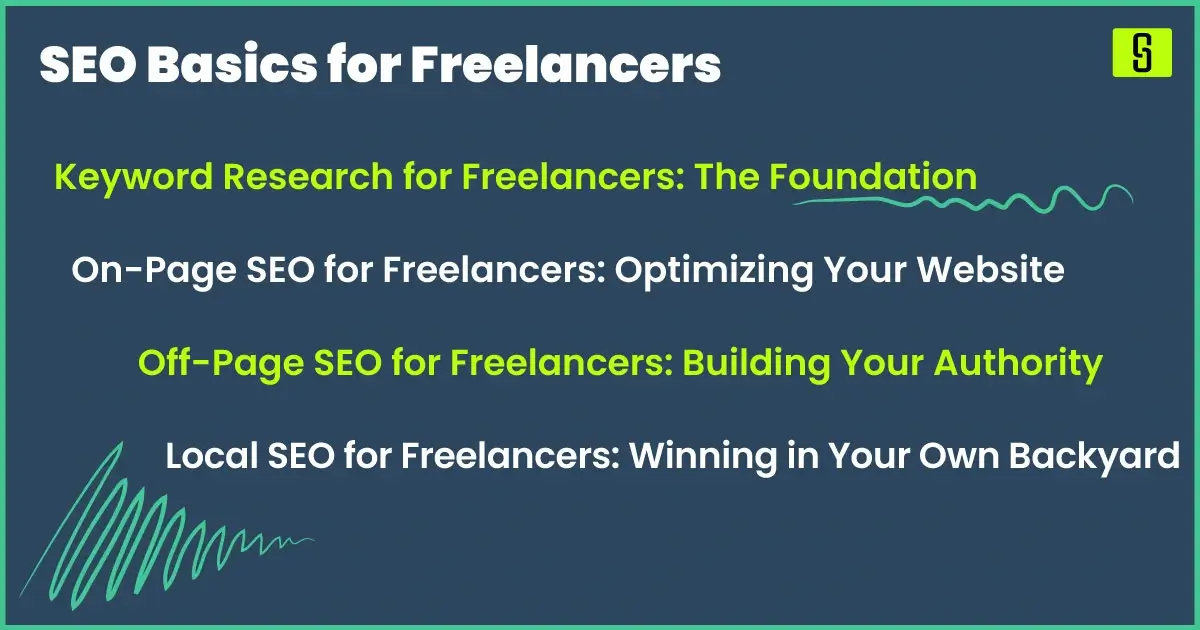
Whether you’re just starting or looking to refine your current marketing strategy, these SEO basics are timeless:
Keyword Research for Freelancers: The Foundation
Everything in SEO starts with keywords. These are the words and phrases your potential clients are typing into search engines.
If you can figure out what those keywords are, you can create content that answers their questions and solves their problems.
Here’s a simple process for conducting keyword research:
- Brainstorm a list of topics related to your services: Think about the problems you solve for your clients. What are their biggest challenges? What questions do they ask you most often?
- Use SEO tools to expand your list and find keyword ideas: There are a ton of great SEO tools for freelancers out there, both free and paid. Some of my favorites include Ahrefs, Semrush, and Ubersuggest. These tools will show you how many people are searching for a particular keyword, how difficult it is to rank for, and related keywords you might not have thought of.
- Focus on long-tail keywords: These are longer, more specific phrases that people are searching for. For example, instead of trying to rank for a broad keyword like “freelance writer,” you could target a long-tail keyword like “freelance writer for SaaS companies.” Long-tail keywords are less competitive and tend to convert better because they’re more specific.
- Analyze your competitors: Take a look at the websites of other freelancers in your niche who are ranking well in search results. What keywords are they targeting? What kind of content are they creating? This can give you a ton of ideas for your own SEO strategy.
On-Page SEO for Freelancers: Optimizing Your Website
Once you have your list of keywords, it’s time to start optimizing your website. This is known as on-page SEO for freelancers. It involves making changes to your website’s content and code to make it more search engine-friendly.
Here are some of the most important on-page SEO factors to focus on:
- Title tags: This is the title of your page that appears in search results and at the top of your browser window. It should be catchy, include your main keyword, and be no more than 60 characters long.
- Meta descriptions: This is the short description of your page that appears below the title in search results. It should be compelling, include your main keyword, and be no more than 160 characters long.
- Header tags (H1, H2, H3): These are the headings and subheadings on your page. Your main title should be an H1 tag, and your subheadings should be H2s and H3s. Include your keywords in your headings where it makes sense.
- Content: Your content should be high-quality, informative, and engaging. It should be well-written, easy to read, and provide value to your readers. Make sure to include your keywords throughout your content, but don’t overdo it. Keyword stuffing is a big no-no. For more on creating content that ranks, check out our guide to building an SEO-friendly website.
- Images: Optimize your images by using descriptive file names and alt text. This helps search engines understand what your images are about and can also help you rank in image search results.
- Internal Linking: Link to other relevant pages on your website within your content. This helps search engines understand the structure of your website and can also help keep visitors on your site longer.
Off-Page SEO for Freelancers: Building Your Authority
Off-page SEO for freelancers is all about building your website’s authority and credibility. It involves getting other websites to link to yours, which is a signal to search engines that your website is a trusted resource.
Here are some of the most effective off-page SEO strategies:
- Guest blogging: Write articles for other websites in your niche and include a link back to your own website in your author bio. This is a great way to get high-quality backlinks and get your name in front of a new audience.
- Broken link building: Find websites in your niche that have broken links, and then reach out to the website owner and suggest they replace the broken link with a link to a relevant piece of content on your own website.
- Social media: Share your content on social media and engage with other users in your niche. While social media signals aren’t a direct ranking factor, they can help you get more eyes on your content and can lead to more backlinks and website traffic.
- HARO (Help a Reporter Out): These are free services, such as Qwoted, Source Bottle, and Help a B2B Writer, that connect journalists with sources for their stories. You can sign up for them, and if you see a query that’s relevant to your expertise, you can respond and potentially get a mention and a backlink in a major publication.
Local SEO for Freelancers: Winning in Your Own Backyard
If you’re a freelancer who serves a specific geographic area, then local SEO is a must. It involves optimizing your website to rank for location-based keywords, such as “photographer in New York City.”
Here are some of the most important local SEO factors to focus on:
- Google Business Profile: This is a free listing that appears in Google search results and on Google Maps. Make sure to claim and optimize your Google Business Profile with accurate information about your business, including your name, address, phone number, and website.
- Local citations: These are mentions of your business’s name, address, and phone number on other websites, such as online directories and review sites. Make sure your citations are consistent across all platforms.
- Online reviews: Encourage your clients to leave you reviews on your Google Business Profile and other review sites. Positive reviews can help you rank higher in local search results and can also help you build trust with potential clients.
Your SEO Checklist for Freelancers
I know we’ve covered a lot of ground, so here’s a simple SEO checklist for freelancers to help you stay on track:
- Conduct in-depth keyword research to understand what your ideal clients are searching for.
- Optimize your website’s on-page SEO, including title tags, meta descriptions, and header tags.
- Create high-quality, in-depth content that answers your clients’ questions and solves their problems.
- Build high-quality backlinks to your website through guest blogging, broken link building, and other off-page SEO strategies.
- If you serve a specific geographic area, focus on local SEO for freelancers by optimizing your Google Business Profile and gathering reviews.
- Use SEO tools for freelancers like Ahrefs, Semrush, or Ubersuggest to track your progress, identify new keyword opportunities, and monitor your competitors.
- Regularly update your content to reflect industry changes and keep your web pages fresh for search engines.
- Interlink your blog posts to relevant resources. For example, I would link this article to our SEO tips for small business and commercial intent keywords guides because they are related topics.
- Analyze your website’s performance using Google Analytics to understand which pages drive the most website traffic and conversions.
- Refine your SEO strategies for freelancers based on data, not guesswork.
How to Learn SEO as a Freelancer
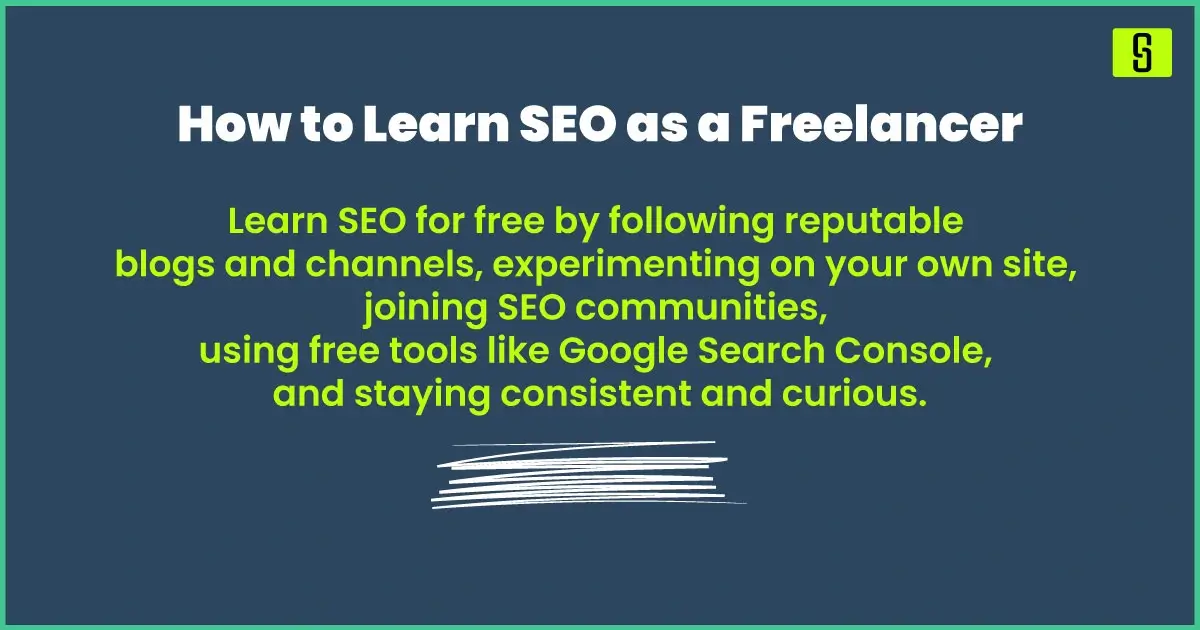
The truth is, you don’t need a degree or a massive marketing budget to start. My own journey began with free resources and lots of trial and error. Here’s how you can get started, no matter your experience level.
First, immerse yourself in reputable SEO blogs and YouTube channels. Search Engine Land, Backlinko, and Search Engine Journal sites are filled with actionable advice.
Second, experiment with your own website SEO. Tweak your on-page SEO elements, publish new content, and watch how Google responds.
Third, get involved in online communities—Reddit’s r/SEO and niche Facebook and LinkedIn groups are goldmines for real-world tips.
Don’t forget to test out different SEO tools for freelancers. Even free versions of tools like Google Search Console can reveal valuable insights about your web pages and search engine rankings.
Consistent effort and curiosity will set you apart from the average freelance SEO.
Essential SEO Tactics Every Freelancer Should Know
To stand out in a crowded market, you need to embrace proven SEO tactics. Let’s break down the essentials:
- Match search intent: Always create content that matches the search intent of your prospective clients. If they’re looking for a solution, your article should offer it clearly and quickly.
- Optimize for featured snippets: Answer common questions in short, direct sentences to increase your chances of being featured at the top of search results.
- Use internal and external links: Link to authoritative websites and relevant resources on your own site. This demonstrates expertise and guides users deeper into your content.
- Prioritize user experience: A fast, mobile-friendly freelance website keeps visitors engaged. Clean web design, easy navigation, and clear calls to action make a huge difference in search engine rankings.
- Harness social media: Share your best content on LinkedIn, Twitter, and industry-specific forums. While social signals aren’t a direct ranking factor, they drive traffic and can lead to valuable backlinks.
SEO for Freelance Business: Building Your Personal Brand
Here’s what I’ve learned:
Clients want to work with freelancers who provide value through their content and demonstrate a deep understanding of their industry. That’s why every piece of content you publish should speak directly to your ideal client’s needs.
Sprinkle your expertise in every blog post.
For example, if you’re a freelance web designer, share case studies that highlight how your optimization improved a client’s website search rankings and user experience.
Remember, building brand awareness through SEO is a long-term strategy, but it pays off in higher rates, better clients, and a steady stream of inquiries.
Real-World SEO Strategies for Freelancers (From My Experience)
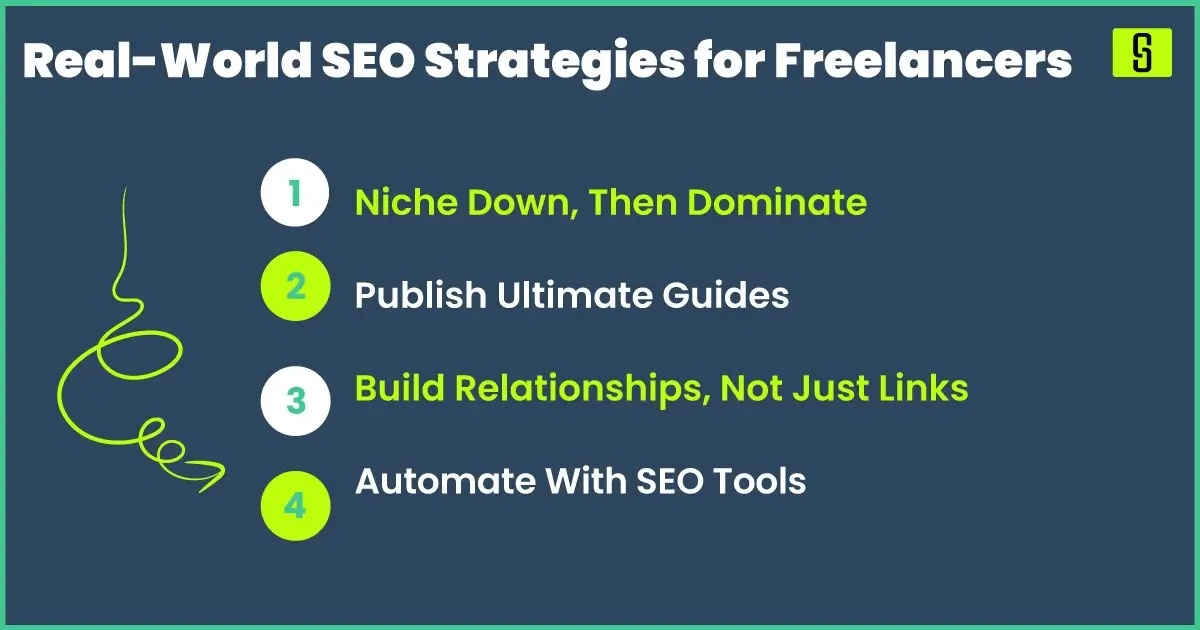
Here’s where I get personal. Over my 10 years as an SEO professional, a few strategies have consistently attracted the best clients:
1. Niche Down, Then Dominate
Instead of targeting broad keywords, I focus on niche markets—like SEO for SaaS startups or SEO for ecommerce. This approach helped me rank faster, get featured in niche directories, and land clients who truly value my expertise.
When you’re a generalist, you’re competing against everyone. By niching down, you drastically shrink your competition and increase your relevance for very specific search queries.
2. Publish Ultimate Guides
Long-form, in-depth guides (like this one) not only rank well but also get shared and referenced by others in the industry. Ultimate guides can land you multiple speaking invitations and guest post opportunities.
These cornerstone pieces of content act as powerful “link magnets,” attracting natural backlinks from other sites that want to reference a definitive resource. I always sprinkle relevant case studies and clear calls-to-action throughout my guides to convert interested readers into paying clients.
3. Build Relationships, Not Just Links
Networking with other freelancers, agency owners, and bloggers results in genuine backlinks, not just empty exchanges. These relationships also lead to referrals and collaborations.
I started investing time in genuine interaction, like actively participating in the same online communities and sharing their content. A link from someone who respects your work is far more powerful than one from a random exchange because it often comes with their implicit endorsement.
These professional friendships have become my number one source of high-quality client referrals.
4. Automate With SEO Tools
Tools like Google Search Console and Ahrefs saved me hours every week. I use them for technical audits, keyword tracking, and competitor analysis.
Instead of manually checking rankings, I set up automated reports that alerted me to important shifts. This automation frees up critical time, allowing me to focus less on tedious data collection and more on high-level strategy and client acquisition.
My Content-First Approach to SEO
Over the years, I’ve tried all sorts of SEO tactics and strategies. But the one thing that has consistently delivered the best results for my business is a content-first approach.
What does that mean?
It means I focus on creating content that my ideal clients are actually searching for. I write blog posts and guides that answer their questions, solve their problems, and position me as the go-to expert in my field.
Here’s why this approach works so well:
- It builds trust: When you consistently create valuable content, you build trust with your audience. They start to see you as a credible source of information, and when they’re ready to hire someone with your skills, you’ll be the first person they think of.
- It attracts high-quality clients: The kind of clients who are willing to invest in high-quality services are also the kind of clients who do their research. They’re not just looking for the cheapest option; they’re looking for an expert who can help them achieve their goals. By creating in-depth, valuable content, you’ll attract these types of clients.
- It’s a long-term asset: A blog post you write today can continue to attract clients for years to come. It’s a long-term asset that will continue to pay dividends long after you’ve hit the “publish” button.
For more on this, check out my article on using SEO as a marketing channel.
Wrap Up
SEO for freelancers is your ticket to a steady pipeline of high-quality clients, higher rates, and a business that grows on your terms.
By focusing on keyword research, on-page and off-page SEO, local SEO, and consistently publishing valuable content, you’ll build authority and brand awareness in your niche.
Remember, real results come from taking action, refining your approach, and sticking with it long-term. With the right strategies and tools, you can make your freelance website a client-generating machine.
FAQ
I’m a freelancer with no SEO experience. Where do I even begin?
The first step is to ensure your own online presence is optimized. Focus on creating a professional portfolio website. Learn the fundamentals of keyword research to understand what potential clients are searching for. Begin by reading reputable sources like the Google Search Central blog, Moz’s Beginner’s Guide to SEO, or Ahrefs’ blog to build a solid foundation.
Do I really need a website, or is a strong social media presence enough?
You absolutely need a professional website. While social media is excellent for networking and brand building, your website is an asset you own and control. It serves as your digital storefront, portfolio, and the central hub for all your marketing efforts. Search engines rank websites, not social media profiles, making a website critical for long-term organic growth.
How much does it cost to get started with SEO as a freelancer?
The initial cost can be very low. Many essential SEO tools offer free versions or trials that are perfect for beginners. For example, you can use Google Keyword Planner for free, and many website platforms like WordPress have free SEO plugins (e.g., Yoast SEO, Rank Math). Your primary investment will be your time to learn and implement best practices.


