What makes unlinked brand mentions so powerful is that you’re not starting from scratch—someone has already talked about your brand, product, or service. All that’s missing is the link.
I’m Elena, and I’ve been doing link building for over 5 years. During that time, I’ve used this method countless times to secure backlinks for clients across different industries.
In this article, I’ll walk you through everything you need to know:
- Why unlinked mentions matter
- How to find them using free and paid methods
- How to turn them into high-authority backlinks
- The best practices I’ve learned through trial and error
By the end, you’ll have a complete playbook you can apply to your own site.
Highlights
- Unlinked brand mentions are easy, white-hat link building opportunities you can reclaim with simple outreach.
- Mentions still build awareness, relevance signals, and AI search visibility.
- Find them with tools like Ahrefs, Semrush, or Google Alerts, or search operators.
- Prioritize high-authority, niche-relevant sites for the biggest SEO impact.
- Keep outreach short, polite, and helpful—make it easy for the publisher to say yes.
- Monitor mentions regularly; consistent effort leads to steady backlink growth.
What Are Unlinked Brand Mentions?
Unlinked brand mentions are a type of niche edits link building strategy.
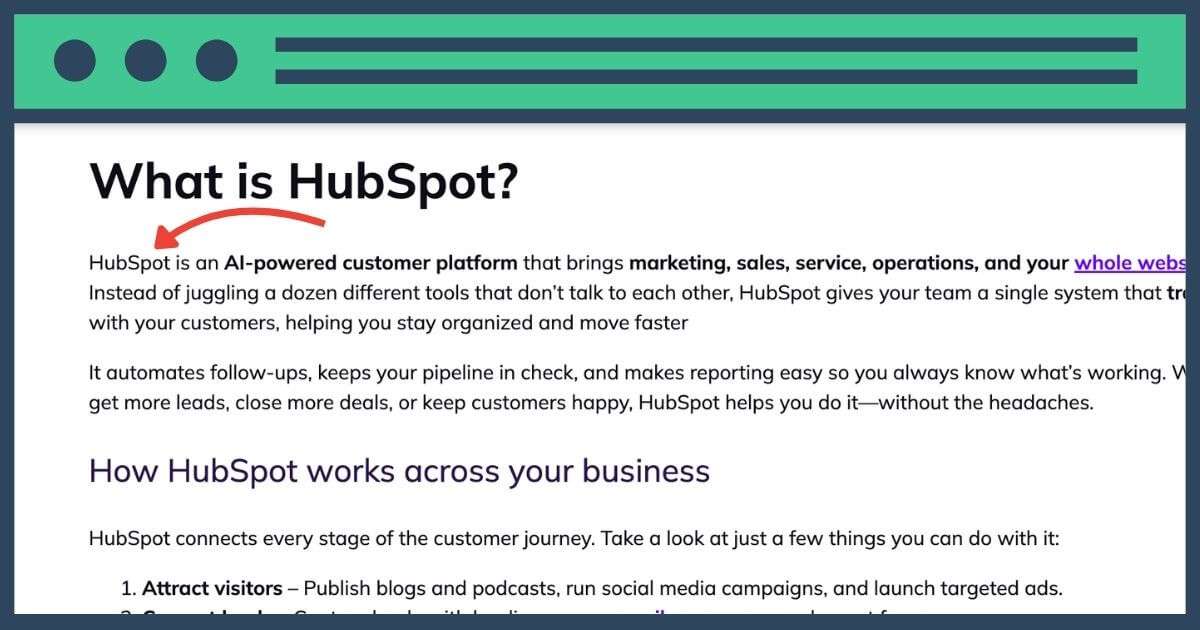
It refers to instances where a publication mentions a brand, product, or service without including a hyperlink that links back to the brand’s official website.
For example, here’s a case where a publication mentioned the marketing platform HubSpot but didn’t link back to their website:
In link building, unlinked mentions are seen as low-hanging fruit.
It’s perfect because it doesn’t go against Google’s guidelines, which makes it a white hat link building strategy. And, with the right outreach, you can transform them into high-quality backlinks.
Why Do Unlinked Brand Mentions Matter?
There was a time when brand mentions in SEO were seen as worthless unless they included an outbound link to your website. However, the algorithms and the ways Google evaluates content have changed significantly over time.
And let’s not forget that AI search experiences have entered the scene, too.
So, here is why unlinked mentions are still valuable even though they don’t have hyperlinks:
1. They Raise Brand Awareness
Unlinked brand mentions still get your name out there. A reader might not click through on the spot, but seeing your brand in a trusted publication builds brand familiarity.
2. Search Engines Now Look Beyond Hyperlinks
Search engines nowadays process context, co-citations, and entity relationships. When your brand keeps showing up in authoritative sources alongside industry keywords, it reinforces your relevance. Even if there’s no backlink.
In other words, mentions are part of the digital footprints that Google uses to understand who’s credible in a niche.
3. Higher Chances of Appearing in AI Search Results
This is the newest and, I would even say, the biggest discovery in the SEO community.
AI-driven search results—like Google Search Generative Experience, Perplexity, or ChatGPT’s browsing—aren’t built on backlinks alone. They use the data they were trained on (including the information they find online), so brand mentions help these systems recognize and understand your brand.
Research on brand mentions in LLMs indicates that the popularity of a brand leads to mentions in AI Chatbots. Another study shows that branded web mentions correspond with higher brand visibility in AI Overviews.
So, it’s becoming more obvious that the more your brand is referenced across the web, the higher your chances of being surfaced in AI summaries and answers.
How to Find Unlinked Brand Mentions
So, what are the best ways to discover unlinked brand mentions?
I break it down into three categories:
- Monitoring tools
- Search operators
- Social media tracking
Each plays a different role, but together they’ll cover 90% of your opportunities.
1. Use Brand Monitoring Tools and Alerts
These keep you updated when new mentions pop up, so you can react quickly.
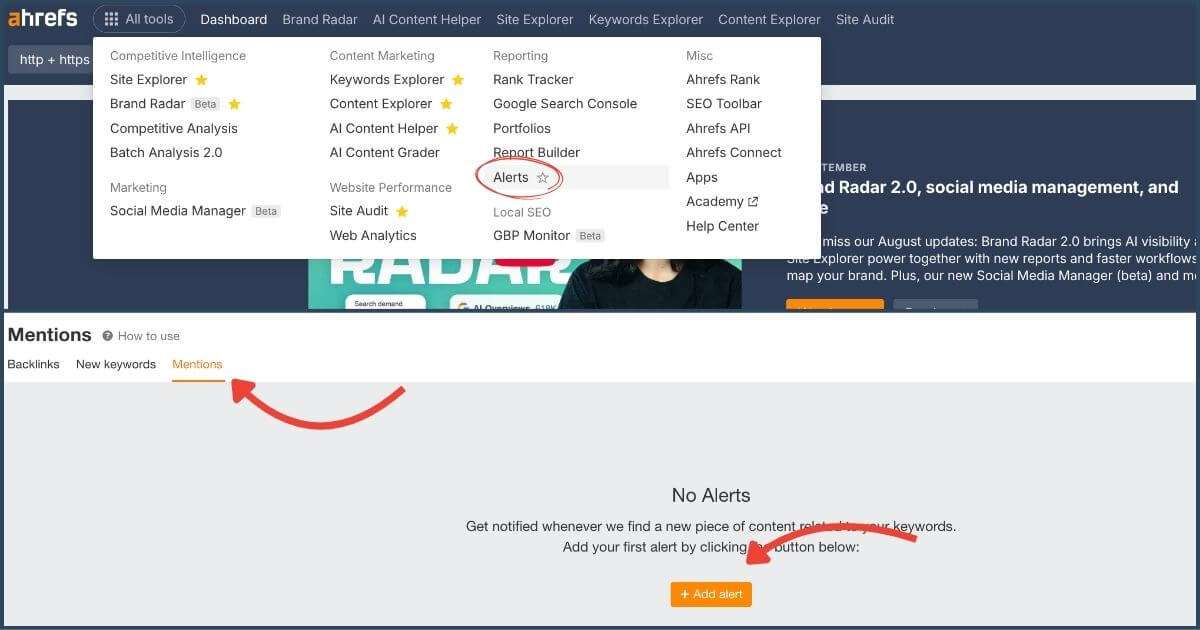
Finding Unlinked Mentions Using Ahrefs Alerts
You can easily find unlinked brand mentions with Ahrefs. The process is straightforward and makes for a quick win in your link building workflow.
It’s one of my go-to methods, though there are a few other approaches I’ll cover later.
- Go to Alerts, then Mentions.
- Click Add Alerts and enter your brand name (and variations).
- Choose frequency (daily or weekly).
- You’ll get an email every time your brand is mentioned online.
Pro tip:
Add product names and even common misspellings—you’d be surprised how often those turn up.
Finding Unlinked Brand Mentions Using Semrush
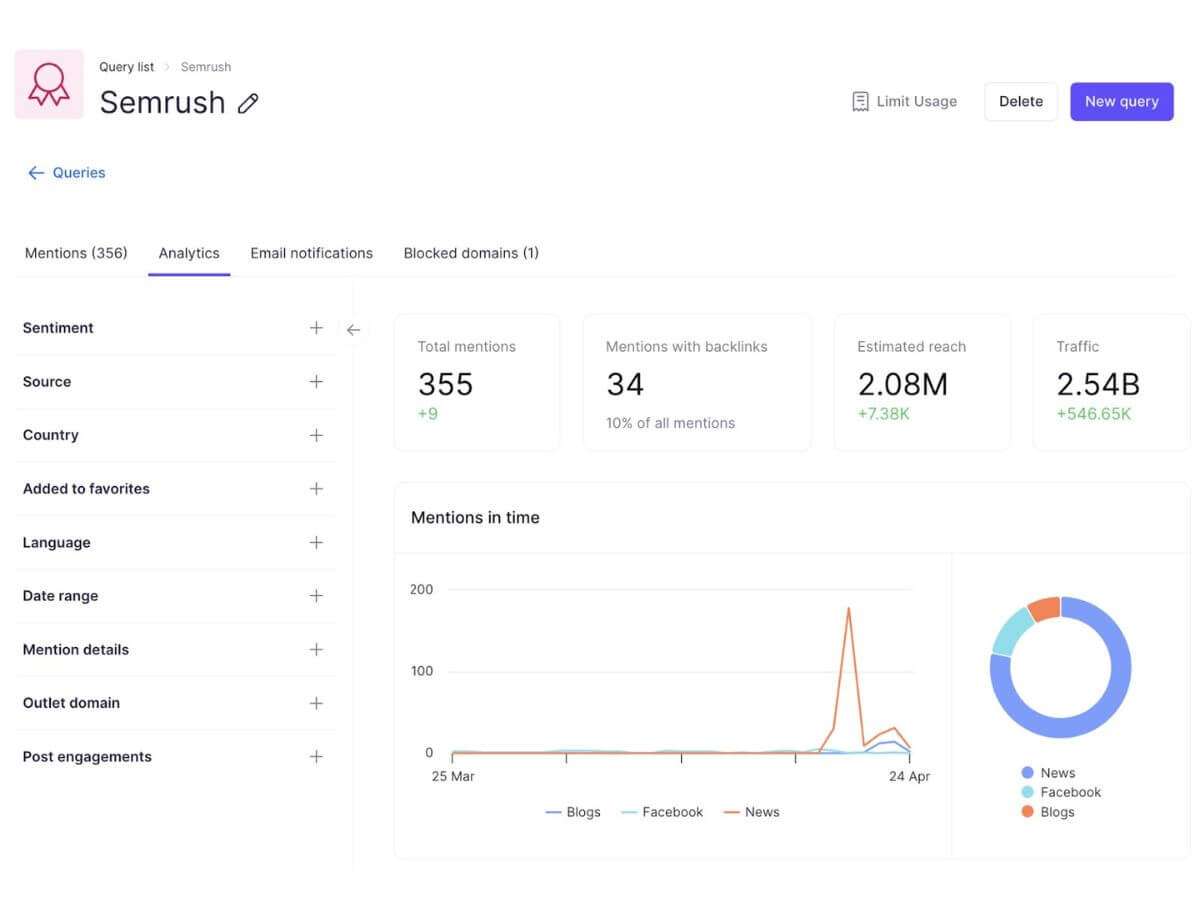
Source: semrush.com
You can also use Semrush Brand Monitoring Tool to keep track of your brand’s presence on web and receive notifications about new brand mentions.
- Go to Brand Monitoring and click “Get started”: This is where you’ll set up a new project.
- Choose “Brand” from the drop-down menu: You can enter your brand name, your site URL, and even product names. Add your email address to receive alerts when new mentions appear.
- Select your sources: Semrush lets you track mentions across news sites, blogs, forums, and social media. For SEO purposes, news and blog mentions usually hold the most value, but you can also add links to your social profiles to monitor mentions on platforms like Facebook, X, and Instagram.
- Set countries and languages (optional): You can narrow tracking to specific regions and languages if you only care about certain markets. If your brand is still small or global, leave this blank, and the tool will track everywhere.
- Review recent mentions: Semrush shows a preview of brand mentions from the last 30 days. To see the full list, click Create query.
- Analyze sentiment: Each mention is tagged as positive, neutral, or negative, so you can prioritize where to engage.
- Filter unlinked mentions: Go to Mention details. Under Backlinks, tick Without backlinks. This shows you the sites that mention your brand without linking to you.
- Export your list: Save results as a spreadsheet. This gives you a working file to combine with mentions found through other tools and methods, so everything lives in one place.
Finding Unlinked Mentions Using Google Alerts (Free Option)
This is the best alternative if you don’t want to spend your budget on expensive tools. Google Alerts is completely free, making it a good starting point for smaller brands.
The only downside is that the notifications can sometimes be limited. But if you set it up right, it can still catch valuable opportunities.
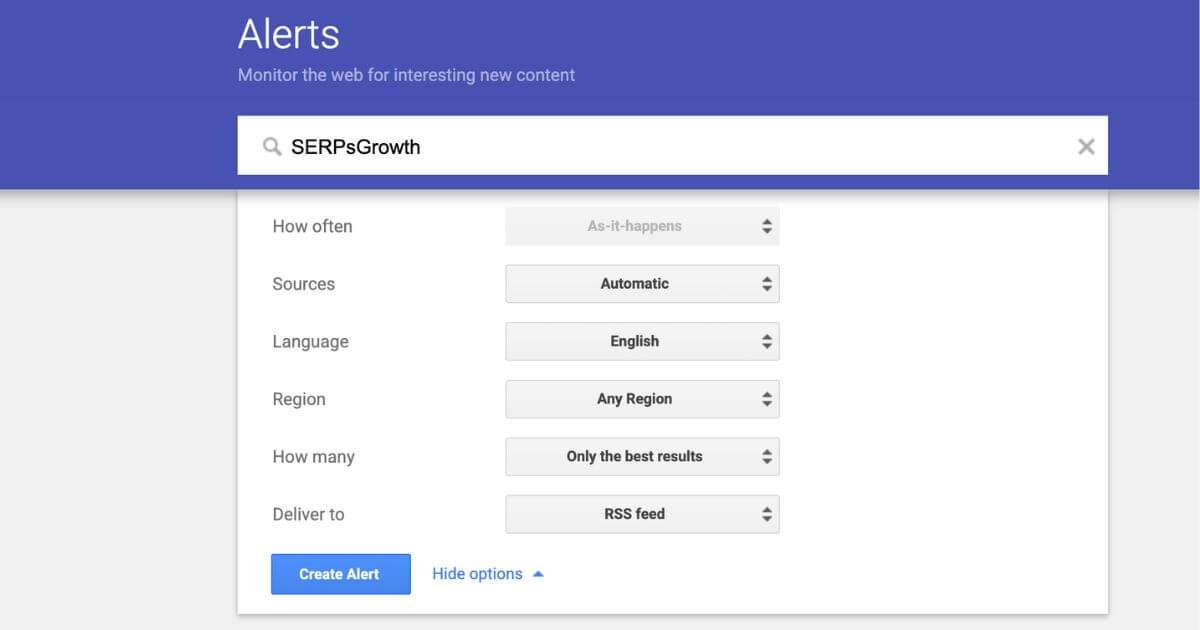
So, here is how you track brand mentions using Google Alerts:
- Go to Google Alerts: This is Google’s built-in tool for tracking new mentions across the web.
- Enter your brand name in the search bar: You can also set up alerts for product names, key team members or founders and common misspellings of your brand to help you catch mentions that don’t include your official brand name.
- Choose how often you want alerts: You can pick “As-it-happens,” “At most once a day,” or “At most once a week.” For active brands, I usually recommend daily—fast enough to act quickly, but not overwhelming.
- Choose the email you want the alerts to be delivered to: Google will notify you when new mentions go live.
2. Search Operators + Content Discovery
Tools help with new mentions. Search operators help you find all the ones already out there.
Finding Unlinked Brand Mentions Using Google Search Operators
Type this into Google: “Your Brand” -site:yourdomain.com. Like so:
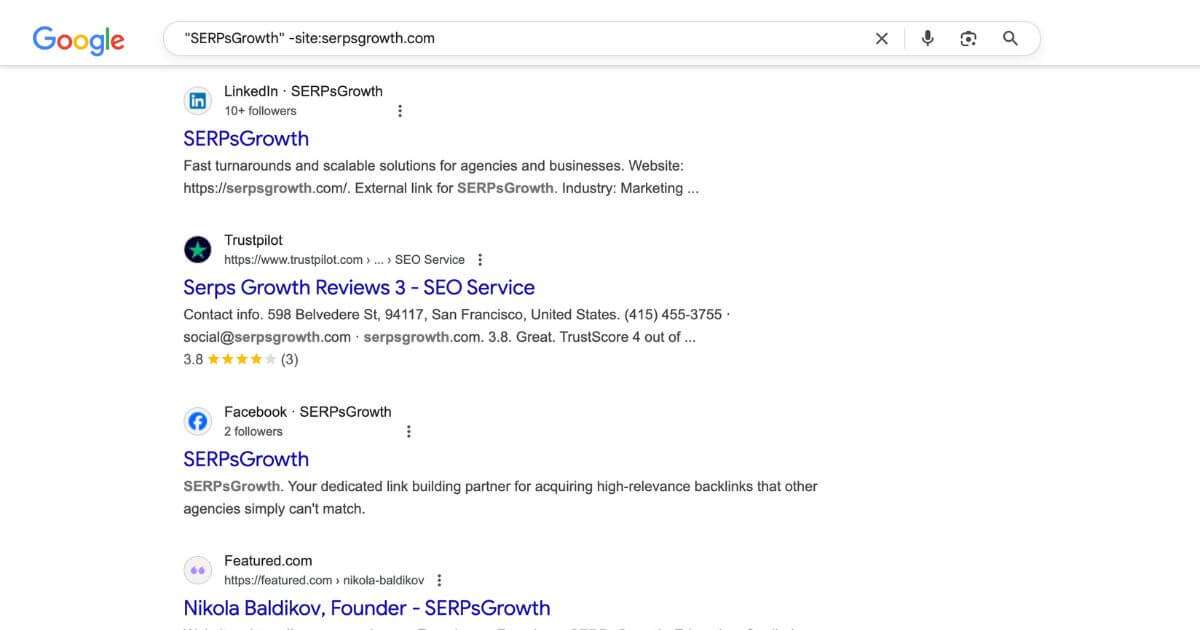
The quotes (“ ”) make sure Google searches for your exact brand name. The -site: operator excludes results from your own domain, so you only see external mentions.
Then, you need to manually go through the results and check whether the mention includes a link. If not, add it to your outreach list.
To expand the results, I always run separate searches for variations, like abbreviations and even common misspellings. You’ll often uncover mentions you wouldn’t find otherwise.
Finding Unlinked Brand Mentions Using Ahrefs Content Explorer
This is the second way you can use Ahrefs to track down unlinked mentions.
It’s not that different from using Google search operators. The principle is the same: find pages that mention your brand but don’t link to you.
The difference is that Content Explorer lets you do it at scale and export results more easily.
- Open Content Explorer and enter your brand name: Type your brand name in quotes to find exact matches, e.g.: “Your Brand”
- Exclude your own domain: In the filters, add: -site:yourdomain.com.
This ensures you only see mentions on external sites.
- Apply the “In Content” filter. That way, you’ll only get results where your brand name appears in the body of the text—not just in titles or metadata. Your result page should look like this:
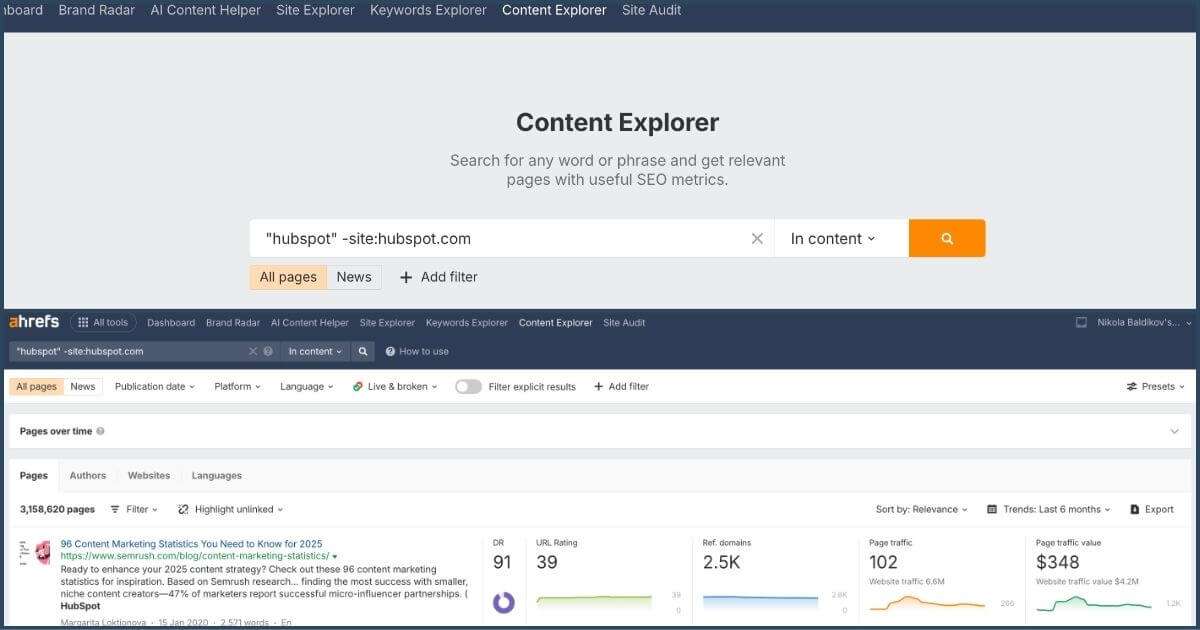
- Review the results manually: Click into the pages and check whether the mention includes a link. If it doesn’t, mark it as unlinked.
- Export the list: Download results as a spreadsheet, and use a separate column to flag which mentions are unlinked. This quickly turns into a clean outreach list.
3. Track Social Media and Blogs
Not all mentions live in articles. Many happen on social platforms or smaller niche blogs.
Tools like Mention.com or Brand24 track mentions on Twitter/X, LinkedIn, YouTube, podcasts, and forums. These aren’t always link opportunities, but they’re excellent for identifying journalists or influencers who already know your brand.
Using Unlinked Brand Mentions as a Link Building Tactic
Once you’ve built your list of unlinked brand mentions, the next step is reaching out to the sites that mentioned you.
At first, outreach can feel awkward or even intimidating, but with a clear system, it quickly becomes easy. Here’s the step-by-step approach I follow:
Step 1. Decide If It’s Worth Chasing
Not every mention deserves an email. The rule of thumb is to focus on sites that:
- Are relevant to your niche.
- Have some level of authority (DR>30).
- Look professional and indexed by Google.
Skip spammy scraper sites or random forums.
Step 2. Pick The Best Page to Link to
You want to make it easy for the publisher to make the decision. Quote the exact sentence where your brand appears and include the URL you want linked. When you do the work for them, adding the link becomes a 10-second task instead of a chore.
Match the link to the context of the mention:
- If they reference your company name—suggest your homepage.
- If they mention a product—send them the product page.
- If they cite a statistic, study, or resource—provide the exact source URL.
The more relevant the link is to their content, the easier it is for them to say “yes.”
Step 3. Reach Out Politely
This is where many people overcomplicate things. Keep your message short and friendly.
Start by thanking the author for mentioning your brand. They already gave you free visibility, so acknowledging that sets a positive tone and makes your request feel like a small, natural next step.
Here’s a simple structure that’s worked for me:
- Thank them for mentioning your brand.
- Point out the exact spot where your name appears.
- Suggest adding a link to make it easier for their readers.
- Include the correct URL so it’s copy-and-paste ready.
Here is a short unlinked brand mentions email template:
“Hi [Name],
Thanks for mentioning [Brand] in your article on [Topic+their article link]. Would you mind linking it to [your URL] so readers can find us directly?
Really appreciate it!
[Signature]”
A two- or three-sentence email is often all you need. Overexplaining slows things down and makes your request look complicated. Busy editors are more likely to respond when you get straight to the point.
If you’d like more outreach strategies, check out my outreach link building article, where I break down all the tools and methods I use to find the right contacts.
Step 4. Follow up once
If you don’t get a reply, send one polite follow-up after 3–5 days.
Many links are won on the second email. But avoid pushing too hard. Beyond one follow-up, you risk damaging the relationship.
Step 5. Track your results
Keep a simple spreadsheet with URLs, contact names, outreach status, and results.
This helps you stay organized, measure success rates, and refine your process over time.
Note which sites respond, which links go live, and which don’t.
Over time, you’ll see patterns. Some industries and outreach angles convert much higher than others.
Best Practices and Tips
Over the years, I’ve found a few rules that make the process smoother and more effective:
- Prioritize quality over quantity: Not every unlinked mention is worth chasing. Focus on authoritative, niche-relevant sites that readers actually trust. Skip spammy directories, scraper sites, or irrelevant blogs—they won’t help your SEO.
- Avoid paying for reclaimed links: If a publisher asks for money to add a link to your brand mention, it’s usually not worth it. These are supposed to be editorial, natural links. Paying undermines that and sets the wrong precedent.
- Leverage mentions for relationship building: A link request doesn’t have to be the end of the interaction. Share their article, comment on their content, or offer to collaborate in the future. Turning one reclaimed link into an ongoing relationship is far more valuable.
- Stay consistent: Make unlinked mention reclamation part of your routine. Weekly alerts and monthly audits work best. Over time, this steady effort compounds into a reliable source of new backlinks.
Expert Opinions
To give you more than just my perspective, I also reached out to other link building specialists online. I asked them to share their own experiences and tips on unlinked brand mentions, and here’s what they had to say:
“One of the most overlooked opportunities in digital PR and SEO is unlinked brand mentions. We have worked with brands where converting those mentions into backlinks has made a measurable difference. One such instance occurred with a travel client, who found dozens of unlinked media mentions. Through building out an entire process to politely reach out to journalists and site editors, we converted about 35% of those mentions into live backlinks. Within just three months, the number of referring domains increased by 18%, with a concomitant increase in organic traffic by 22%. Aside from SEO, such added visibility from being properly linked positioned them as a trusted authority in their niche, which opened doors for further coverage. So the key takeaway is that unlinked mentions are not in any way missed opportunities – with the right outreach process, they are in fact a fast track to increasing brand visibility and predicting measurable growth.” — Tom Jauncey, Head Nerd, Nautilus Marketing
“A major industry publication had quoted our client’s expertise on OSHA compliance but didn’t link back to his site.
We reached out with a comprehensive OSHA checklist we’d created specifically for their audience. Not only did they add the backlink to the original article, but they featured the checklist in their newsletter to 15,000+ contractors. Within 60 days, his organic traffic jumped 47% and he landed three new commercial projects worth $280K total.
The key difference from what most people do is we offered something their readers actually needed, not just asked for credit. We tracked a 73% success rate using this approach across 12 different industries. The real magic happens when these publications start reaching out to YOU for future quotes because you’ve proven you understand their audience.
What surprised me most was how it affected local search rankings. Those high-authority backlinks boosted his entire local SEO footprint – he went from ranking #8 to #2 for “commercial contractor Charlotte” in just four months.” — Matt Maglodi, Founder, Online Advantages
“Earlier this year, we set this up for a “mid-size” SaaS company and got great results. We used Ahrefs Alerts to tracked down around 40 unlinked brand mentions in just six weeks. By reaching out with a quick “Hey, would you link back?” email, we converted 15 of those into live backlinks from DR 40 – 70 sites.” — Raphael Larouche, Founder & SEO Specialist, Agence SEO
Wrap Up
Unlinked brand mentions may look small on the surface, but they’re one of the most accessible link building tactics you can use.
They give you exposure, build trust, and—when converted into links—directly boost your site’s SEO and traffic.
The key is to stay proactive: monitor for mentions, prioritize the ones that matter, and reach out with a clear, polite request.
Done consistently, this simple process compounds into stronger rankings and a more authoritative brand presence online.
FAQ
How can I quickly detect unlinked mentions of my brand across the web using free searches?
You can use Google Alerts or run simple search operators in Google. For example: “Your Brand” -site:yourdomain.com. This will show pages mentioning your brand but excluding your own site.
What criteria should I use to prioritize which unlinked mentions to pursue for backlinks?
Look at three things: relevance (is the site or article connected to your niche?), authority (does the domain have solid visibility and trust?), and value (would a link from this page actually send referral traffic or support your SEO strategy?). High-authority, niche-relevant sites should be your top priority.
Why might authors mention my brand without linking?
Usually, it’s not intentional. Authors might:
– Assume readers already know your brand.
– Forget to add a link while editing.
– Have editorial guidelines that limit external links.
– Simply not think about it—most cases are just an oversight.
How could converting unlinked mentions into links affect my site’s SEO and traffic?
When a mention turns into a backlink, your website gets an SEO boost. The link passes authority to your site, improving rankings over time. Moreover, readers can now click directly through to your site, which can generate leads, sales, or sign-ups.
What personalized outreach approaches can I use to convince sites to add my backlink?
Keep your outreach short, specific, and helpful. Personalize by:
– Thanking them for the mention.
– Quoting the exact sentence where your brand appears.
– Explaining how adding a link helps their readers.
– Providing the exact URL so it’s a quick copy-paste task.