

If you own a small business and want better website visibility and more customers, you must implement a solid SEO strategy.
As an SEO expert with over a decade of experience, I’ve encountered many small business owners who are completely overwhelmed by the intricacy of search engine optimization. They hear the jargon, see the conflicting advice, and feel like they’re falling behind.
The truth is:
With the right guidance and a focus on fundamental principles, you can make a significant and lasting impact.
Today, I’m here to provide actionable SEO tips for small business that I have used to help businesses just like yours move from digital obscurity to the first page of Google.
Ready to achieve sustainable, long-term growth?
Let’s get down to business.
Highlights
- Optimize your Google Business Profile for maximum local search visibility.
- Conduct effective keyword research to understand precisely what your customers are searching for.
- Create high-quality, valuable content that answers user questions and builds authority.
- Focus on technical SEO best practices to improve your site’s user experience and crawlability.
- Build a strong backlink profile through strategic, relationship-based outreach.
5 Actionable SEO Tips for Small Business
Here are my small business SEO tips for beginners for improving online visibility and attracting more customers:
1. Master Local SEO With Your Google Business Profile
For any brick-and-mortar or service-area small business, local SEO is the absolute foundation of your digital presence.
When a potential customer in your neighborhood pulls out their phone to search for “coffee shop near me” or “emergency plumber,” you want to be the first name they see. This is where your Google Business Profile (GBP) becomes your single most powerful tool. Think of it as your digital storefront, your 24/7 billboard on Google Search and Google Maps.
Let me further explain this:
A fully optimized GBP can dramatically increase your visibility in the coveted Local Pack, also known as the Map Pack—the block of three business listings that appears at the very top of the search results for local queries.
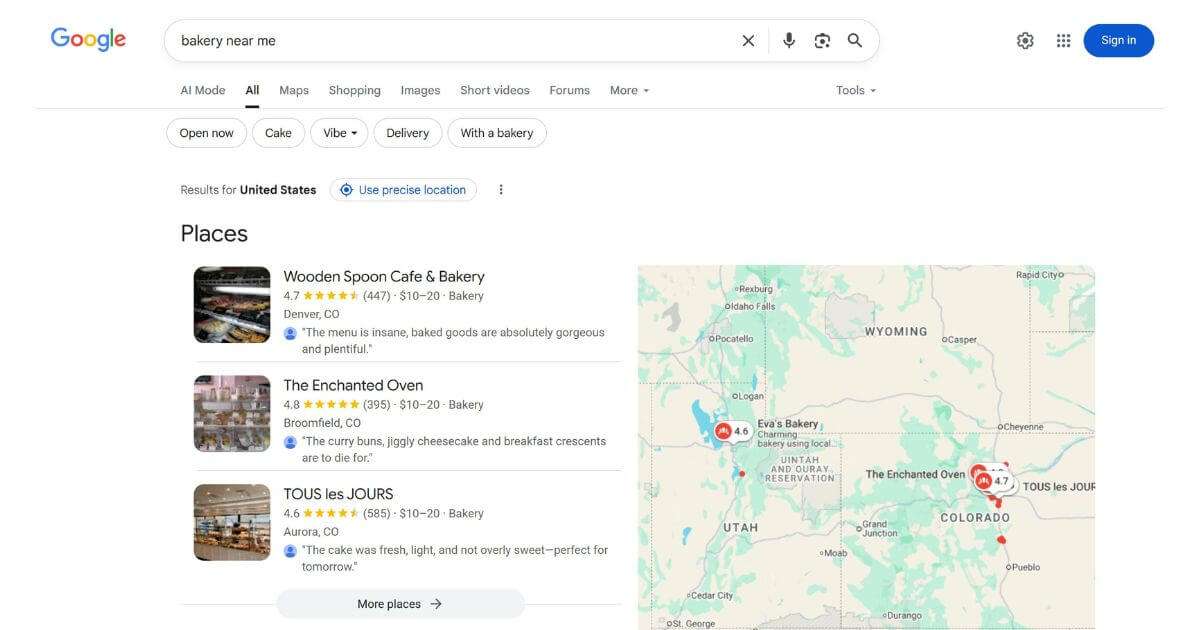
I’ve worked with businesses that saw a 50% increase in phone calls and website visits within months of properly setting up and actively managing their profile.
To get started, you need to claim and verify your business profile. This involves Google sending a postcard with a verification code to your physical address to confirm your location. Once that’s done, the real work begins.
How to Optimize Your Google Business Profile
Here is a detailed list of actions you must take to fully optimize your GBP profile:
- Complete every single section: Do not skip anything. Fill out every field Google provides with complete and accurate information. This includes your exact business name, address, phone number (ensure NAP consistency across the web), website, and hours of operation.
- Choose the right categories: Select a primary category that best describes your core business. Then, add as many relevant secondary categories as apply. If you’re a restaurant that also does catering and has a private event space, make sure you have categories for all three.
- Utilize all available attributes: Google provides a long list of attributes you can add to your profile, such as woman-owned, wheelchair accessible, free Wi-Fi, or outdoor seating. These help you stand out and answer potential customer questions before they even ask.
- Upload high-quality photos and videos: Your profile should be a visual representation of your business. Regularly add photos of your storefront (both interior and exterior), your products, your team in action, and happy customers. Businesses with more than 100 photos get significantly more engagement. Videos are even better for showcasing your business’s personality.
- Encourage and respond to all reviews: Customer reviews are a massive ranking factor for local search. Actively encourage your satisfied customers to leave reviews. More importantly, respond to every single review—both positive and negative. A thoughtful response to a negative review can often win over more future customers than a dozen positive ones.
- Leverage Google Posts and Q&A: Use Google Posts to share updates, special offers, new products, and upcoming events directly on your profile. This keeps your listing fresh and engaging. Also, proactively populate the Q&A section by asking and answering common questions yourself. This helps you control the narrative and provide valuable information upfront.
Let’s continue with the next SEO tips for small business websites.
2. Conduct Effective Keyword Research to Target the Right Audience
You can have the most beautifully designed small business website in the world, but if it doesn’t target the specific words and phrases your potential customers are typing into the search bar, it will never generate the results you want.
Keyword research is a fundamental element of any successful SEO strategy. It’s the process of discovering the language of your target audience so you can align your content, products, and services with their needs and search intent.
You might be wondering where to even begin. It’s a whole world unto itself.
What Is a Keyword Search Intent?
First, you need to understand the four primary types of keyword intent:
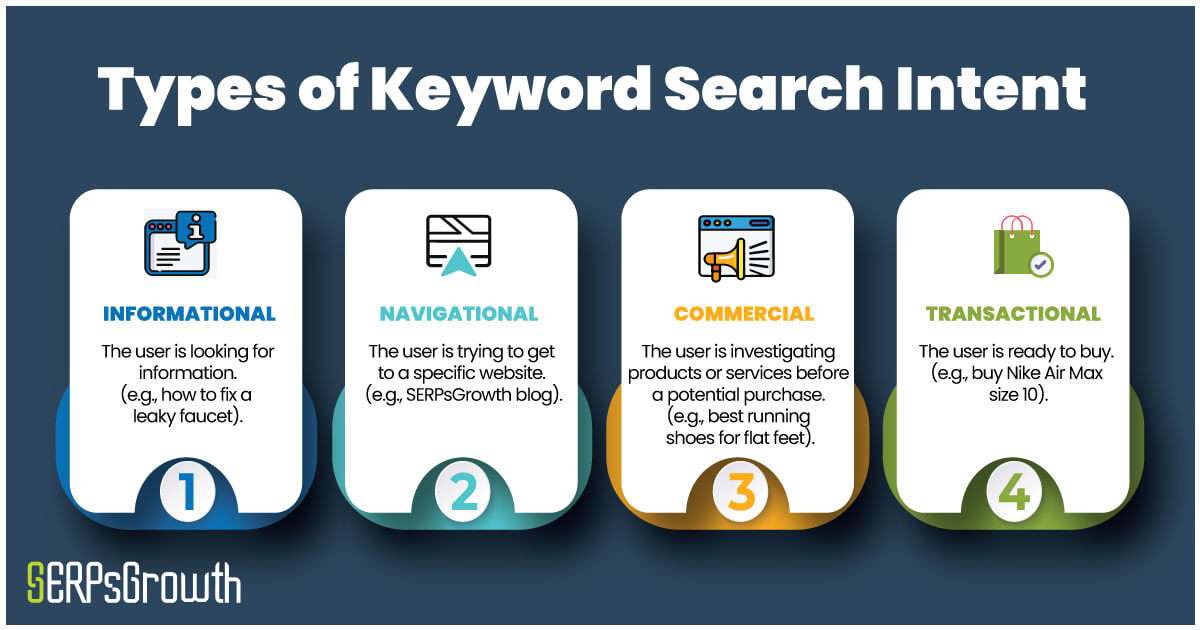
- Informational: The user is looking for information. (e.g., how to fix a leaky faucet).
- Navigational: The user is trying to get to a specific website. (e.g., SERPsGrowth blog).
- Commercial: The user is investigating products or services before a potential purchase. (e.g., best running shoes for flat feet).
- Transactional: The user is ready to buy. (e.g., buy Nike Air Max size 10).
As a small business, you should target keywords across all these intents to build a comprehensive customer journey on your site.
For example, an informational blog post on how to choose a mattress can lead a user to a commercial comparison of memory foam vs. hybrid mattresses, and finally to a transactional page to buy a queen-size memory foam mattress.
To find these valuable keywords, you can use a variety of tools and techniques.
Here’s what you can do:
- Start by brainstorming a list of seed topics relevant to your business.
- Use free tools like Google Keyword Planner, Ubersuggest, or AnswerThePublic to find related keywords and see their search volume and competition level.
- Perform a thorough competitive analysis. Look at the keywords your direct competitors rank for to get ideas and find opportunities. This process of data collection is crucial for building a content plan that drives organic search traffic.
Pro tip:
Another goldmine for keyword ideas is your own audience. Pay close attention to the questions they ask on the phone, via email, or in person. These are the exact phrases people are searching for. This is one of the most overlooked but effective SEO tips for small business owners.
3. Create High-Quality, Authoritative Content
In the world of SEO, content is king.
But not just any content.
To rank in today’s competitive environment, you need to create high-quality, authoritative content that satisfies user intent and establishes your expertise. Google’s ranking systems are designed to reward content that demonstrates a high level of Experience, Expertise, Authoritativeness, and Trustworthiness (EEAT). I’ve created a downloadable EEAT checklist, in case you’re interested.
This means your content must be:
- Accurate and well-researched: Back up your claims with data and link to authoritative sources.
- Comprehensive: Cover the topic in-depth, answering all the likely questions a user might have.
- Well-written and engaging: Use clear language, proper grammar, and a compelling tone of voice.
- Written from experience: Showcase your unique perspective and firsthand knowledge.
One of the best SEO optimization tips for small business website owners is to focus on creating pillar pages or cornerstone content. These are long-form, in-depth guides on the most important topics in your industry.
For example, a financial advisor might create a pillar page on “A Beginner’s Guide to Retirement Planning.” This page would then link out to smaller, more specific blog posts on topics like “What is a 401(k)?” and “Roth IRA vs. Traditional IRA.”
On-Page SEO Best Practices
When creating your content, pay close attention to on-page search engine optimization. This involves optimizing various elements on the page itself to help search engines understand what it’s about.
Here are the key elements of on-page SEO best practices:
- Meta title: The title that appears in the browser tab and on the search results page. It should be under 60 characters and include your main keyword.
- Meta description: The short snippet of text that appears under your title in the search results. It should be under 160 characters and act as a compelling ad to encourage clicks.
- Heading tags (H1, H2, H3): Use one H1 tag for your main title. Use H2s and H3s to structure your content logically, making it easy for both users and search engines to read. Include your main keyword in at least one H2.
- Internal linking: Link to other relevant pages on your website. This helps distribute link equity throughout your site and keeps users engaged longer.
- Image alt text: Add descriptive alt text to all your images. This helps search engines understand what the image is about and improves accessibility for visually impaired users.
Simple seo tip for small business:
Don’t stuff keywords into your content. Write for your audience first, then optimize for search engines. This creates a better user experience, which ultimately leads to higher rankings.
4. Focus on Technical SEO Best Practices
Technical SEO can sound intimidating, but it’s essentially about making sure your website’s foundation is solid so that search engines can easily crawl, index, and understand your content.
A technically sound site provides a better user experience, which is a massive factor in how Google ranks pages. A poor user experience, such as a slow-loading page or a broken link, can lead to a high bounce rate, signaling to Google that your page isn’t helpful.
Important Technical SEO Elements
Here are some of the most critical technical SEO elements you need to get right:
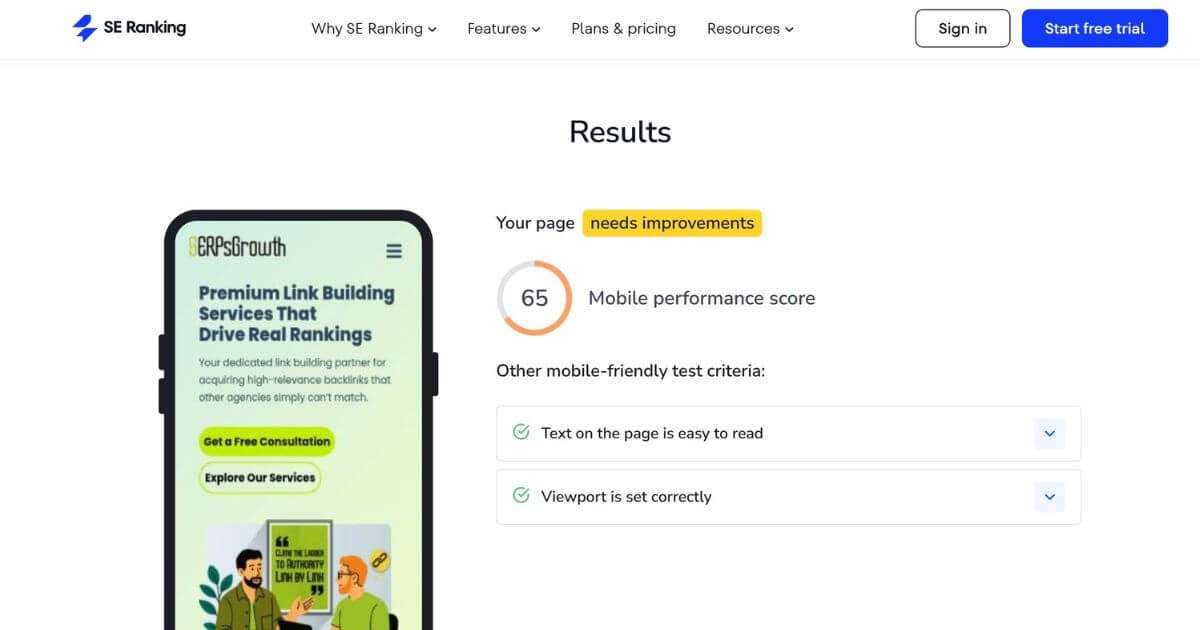
- Mobile-friendliness: We live in a mobile-first world. The majority of searches on Google now happen on mobile devices. Your website must be responsive, meaning it automatically adjusts to fit any screen size, providing a seamless experience on desktops, tablets, and smartphones. You can use this free Mobile Friendly Site Test tool for a basic check.
- Page speed: Users are impatient. If your page takes more than a few seconds to load, a significant portion of visitors will leave and never come back. Page speed is a confirmed ranking factor. Use tools like Google’s PageSpeed Insights to analyze your site’s speed and get actionable recommendations for improvement. Focus on the Core Web Vitals: Largest Contentful Paint (LCP) and Cumulative Layout Shift (CLS).
- Secure your site with HTTPS: HTTPS encrypts the connection between your website and your users’ browsers, protecting their data. It’s a sign of trust and a confirmed, albeit small, ranking signal. If your website URL still starts with http://, you need to install an SSL certificate immediately.
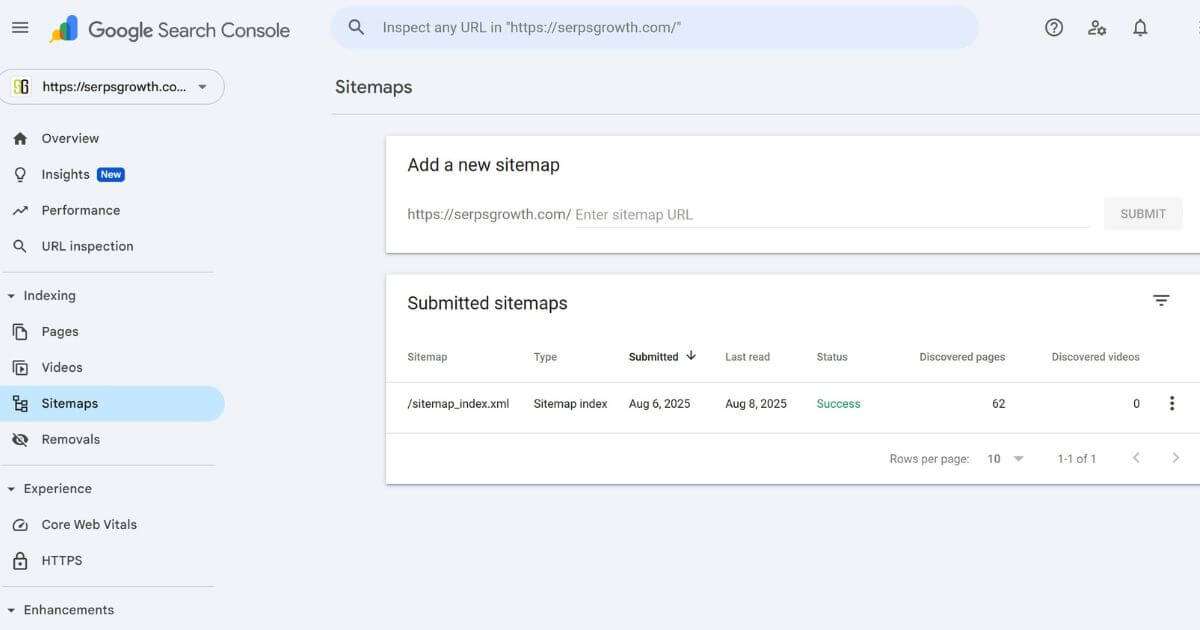
- Create and submit an XML sitemap: A sitemap is a file that lists all the important pages on your website. Creating an XML sitemap and submitting it to Google Search Console helps Google find and index your content more efficiently, especially if you have a large site or pages that aren’t well-linked internally.
- Use a logical site structure: Your website should be organized in a clear, logical hierarchy. This makes it easy for users to navigate and for search engine crawlers to understand the relationship between your pages. A silo structure, where you group related content together, is often the most effective approach.
- Implement structured data (schema markup): Structured data is a type of code that you can add to your website to help search engines better understand your content. It can lead to rich snippets in the search results, such as star ratings, event information, or recipe cooking times, which can significantly improve your click-through rate.
5. Build High-Quality Backlinks to Improve Authority
Link building is the process of acquiring hyperlinks from other websites to your own. In the eyes of a search engine, these links act as votes of confidence or endorsements.
When a reputable, authoritative site links to your site, it signals to search engines that your content is valuable, credible, and trustworthy. This is one of the most powerful and challenging aspects of search engine optimization.
However, it’s crucial to understand that not all links are equal. The mantra is quality over quantity.
A single, relevant backlink from a highly respected industry publication is worth more than a hundred low-quality links from spammy directories. In fact, a pattern of low-quality or manipulative link building can lead to a Google penalty, effectively wiping out your search engine rankings.
White-Hat Link Building Strategies
Here are a few legitimate, white-hat strategies for building high-quality links:
- Create link-worthy content: This is the most natural and sustainable way to earn backlinks. If you create truly exceptional content (e.g., original research study, in-depth guide, powerful case study, or free tool), other people in your industry will naturally want to link to it as a resource.
- Strategic guest blogging: Write articles for other reputable websites in your niche. This doesn’t mean spamming hundreds of low-quality blogs. It’s about building relationships and providing genuine value to another site’s audience. In return, you typically get an author bio with a link back to your website.
- Broken link building: This classic technique involves finding a broken (404) link on another website, creating a piece of content that would be a suitable replacement, and then reaching out to the site owner to suggest they swap the dead link with a link to your live resource.
- Local citations and resource pages: Ensure your business is listed consistently in top-tier online directories like Yelp and industry-specific sites. Also, look for resource pages on other websites that list helpful links on a particular topic and suggest your relevant content be included.
Expert insight:
Building a strong backlink profile is a long-term game that requires patience and persistence, but it’s one of the best ways to improve SEO and establish your site as a true authority in your field.
Sharing My Personal Experience Helping a Small Business
Early in my career, I was brought in to consult for a local bakery. They had a beautiful, charming website with professional photos of their cakes and pastries, but they were getting almost no organic search traffic.
They had been diligently writing blog posts for two years but saw zero improvement in their SEO performance. They were frustrated, spending time and money with no return, and were on the verge of giving up on their content marketing entirely.
Here’s what I did:
Instead of just suggesting they create more content, I proposed we start with a comprehensive content audit. I needed to know what was working and what wasn’t. I exported all their website data and combined it with metrics from their Google Analytics account and Google Search Console.
The results were eye-opening:
I discovered that over 70% of their blog posts had not received a single visitor from search engines in the past year. They were essentially invisible. I also found a significant amount of duplicate content from pages that had been created, forgotten, and then recreated with slightly different URLs.
Here’s the plan I put into action:
- I ruthlessly pruned the underperforming content. If a post had no traffic, no backlinks, and served no strategic purpose, I removed it and redirected the URL to a more relevant page.
- For pages with overlapping topics, I consolidated them into a single, authoritative ultimate guide.
For example, they had separate posts for chocolate chip cookies, oatmeal cookies, and peanut butter cookies. We combined them into one comprehensive guide to “The Best Cookie Recipes for Every Occasion,” which immediately started ranking for a wider range of terms.
- I updated the good content with fresh information and optimized it for the right keywords we had researched.
It was a ton of work, but the outcome was astounding:
Within six months, their organic traffic had tripled. They started ranking on the first page of Google search results for valuable local terms like “custom birthday cakes in [city]” and “best croissants near me.”
This experience taught me a vital lesson: sometimes, the best small business SEO tip for beginners is not about creating something new but about strategically improving what you already have.
Wrap Up
These essential SEO tips for small business are your roadmap. Let’s recap:
- Start by dominating your local market through a meticulously optimized Google Business Profile.
- Use in-depth keyword research to truly understand your customers and guide your content strategy.
- Create genuinely valuable content that establishes your authority and answers questions.
- Ensure your website is technically sound to provide a great user experience.
- Finally, build your site’s reputation through high-quality link building.
By consistently applying these search engine optimization tips for small business owners, you will build a powerful digital presence that drives sustainable growth. Once you’ve mastered these fundamentals, explore SEO vs SMM strategies to understand how to combine these two channels.
FAQ
How long does it take for SEO to start working for a small business?
SEO is a long-term investment, not a quick fix. While you might see some minor improvements in keyword rankings or traffic within a few weeks, it typically takes 4–6 months of consistent effort to see significant, meaningful results. The exact timeline depends on your industry, competition, and the intensity of your efforts. Patience and consistency are paramount.
Can I do SEO on my own, or do I need to hire an agency?
You can absolutely start with the basics on your own, especially with local SEO via your Google Business Profile and creating initial content. However, SEO becomes increasingly complex. Hiring an agency can provide deeper expertise, access to professional tools, and save you a tremendous amount of time, especially when it comes to technical SEO, competitive analysis, and strategic link building.
What is the difference between on-page, off-page, and technical SEO?
Think of it like building a house.
Technical SEO is the foundation—it has to be solid for the house to stand.
On-page SEO is the architecture and interior design of the house itself—the content, structure, and layout that make it useful and appealing.
Off-page SEO is the house’s reputation in the neighborhood—the backlinks and mentions from other sites that build its authority and trust.
You need all three to succeed.
What is the most common mistake small business owners make with SEO?
The most common and damaging mistake is a lack of patience and consistency, often driven by unrealistic expectations. Many business owners get excited, work on SEO for a month or two, and then give up when they don’t see immediate, dramatic results. The businesses that win are the ones that commit to a steady, ongoing effort over the long term.


