Digital PR and traditional PR both aim to build your brand’s reputation—but they do it in very different ways.
Think about how you usually discover new brands. Is it through a newspaper or a TV commercial? Or maybe it’s while you’re scrolling through your social media feed?
Chances are, it’s the latter. This shift in media consumption is precisely why understanding the differences between digital PR vs traditional PR is crucial for any brand seeking to make a genuine impact.
I’m Bilyana, and for over three years, I’ve helped brands navigate the digital media landscape. In this article, I’ll walk you through:
- What sets digital PR and traditional PR apart.
- When to use each strategy to get the best results.
- How combining both can take your brand’s visibility and credibility to the next level.
Let’s dive in.
Highlights
- Digital PR builds online authority through content that earns backlinks and drives traffic.
- Online PR is measurable, cost-effective, and creates lasting value.
- Traditional PR builds broad reach and brand reputation but is less measurable and slower to execute.
- The best PR approach depends on your specific goals, target audience, and budget.
- Combining digital and traditional PR strategies can create a powerful complementary effect—amplifying reach and strengthening credibility.
What Does Digital PR Involve?
In today’s digital world, most of your customers are spending their time online.
So, how do you get their attention?
You meet them where they already are.
Digital PR (also called online PR or digital public relations) is part of a digital marketing strategy. This practical approach is used to build a strong online brand reputation and earn valuable backlinks that help your website rank higher in Google.
To achieve that, you need to create content worth media attention. I’m talking about original research that is supported by striking infographics or expert insights on trending topics, so journalists and bloggers will feature it in their stories.
The main strategies used in digital PR campaigns include:
- Media outreach
- Content marketing
- Thought leadership
- Link building
- Community engagement on platforms like LinkedIn and Instagram
Pros of Digital PR
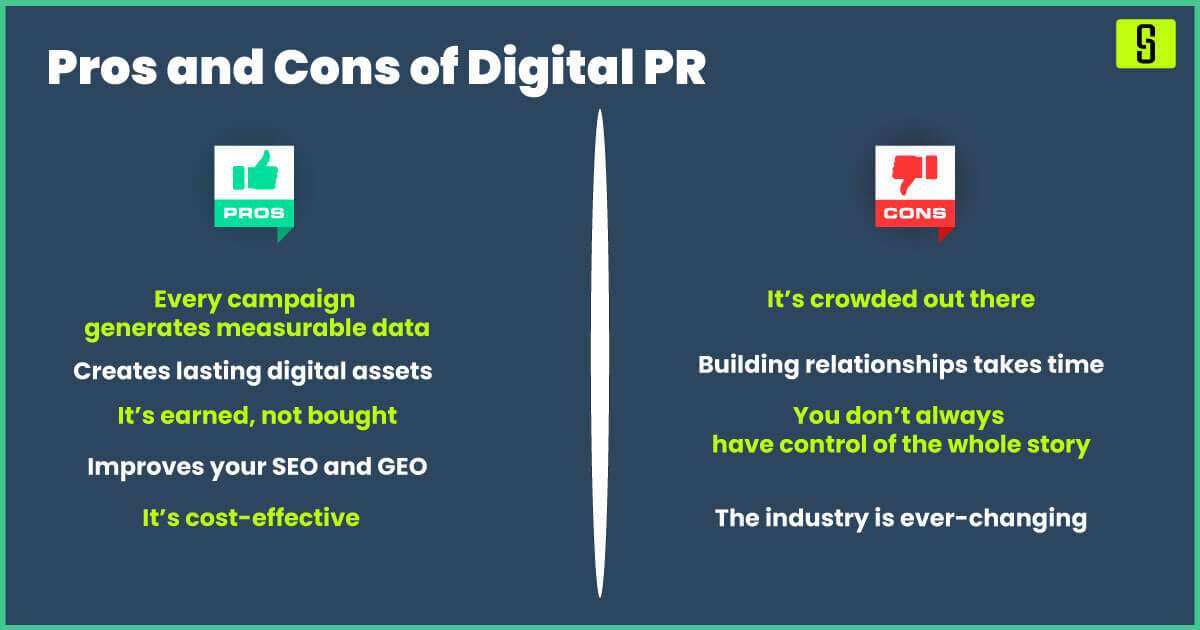
Like any strategy, digital PR strategies present both benefits and challenges. Here’s what I think makes it such a powerful tactic:
- Every campaign generates measurable data: With proper tracking, you can see exactly which articles drive traffic and show how many leads convert into customers.
- It’s earned, not bought: Journalists are always looking for fresh takes that capture their audience’s interest. If you present something exciting and engaging, you can earn free media coverage based on the strength of your message.
- Creates lasting digital assets: Online articles stick around. A good feature can continue to bring traffic to your website for months or even years.
- Improves your SEO and GEO: Earning backlinks from reputable websites builds your online authority. Search engines view these links as trust signals, helping your content rank higher. It also supports generative engine optimization (GEO) by increasing brand mentions across trusted sources. This makes your brand more visible in AI-powered search results.
- It’s cost-effective: Digital PR doesn’t require big budgets because it uses resources that are often already available, like your current marketing toolkit. For example, I use SEO data, keyword research, and customer insights to guide content topics and find a unique angle for my clients’ stories.
Want to explore digital media relations further? My recent article breaks down the benefits of digital PR and how it can drive real business results.
Cons of Digital PR
But digital PR isn’t without its hurdles. Here’s what to keep in mind:
- It’s crowded out there: Because this strategy is often abused (especially for backlinks), journalists are constantly bombarded with irrelevant pitches. Getting noticed requires smart timing and a genuinely compelling story (with a little hint of exclusivity).
- Building relationships takes time: Earning trust with journalists doesn’t happen overnight. When I need to pitch a press release, I take the time to understand the topics they typically cover, engage with their work, and try to offer valuable and relevant information. That kind of interaction takes patience and often months of groundwork before it pays off.
- You don’t always have control of the whole story: Once your story is published, the conversation moves beyond your influence. Although journalists might cover the angle you had in mind, comments and discussions happen whether you like it or not.
- The industry is ever-changing: Public trends shift, and media outlets adjust their publishing priorities. A campaign that earned backlinks and coverage last quarter might fall flat today, only to resurface later when the timing or context is right. To stay relevant, you need to adjust your strategy to fit changing conditions and keep up with the digital world.
What Does Traditional PR Involve?
Traditional public relations (PR) focuses on building relationships with mainstream media. By securing coverage through trusted channels, brands enhance their public image and appeal to a broader audience.
Before social media, SEO, or content marketing, PR meant getting your story into the hands of traditional media.
So, what is considered traditional media?
It includes long-established, offline channels like:
- newspapers
- magazines
- radio
- TV stations
While digital PR lives online, its goal isn’t all that different. It’s still about building credibility and visibility, but the tactics, pace, and platforms are different now.
Pros of Traditional PR
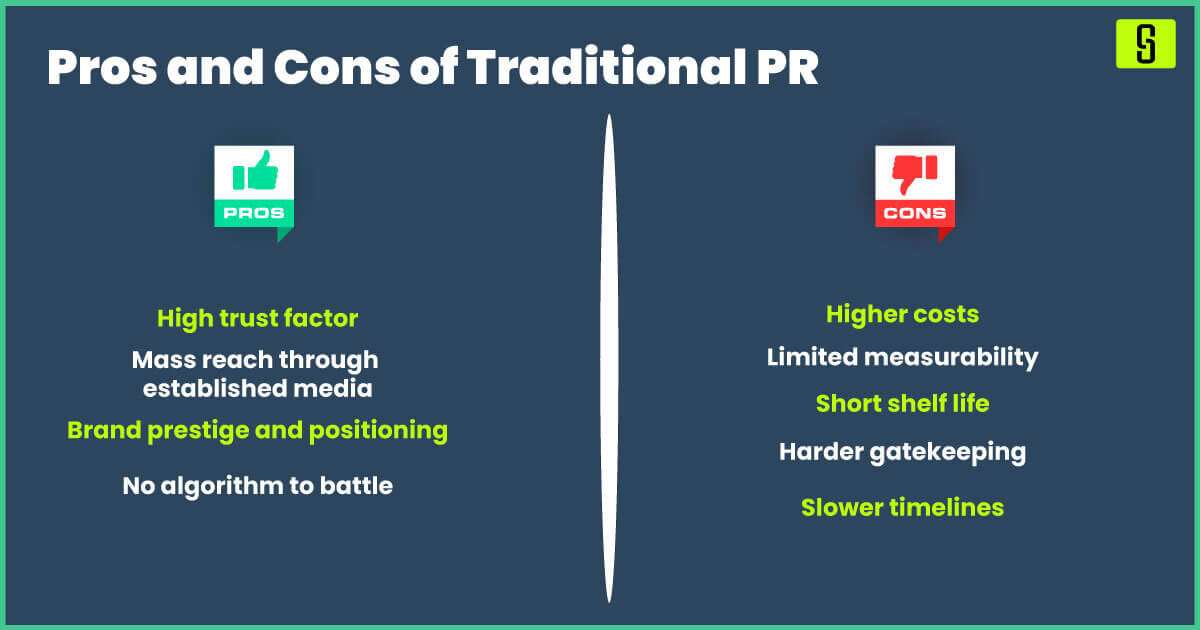
Here’s why traditional media relations have worked for generations:
- High trust factor: Coverage in print media or a national TV segment still carries significant weight with audiences. These are legacy institutions with built-in credibility.
- Mass reach through established media: Traditional media often reaches large, diverse audiences, especially for brands targeting older demographics or aiming for nationwide visibility.
- Brand prestige and positioning: Appearing in a major publication or on a reputable broadcast channel can elevate your brand perception and open doors with investors, partners, and other media.
- No algorithm to battle: Unlike social media or search platforms, traditional media isn’t subject to algorithm changes. A front-page article or prime-time segment gets attention, no matter what platform updates happen that week.
Cons of Traditional PR
That said, traditional PR isn’t without its limitations, especially in a fast-moving, data-driven digital world.
- Higher costs: Traditional PR can be significantly more expensive. It often includes event planning, printed press kits, branded materials, and ongoing agency retainers. Even though you’re not paying for coverage itself, the surrounding costs can quickly add up. In contrast, digital PR focuses more on content, outreach, and online relationships, making it a more budget-friendly and scalable approach.
- Limited measurability: It’s hard to track exact ROI. While you can estimate audience reach or impressions, you rarely know how much traffic or how many conversions a print article or TV appearance generated.
- Short shelf life: Most traditional coverage is one-and-done. Unless it’s syndicated or repurposed online, the story fades once the next day’s paper or news cycle rolls in.
- Harder gatekeeping: Traditional media is more selective. You’re often competing with major national stories, and editorial calendars can be tight.
- Slower timelines: Pitching, booking, and publishing through traditional media usually takes longer. If your story is time-sensitive or reactive, the process might not move fast enough.
What Is the Difference Between Digital PR and Traditional PR?
The main difference between digital PR and traditional PR is that digital PR marketing is designed to drive online engagement, while traditional PR focuses on overall brand awareness.
Digital PR earns inbound links or mentions from authoritative websites, which directly improves your domain authority. This, in turn, improves search engine rankings and drives organic traffic.
Traditional PR boosts overall brand perception and trust, but it offers little to no SEO value, since coverage appears offline or lacks valuable follow links.
I created this simple side-by-side comparison table to help you see the real difference between traditional PR and digital PR:
| Factor | Digital PR | Traditional PR |
|---|---|---|
| Primary Goal | Build online authority, earn backlinks, improve SEO visibility, and drive measurable traffic. | Build brand reputation, increase awareness, and gain credibility through trusted mainstream media. |
| Channels | Digital publications, blogs, online news outlets and magazines, and social media platforms. | Print newspapers, magazines, TV, and radio. |
| Backlink Value | High: Stories often include dofollow backlinks to your website. | Low to none: Traditional coverage rarely includes backlinks, unless they’re republished online. |
| SEO Impact | Direct and measurable. Improves keyword rankings, organic traffic, and link profile strength. | Indirect. May influence branded searches but offers little direct SEO value. |
| Measurement Tools | Google Analytics, Ahrefs, Semrush, UTM tracking, referral data. Everything is trackable. | Relies on estimated impressions, ad value equivalency, or circulation figures. |
| Longevity | Long-term SEO benefit. Articles with backlinks continue driving traffic and authority over time. | Short-lived unless republished online; minimal ongoing SEO impact. |
| Content Type | Optimized for online sharing: data-driven reports, infographics, expert commentary, and listicles. | Press releases, feature stories, interviews, and on-air segments. |
| Speed & Scalability | Fast-paced and scalable. One campaign can land links from dozens of sites across industries and regions. | Slower rollout. Typically focused on a few major outlets with longer lead times. |
Digital PR vs Traditional PR: Which Is Right for You?
When deciding between traditional vs digital PR, the first and most important thing to consider is your brand’s needs and what you want to achieve with that campaign.
As we have already established, both PR methods have their strengths. However, based on my experience, I can say that digital PR offers the opportunity to reach specific audiences with speed and precision that conventional PR cannot achieve.
When I plan a campaign, I don’t just send out pitches willy-nilly. I tailor the message specifically for journalists who cover stories in a manner that aligns with my goals.
I also pay close attention to their target audience, so I can shape the angle for my press release to get picked up.
When Digital PR Makes Sense
I recommend turning to digital PR strategies if your goals are to:
- Earn high-quality links from online news sources that improve search rankings and drive long-term traffic.
- Expand your reach quickly and gain momentum from online publicity. This is especially relevant for startups.
- Target specific audiences and communities across various online media platforms.
- Spark conversations about your brand through shareable content.
When Traditional PR Channels Excel
On the flip side, traditional PR works best when you need to:
- Reach broad or older demographics who still trust print, TV, or radio.
- Build long-term brand credibility by appearing in established, mainstream outlets.
- Support reputation in regulated industries, such as finance, healthcare, or government.
- Secure high-profile coverage that carries weight with investors, partners, or press kits.
Can Traditional PR and Digital PR Work Together?
Yes, they absolutely can, and many businesses are finding success by doing exactly that.
Traditional PR strategies generate media coverage that brings valuable visibility and credibility to your brand, regardless of the format it takes. Brands can then amplify those stories online through digital outreach.
For example, you can take one angle from a newspaper feature, explore it further, and turn it into a data-driven piece or trends breakdown.
Another effective approach happens when traditional PR efforts generate insights or data that fuel digital campaigns. For instance, you hosted a press conference that revealed interesting industry trends. Those insights can become the foundation for original research that will be sensational for new stories.
Traditional PR also opens doors that make digital outreach more effective. When you pitch bloggers and online journalists, mentioning your recent coverage in established publications instantly adds credibility to your story.
Practical Digital PR Examples
In this section, I highlight a few campaigns that I find truly inspirational. They showcase just how creative and effective digital PR can be.
Each one demonstrates practical digital PR tactics and helps illustrate the digital PR vs traditional PR differences in action.
* I’ve included backlink data from Ahrefs to give a sense of the impact each campaign achieved.
1. Cats.com: “The Ultimate Pet Rich List”
The editorial team of the cat-care resources website Cats.com analyzed the Instagrams of the pets with the most followers to discover the most influential pets on the internet.

Launched in 2023, the campaign attracted links from 889 domains, the notable websites being bbc.com, businessinsider.com, cbsnews.com, dailymail.co.uk, and independent.co.uk.
2. Self: “The Cost of Unused Paid Subscriptions”
The personal finance platform Self surveyed 1,000 Americans to reveal how much they spend annually on paid subscriptions they don’t use, highlighting the growing trend of subscription fatigue.
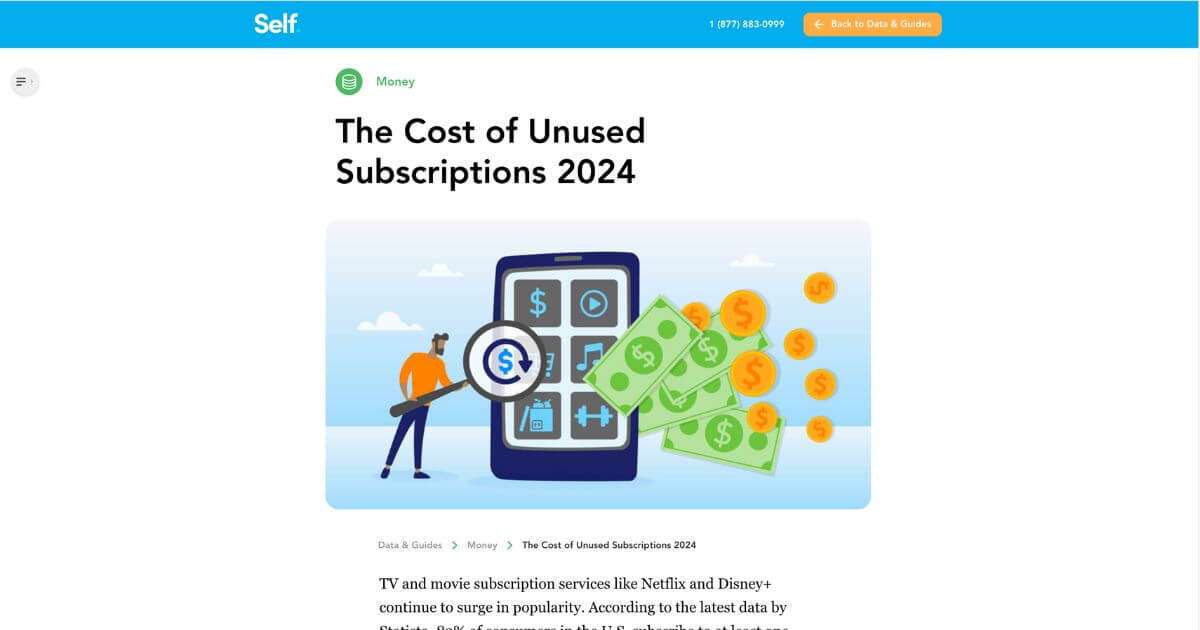
The campaign attracted links from 228 domains to date, including major publications such as yahoo.com, cbsnews.com, and dailymail.co.uk.
3. Kuoni: World’s Most Popular Filming Destinations
The travel brand Kuoni analyzed nearly 3,500 films to compile a ranking of cities and countries most frequently used as filming locations, which subsequently inspired travelers to choose their next destinations.

The campaign generated backlinks from 38 referring domains, mostly across travel and media outlets.
4. Perply: What’s Smarter: Google or ChatGPT?
The role‑playing education platform Preply conducted a comparison of Google Search vs. ChatGPT across 40 varied questions, categorizing them by complexity (basic, intermediate, advanced) and evaluating clarity, actionability, context, and substance.
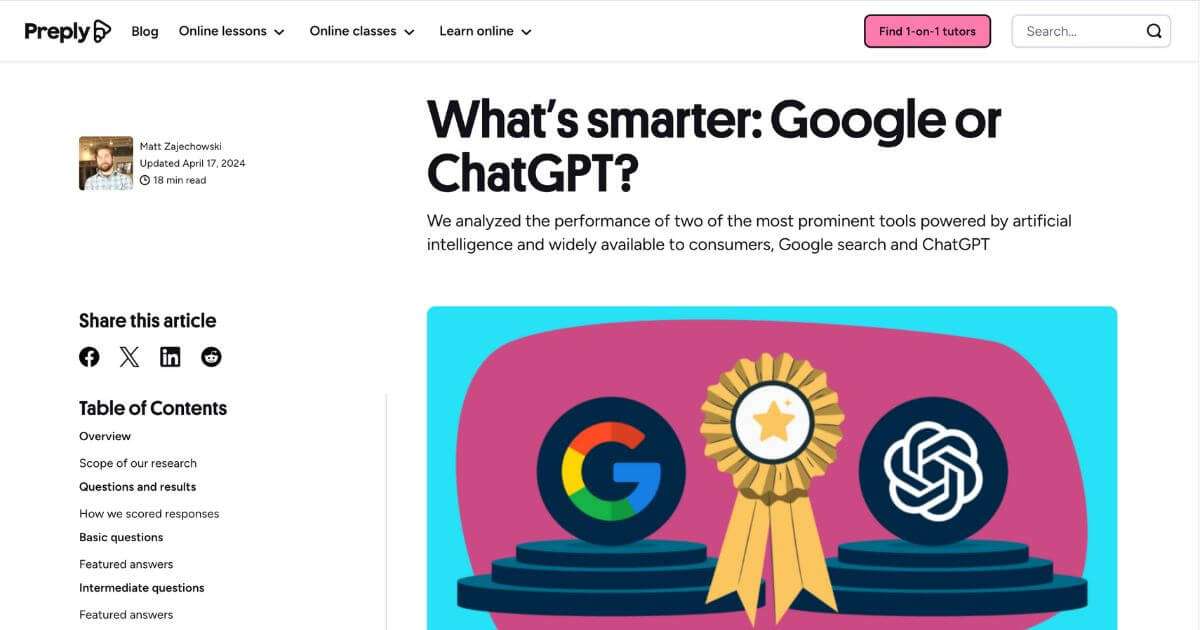
This piece gained backlinks from 115 referring domains, with coverage from prominent educational and tech outlets, like pcmag.com and zdnet.com.
Wrap Up
From my experience in digital PR, one thing is clear: when choosing between digital PR vs traditional PR, the right approach depends on your goals and your audience.
Digital PR is often the more practical choice, especially if you are looking for fast results, measurable impact, and SEO benefits. While traditional PR still holds weight in terms of brand credibility and broad reach.
Align your PR strategy with what your business needs right now and where you want to go. If your goal is to expand your online presence, then digital PR is the solution you need.
And if you need support getting there, SERPsGrowth is here to help.
FAQ
What is the difference between digital media and public relations?
Digital media refers to online content and platforms, including websites, social media, blogs, and videos, that are used to share information and engage audiences.
Public relations (PR), on the other hand, is a communication strategy focused on managing a brand’s reputation and building relationships with the public, media, and stakeholders.
Digital PR is where the two overlap—it uses digital media tools to earn coverage, build brand authority, and improve visibility online.
What is the best approach for getting high-quality backlinks and press coverage?
From my experience working with clients across different industries, the best approach combines three elements: original, data-driven content; strategic relationship building with journalists and influencers; and actively promoting your story on various channels. And a touch of luck.
How does digital PR’s online focus enhance brand visibility compared to traditional PR?
Digital PR’s online focus creates a multiplier effect that traditional PR simply can’t match. When you secure digital coverage, that content stays on the internet and continues working for you long after publication. Your insights may continue to be featured in publications that you haven’t targeted initially. And even after the initial effect wears off, they still carry value through earned backlinks that reinforce your brand’s presence across the web.
Why is measuring success easier with digital PR than with traditional approaches?
Because you can use tracking tools that show exactly how people interact with online content. With digital PR, you can measure things like who clicked a link, how they found your site, what action they took next, and whether they converted. That level of detail is just not possible with traditional channels like print or broadcast, where you rarely know the tangible impact a story had.