Some see niche edits as a smart shortcut—others find them spammy. The truth is, it all comes down to how you approach this method.
But could it hurt your rankings in Google?
I’m Elena, an outreach expert with five years of experience building backlinks in various niches. If you want to learn more about niche edits from a seasoned professional, I’m here to share what I know.
Find out the biggest misconceptions surrounding this strategy and why link insertions are smarter and safer than many portray them to be.
So, let’s dive right in.
Highlights
- Niche edit links are added to existing articles on trusted websites.
- They deliver faster and more cost-effective SEO results compared to other methods.
- Popular niche edit methods include broken link building, converting brand mentions into backlinks, and getting listed on resource pages.
- To avoid penalties, place links that add value and fit naturally into the content.
What Are Niche Edits?
Niche edits are a popular link building strategy used by SEO specialists to grow and strengthen a website’s backlink profile. The process involves manually reaching out to website owners or managers and proposing to add your link to their existing content.
You might also stumble on terms like curated backlinks, link insertions, or link placements—they’re all different names for the same strategy.
How Do Niche Edits Work in SEO?
Niche edits links involve placing your backlink within existing, high-ranking content. This method allows it to pass link equity (or so-called link juice) directly to your target page.
Compared to guest posting, niche edits can produce faster and more effective results.
Why?
Because guest posting requires writing an entirely new article and waiting for it to gain traction.
On the other hand, niche edits allow you to take advantage of the already established authority and traffic of a web page.
However, building niche edit links isn’t as straightforward. With guest posts, you’re offering value by providing content. It’s a clear exchange.
In contrast, niche edits don’t come with that value, so you need to offer it in other ways, such as building strong relationships or engaging in mutually beneficial link collaborations.
From my experience, building niche edit links is a tedious process that often requires creating a network of contacts who are open to this kind of collaboration. That’s why many people turn to link building vendors to handle the heavy lifting and source the links for them.
What Are the Types of Niche Edits?
There are three common types of niche edit backlinks. Let’s explore them below.
Broken Link Building
Broken link building is a strategy for finding links that lead to pages that no longer exist (404 error) on another website and turning them into opportunities.
When you find such a page, you can contact the webmaster and suggest replacing the link with one that leads to useful and relevant content on your site.
This method works well for both sides because:
- They replace the broken link with a valuable addition.
- You earn a contextual backlink that helps your website’s visibility.
Here’s what it looks like:
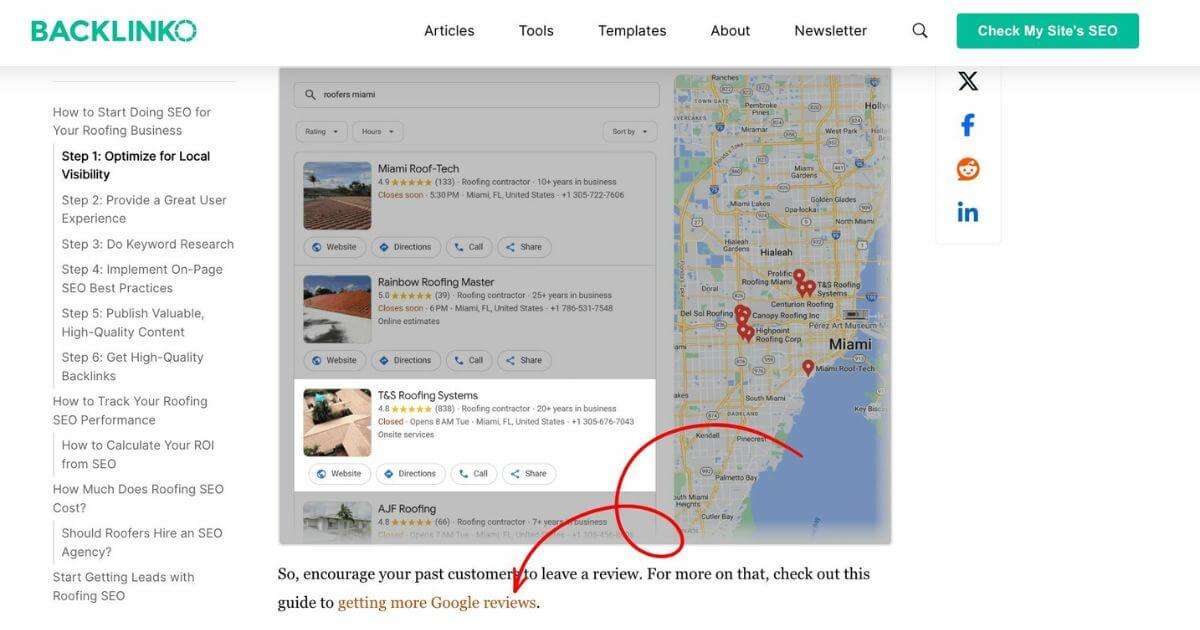
I found this blog page on Backlinko.com with an external link to an article by Semrush that has been removed from their website.
If you covered a similar topic on our website that also fits the anchor text, this would have been an excellent opportunity to establish contact with Backlinko.
How to Find Broken Links
The easiest way would be to use a backlink analysis tool. Almost any SEO platform can do that.
Alternatively, you can try free options like Ahrefs Broken Link Checker, but remember that they show only a limited number of links.
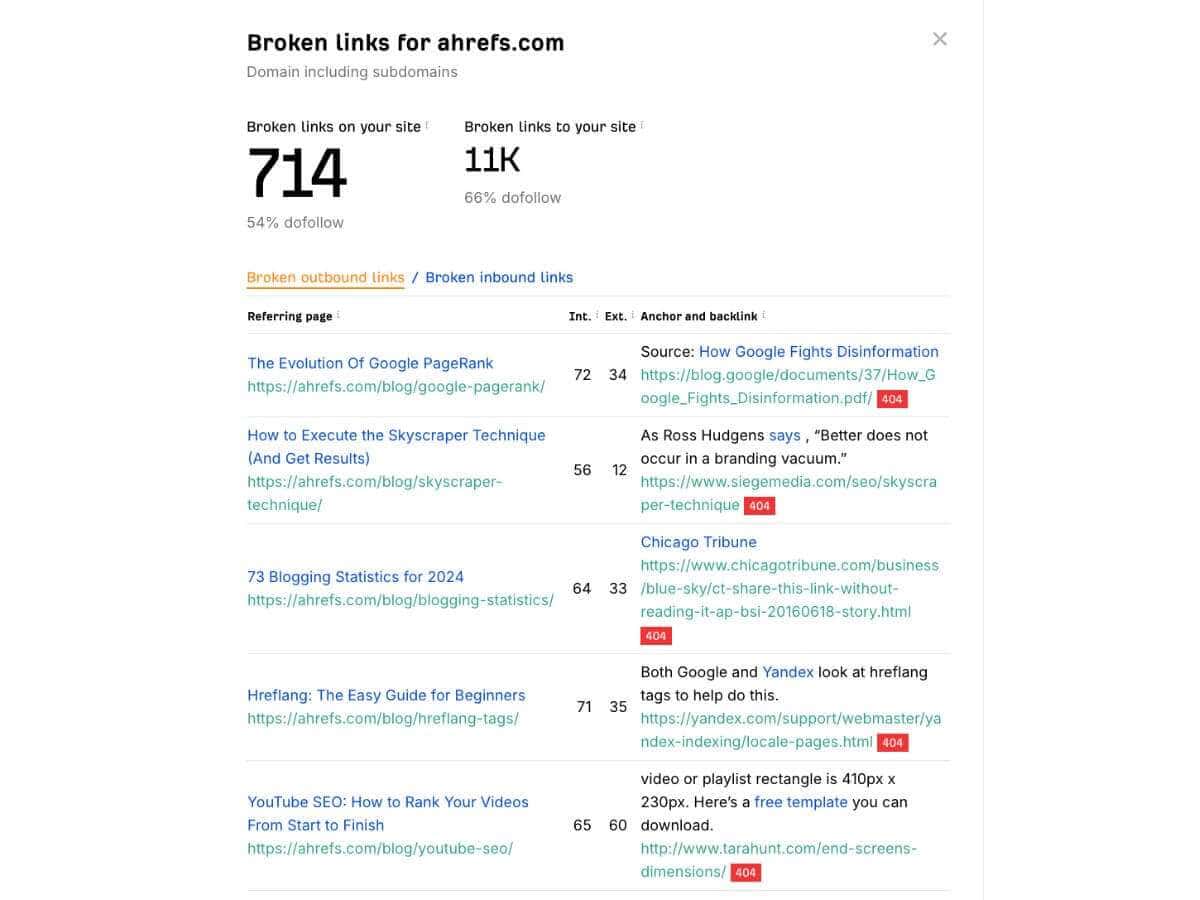
Another option is to use Screaming Frog to crawl an entire website, but this SEO tool is not beginner-friendly and has a learning curve.
I also don’t recommend manually looking for broken links—it’s time-consuming and unproductive. You’ll likely just waste your time.
Unlinked Brand Mentions
As the name suggests, this method is about finding mentions of your brand (or anything closely related to it) that aren’t linked back to your website.
Here is what I mean by closely related:
- Misspellings and common mistakes: SerpGrowth or Serps Grow
- Unique product or service names: SERPsGrowth’s Niche Edits Service
- Mentions of company representatives and spokespeople: Nikola Baldikov, Founder of SERPsGrowth
- Event names that are organized by your company or other events you have participated in
- Your logo, designs your team created, and similar assets that other creators might copy and use on their websites
Here is an example of an unlinked BuzzSumo mention I found using Ahrefs’s Content Explorer:
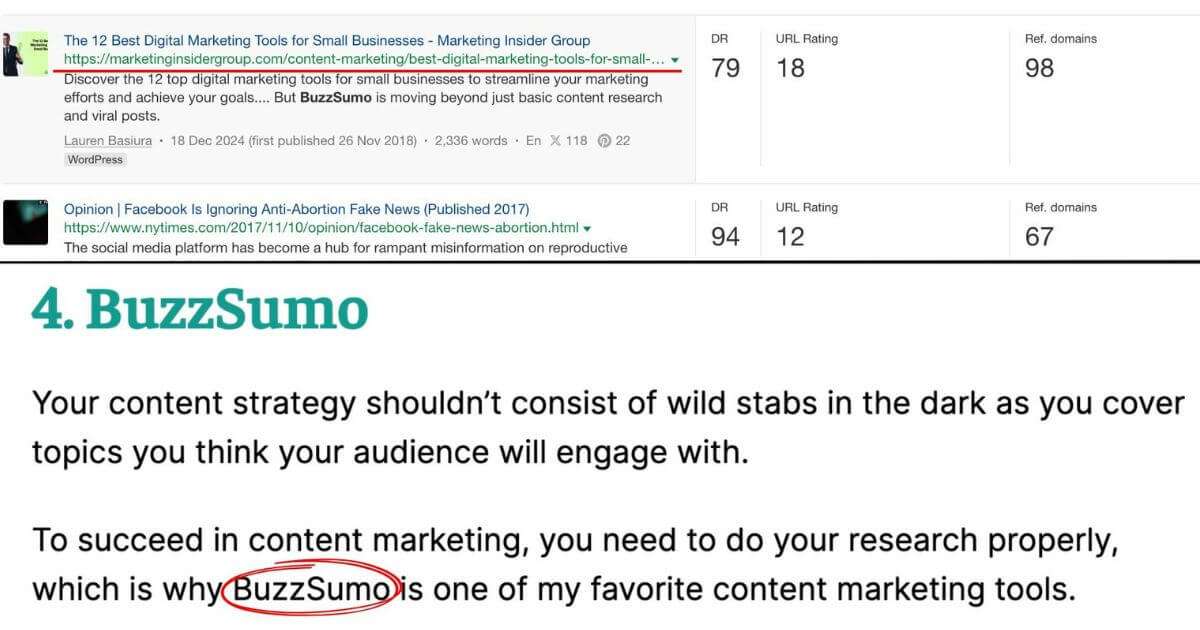
As you can see, turning brand mentions into backlinks is an effective manual niche edits tactic.
But there’s a catch.
If you’ve got a well-known brand, this can be low-hanging fruit. For smaller brands, though, it’s not always that straightforward. It usually takes more digging and a bit of persuasion to turn those mentions into actual links.
How to Find Unlinked Brand Mentions
There are several methods you can use to find unlinked brand mentions:
- Manually using search engine operators: Use queries like “Your Brand Name” -site:yourdomain.com to find mentions that don’t link back to your site.
- Free tools like Google Alerts and Talkwalker: Set up alerts to get notified whenever your brand is mentioned online.
- SEO tools with mention monitoring features: Platforms like Ahrefs (via the Content Explorer) and Semrush (with its Brand Monitoring Tool) can help you discover mentions across various sources.
- Specialized brand monitoring tools: Services like Prowly, BuzzSumo, BrandMentions, and many others offer more advanced tracking features, including social media and PR coverage.
Resource Page Links
Resource page link building involves getting your content included as one of the curated links on a page that lists helpful resources. Hence the name.
This is what niche edit links that come from a resource page look like:
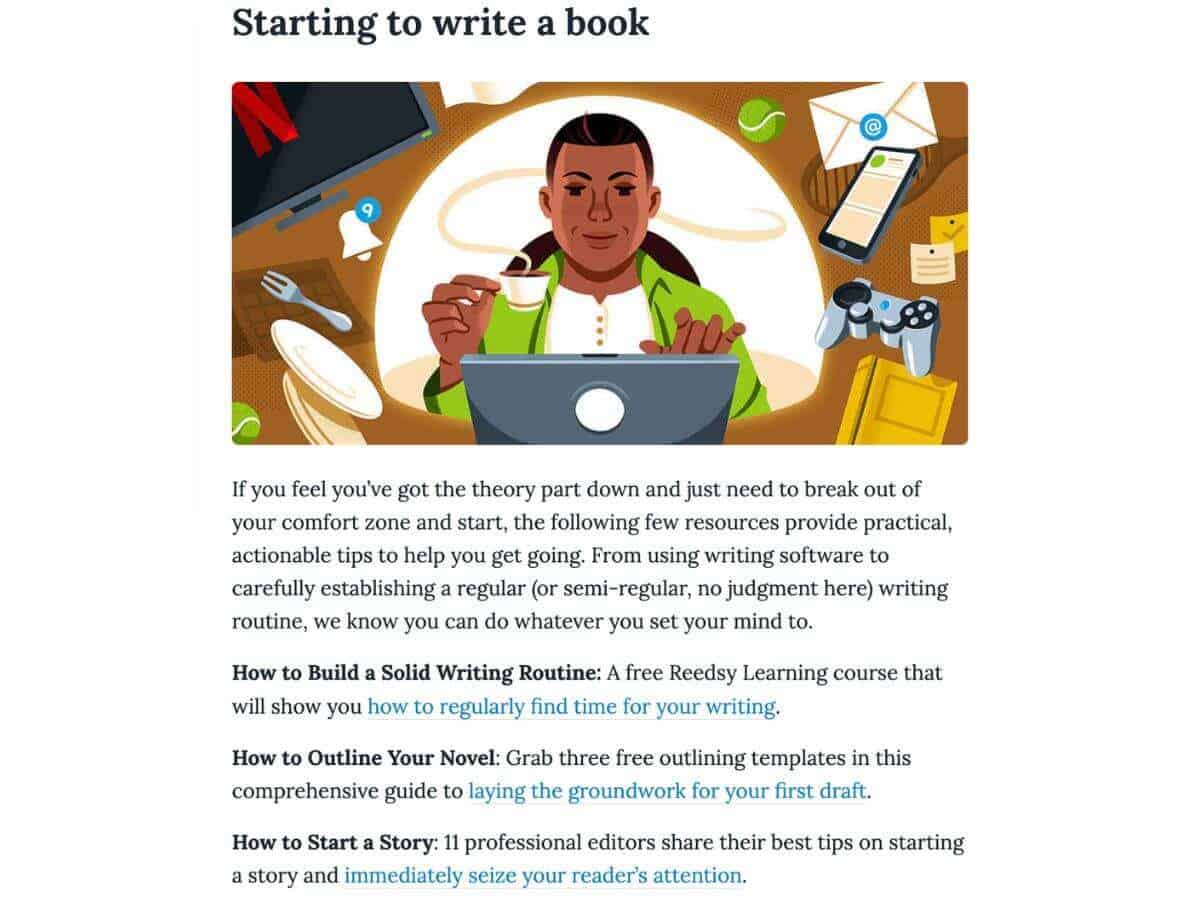
These resource pages exist specifically to guide visitors to useful information on a particular topic.
So, how can you take advantage of that?
Let’s say you’ve written a high-quality blog post, tool, research, or guide that fits the purpose of the page. Then, you can pitch it as a valuable addition.
How to Find Resource Pages
The way I would typically approach finding such lists is by using a combination of your target keyword and search operators in Google, like:
- your keyword inurl:resources (find pages related to your keyword where the URL contains the word “resources”)
- your keyword “best resources” (find pages that specifically mention the phrase “best resources” along with your keyword)
- your keyword “useful resources” (find pages that contain your keyword and the exact phrase “useful resources”)
- your keyword “helpful links” (find pages that mention your keyword and the exact phrase “helpful link”)
This is how your search results will look if your keyword is SEO:
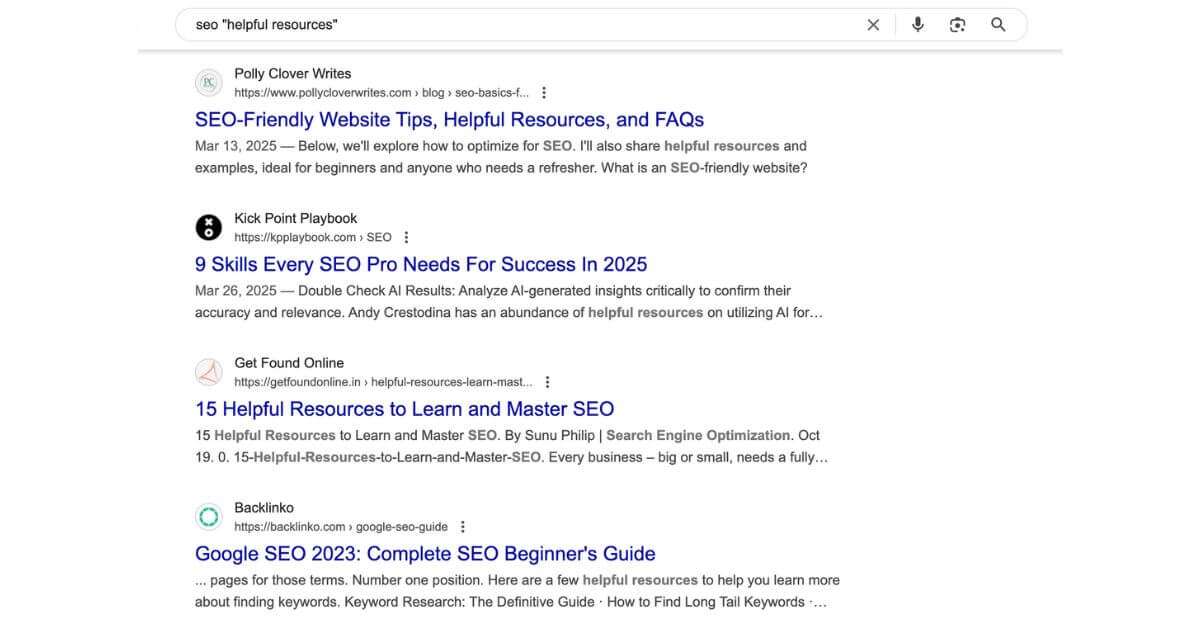
If you have a specific website from which you want to obtain a link, you can add site:yourwebsite.com to the strings, like this: site:yourwebsite.com “helpful links”
Benefits of Niche Edits
What makes this form of link building more appealing than, say, guest posting or digital PR
Here is a breakdown:
- You take advantage of the already existing page authority
Your links get placed inside published, indexed, and often ranking content. Google already knows about this page. And if it’s at the top of the SERPs, that means it trusts it.
- Niche edits often offer faster results
Since there is no need to write or pitch new content, the turnaround time is much quicker. Find a relevant page, place your link, and you’re done.
- This link building method is more cost-effective
Without the cost of content creation, niche edits are usually more affordable than guest posts or big outreach campaigns.
- It helps you build a link profile that looks natural
Your link sits contextually within relevant content, which makes it look organic. This helps create a diverse backlink profile that search engines like.
- Niche edits can improve your website’s domain authority (DA)
DA is a site-wide metric that estimates how authoritative a website is and how well it might rank in search engines. It’s one of the closest public indicators we have to Google’s PageRank. Getting links from high-DA websites increases your chances of ranking for more relevant searches.
- They can boost your rankings
Higher domain authority often leads to better positions in search results, helping your pages climb the rankings.
- Link insertions can increase organic traffic
As your rankings improve, more people will find your site naturally, resulting in a steady flow of organic traffic.
Guest Posts vs. Niche Edits: What’s The Difference
The main difference between a niche edit and a guest post comes from how and where your link gets placed.
A niche edit involves adding your backlink to existing content on someone else’s website.
A guest post requires writing a whole new article from scratch, where you can include an external link to your website.
Both of these methods rely on reaching out to journalists, bloggers, writers, and other content creators who might find your articles valuable and be open to linking to them.
To make the comparison easier, here is a simple niche edits vs. guest post outreach breakdown:
| Criteria | Niche Edits | Guest Posts |
| Content creation | Uses existing content on relevant websites | Requires writing and submitting brand-new content |
| Time investment | Usually faster to implement | Needs writing, editing, and approval time |
| Cost of production | Excludes costs associated with content production | Often more expensive due to content production |
| Link placement | The link is inserted contextually into already published content | The link is included naturally within newly written content |
| Control over content | Limited. You’re working within someone else’s content | High. You control the messaging, structure, and tone |
| Scalability | Easier to scale quickly with the right connections | Harder to scale due to content creation bottlenecks |
| Perceived value | Can appear more organic if done properly | Often seen as more authoritative and editorial |
| Approval rate | Depends on outreach and existing content fit | May be lower due to editorial standards or guidelines |
How to Use Niche Edits Safely
There is a thin line between a well-placed niche edit backlink and a spammy link insertion. Since Google firmly stands against ranking manipulations through link schemes, it can penalize your website for it. That’s why, before you get started with link building, you should know the difference between white-hat, gray-hat, and black-hat practices:
- White-hat niche edits involve proposing relevant content and link placements that add value to the page.
- Gray-hat methods don’t completely break the rules, but they aren’t fully in line with them either. For example, Google discourages paying for links or engaging in link exchanges, but it doesn’t necessarily penalize for these actions.
- Black-hat practices go against Google’s guidelines. They can involve tactics like inserting hidden links or adding links to low-quality content created for the purpose of link exchange. These can easily lead to penalties or even deindexing.
By now, it should be obvious—the best niche edits are white-hat. Treat them like any other ethical outreach strategy, and you’ll be just fine.
Here are some practices that I stand by:
- Target high-authority and relevant sites to your niche: Make sure the sites you’re working with have a good reputation and publish content related to your niche or industry.
- Add contextual link insertions: Your link should naturally fit within the content. It needs to add real value to the piece, not just tick a box for SEO.
- Use natural anchor text: Don’t overoptimize. Stick with anchor text that flows with the content and accurately represents your page.
- Avoid low-quality or spammy websites: Getting links from thin content farms or irrelevant news sites can hurt more than help.
- Avoid pages that are overloaded with links: An article with too many links (if they don’t make sense contextually) can send negative signals to Google.
- Stay away from shortcuts: When your link enhances the original article, it’s much more likely to be accepted and to benefit your SEO long-term.
Success Stories With Niche Edit Backlinks
To further prove my point, I asked experts to share their experiences with link insertions and how they influenced the performance of their websites.
Here is what they have to say:
“About 30% of our backlinks come from niche edits we select based on relevance and authority, with the majority being sites with a Domain Rating (DR) of at least 40+, to be certain that we are getting a quality link that is worthy of some contextual link juice.
In terms of what type of results to expect, as a general rule of thumb, we normally see a bump or bump(s) in ranking as early as four to six weeks post niche edit going live, as well as a 10% to 25% jump in organic search traffic over the following months.” — Deepak Shukla, CEO at Pearl Lemon.
“Editors should avoid including links in just-published articles that have no existing rankings. Otherwise, the edit loses its power and appears disingenuous. Additionally, choosing anchor text that is semantically aligned with the content increases the link’s perceived relevancy. This relevance results in faster movement for chosen keywords.” — Jeff Romero, Founder at Octiv Digital.
“I’ve seen niche edits drive significant improvements in domain rating (DR), search rankings, and organic traffic, particularly for clients targeting competitive keywords. Roughly 30% of our links come from niche edits, with the rest split between guest posts, digital PR, and other methods like broken link building. This balance keeps our backlink profiles diverse and natural, which is critical for long-term success.
A few years ago, we worked with a mid-sized e-commerce client selling fitness equipment. Their DR was stuck at 45, and they were struggling to rank for high-value terms like “home gym setups.” We secured niche edits on 10 fitness blogs with DRs ranging from 50 to 70, embedding links in relevant articles about workout routines. Within three months, their DR climbed to 52, and their target pages jumped from the second page to the top five for several keywords. Organic traffic increased by 28%, translating to roughly 4,000 additional monthly visitors.
Compared to guest posting, niche edits gave us faster results since the pages were already indexed and authoritative. Digital PR, while great for brand visibility, often takes longer to influence rankings directly and requires more resources to execute well.” — Paul DeMott, Chief Technology Officer at Helium SEO.
“In our campaigns, approximately 40% of our backlinks come from niche edits, particularly on DR 40-70 domains with strong topical relevance. For example, one client in the B2B SaaS niche saw a 35% increase in organic traffic and a jump from position #11 to #5 for a high-value keyword within six weeks of implementing niche edits.” — Visha Garg, SEO Lead, Smartlead
“I worked on a SaaS site with a DR of 22. It went from about 400 to 2,300 monthly organic visits in under two months. That was after adding just a dozen niche edits. These links came from domains with an average DR of 48. All were placed within aged, relevant articles. No content updates were made. Just consistent, well-placed backlinks.” — Josiah Roche, Fractional CMO, JRR Marketing
Wrap Up
Let’s recap: niche edits offer quick, scalable, and cost-effective ways to improve your search rankings, as long as they’re implemented the right way.
To get the most out of them, treat them as one part of a well-rounded link building strategy.
When combined with guest posts, digital PR, and other white-hat tactics, they help you build a more natural and resilient backlink profile without risking penalties or wasting time.
Hopefully, this article made the concept of niche edits less mysterious and a lot more useful for your next link building campaign.
And if you feel stuck: