

Email marketing and SEO work together to increase your website’s ranking, drive organic traffic, and amplify your brand’s presence on search engines like Google.
SEO and email marketing are not rivals. They’re partners, and together, they can transform your digital marketing strategy from average to unstoppable.
As an SEO expert with over ten years in the trenches, I’ve seen how aligning these two powerhouses can multiply results and create an accelerating growth cycle.
Stick with me as I share the exact playbook I use to help brands climb to the top of Google search results using nothing but smart content, email, links, and a dash of creative strategy.
Highlights
- Combining SEO and email marketing drives more qualified organic traffic.
- Email campaigns increase site engagement and earn valuable backlinks.
- Keyword-rich content in emails supports search engine optimization efforts.
- Tracking email marketing campaigns with Google Analytics reveals real ROI.
The Basics of SEO
Search engine optimization (SEO) means making your website and web content visible and relevant for search engines like Google.
It’s also about ranking high in search results with quality content that meets the needs of your target audience and gives them a top-notch experience on your site.
When SEO is done right, your website shows up for the exact search queries your audience types into Google search, without you having to pay for ads.
But here’s the twist:
Even the best-optimized website will struggle if no one visits, shares, or links to it. That’s where email marketing for SEO comes in.
How Email Marketing Can Help SEO: A Powerful Synergy
You might wonder:
How does sending emails help my site appear higher in Google search results?
Here’s the answer:
Email marketing and SEO work together by driving traffic, increasing engagement, and generating backlinks—signals that search engines love.
When you run email marketing campaigns, you deliver your latest content straight to people who already care—your subscribers. These readers are primed to click, comment, and share. Every visit, every link they create, and every minute they spend on your site tells Google that your content is valuable. This is the heart of how email marketing can help SEO.
Let’s look at the specifics.
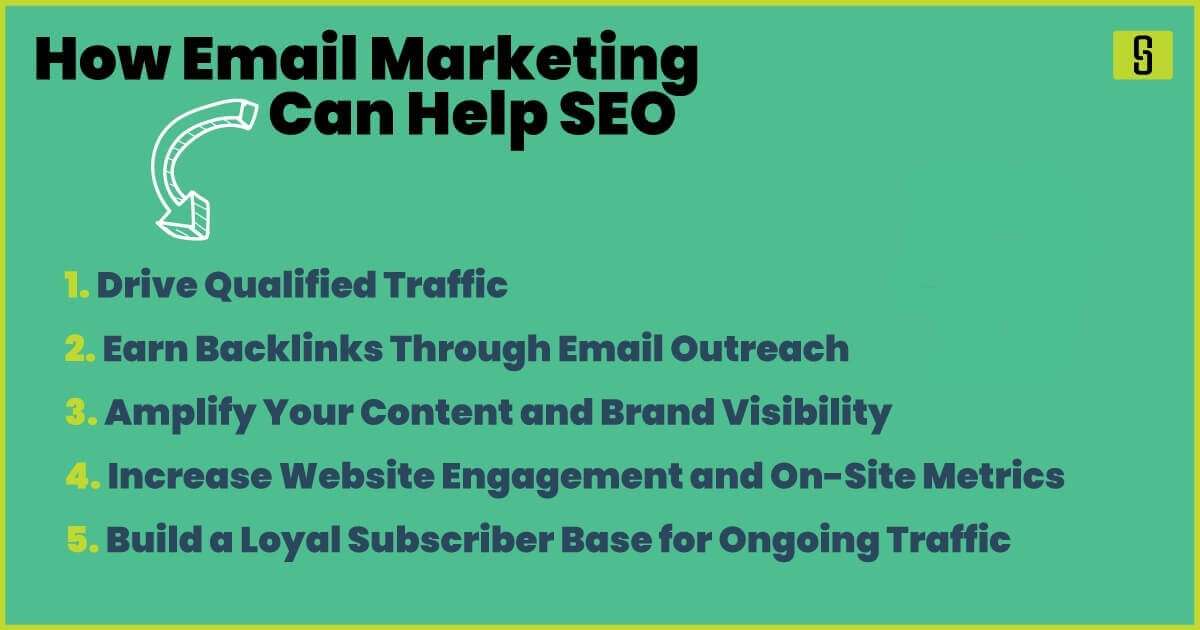
1. Drive Qualified Traffic
First, email marketing in SEO is all about sending content directly to people who want it. This way, you drive qualified traffic. When email subscribers click through to your site, they’re more likely to engage. This sends strong engagement signals to Google and other search engines.
Here’s what you must focus on:
- Send targeted content that matches your audience’s interests.
- Use keywords in your subject lines and email copy for consistency.
- Link to high-value pages to increase time on site and reduce bounce rates.
Why does this matter?
When users spend more time on your website and interact with your content, Google’s web crawlers see your site as more valuable. Increased engagement can translate into higher rankings, which means more organic search traffic for your business.
2. Earn Backlinks Through Email Outreach
Want your content to rank?
You need backlinks.
One method that works:
Share your best content with thought leaders and bloggers via email. If you’ve created something truly valuable, they might link back to your site. This is a practical example of email marketing for SEO in action.
To earn backlinks through email, try this step-by-step approach:
- Use tools like Ahrefs or Semrush to find competitors’ backlinks.
- Identify websites linking to your competitors’ content.
- Reach out via email, introduce your resource, and explain why it’s a better fit.
- Follow up respectfully—sometimes, a second email makes all the difference.
This approach works because it’s personal, relevant, and based on real value. When you work together with other brands or bloggers, you build relationships that benefit your search engine optimization for the long haul.
3. Amplify Your Content and Brand Visibility
Content marketing is crowded.
When you publish a new blog post, don’t let it gather dust. Use your email list to promote new articles, videos, or guides. This drives traffic and increases the odds of your content getting shared and linked to—both critical for search engine optimization.
Ready to see how this works in real life? Keep reading.
4. Increase Website Engagement and On-Site Metrics
When your email marketing campaigns send people to your site, those visitors are primed to interact. Higher on-site engagement means lower bounce rates, more pageviews per session, and longer time on site. These signals tell Google search that your website is providing value, which can move you up in the search results.
A strong email marketing strategy supports your SEO by keeping your audience engaged and returning for more.
5. Build a Loyal Subscriber Base for Ongoing Traffic
Organic search is powerful, but it can be unpredictable due to algorithm updates, competition, and shifting trends.
But your email list is yours.
By growing your mailing list, you guarantee a steady stream of qualified visitors who are interested in your web content. This sustained engagement helps reinforce your rankings and supports your overall marketing strategy.
My Personal Strategy: How I Combine SEO and Email Marketing
After a decade of A/B tests and analytics deep-dives, I’ve landed on a process that gets results every single time.
Here’s my tried-and-tested, personal approach:
- Keyword research fuels both channels: I start by identifying relevant keywords for both web content and email. This keeps messaging consistent and reinforces my brand’s search signals.
- Segmented email campaigns: I never blast my entire list with the same message. Instead, I segment by user intent and behavior—sending valuable, relevant content to each group.
- Optimize subject lines and previews: I treat every subject line and preview text as mini-SEO opportunities, using keywords and language that matches my audience’s search intent.
- Track everything: Every link in my emails uses UTM tracking, allowing me to analyze traffic and conversions in Google Analytics. This helps me refine both my SEO and email marketing strategy.
- Encourage social sharing: Each email includes a simple request for readers to share the content if they found it valuable. Even a few shares can earn new backlinks or mentions.
- Integrate Calls-to-Action (CTAs): Every email drives readers to a specific action, whether it’s reading a blog post, sharing on social media, or replying with feedback.
This process consistently increases both open rates and website ranking, while building lasting relationships with my audience.
SEO Emails: Optimization Techniques for Maximum Results
Let’s talk about SEO emails—emails that are built to support your search engine optimization efforts. You want these emails to drive engagement, clicks, and shares, all while reinforcing your site’s main keywords.
Here’s what’s important:
- Use keywords naturally in your email subject lines and content.
- Link to high-value pages and landing pages.
- Add engaging visuals, but prioritize text for user-friendliness.
- Encourage replies and interaction—this helps deliverability, which improves reach.
- Always include a clear call-to-action (CTA) that drives users to your website.
How Do SEO Emails Improve Organic Traffic?
When you send out high-quality, keyword-rich emails, you encourage subscribers to visit your site and interact with your content. More engagement signals to Google that your site deserves a better spot in the search results.
Every email is a chance to support your website ranking and strengthen your brand reputation.
Example of an Email That Supports SEO
Subject Line:
Is Your Content Ready for Generative Engine Optimization (GEO)?
Body:
Hi [First Name],
Search is evolving—and it’s not just about keywords anymore. With AI-driven platforms like Perplexity and ChatGPT reshaping how people find answers, it’s time to level up your strategy with Generative Engine Optimization (GEO).
What Is GEO?
GEO is the next evolution of SEO. It’s all about creating high-quality, authoritative content that AI tools can understand, summarize, and recommend.
In our latest guide, you’ll learn:
- How to optimize content for AI-powered search
- Why structured data and clarity matter more than ever
- GEO techniques to boost your brand’s visibility in AI results
Want to stay ahead of the algorithm?
Read the GEO Optimization Guide: https://yourdomain.com/geo-strategy/
We’d love to hear your thoughts—just hit ”Reply” and tell us how you’re preparing for AI-driven search.
To smarter content,
The YourDomain Team
Case Study: The Real Impact of Email Marketing in SEO
One of my clients, a SaaS company, struggled to gain traction on Google, despite having excellent technical SEO. Their breakthrough came when I started integrating their email marketing campaigns with their content strategy.
Here’s what I did:
- Used keyword research to plan both blog posts and email topics.
- Sent targeted newsletters for each article, encouraging subscribers to read and share.
- Reached out to industry bloggers with personalized emails, requesting backlinks to new resources.
- Tracked every click and conversion in Google Analytics using UTM parameters.
The result?
Their organic search traffic doubled in six months. It was a textbook example of how email marketing and SEO can work together to drive real business results.
How to Track the Impact of Email Marketing on SEO
Wondering if your strategy is actually working?
Here’s how to measure the impact of email marketing on SEO:
- Use UTM parameters in your email links to track visits in Google Analytics.
- Monitor changes in organic traffic and rankings after each campaign.
- Analyze user behavior—are email visitors spending more time on your site?
- Track backlink growth via tools like Ahrefs or Semrush.
Follow these simple steps to set up UTM tracking for email campaigns:
- Use Google’s Campaign URL builder to add UTM parameters (website, campaign source, medium, etc.) to your links.
- Insert the custom URL in your email.
- Check the data in your Google Analytics dashboard.
What should you look for?
Focus on metrics such as traffic from email, time on page, conversion rates, and new backlinks generated after campaigns. These insights help you fine-tune your marketing strategy and prove the ROI of your efforts.
Common Pitfalls and How to Avoid Them
No strategy is perfect. Here are a few issues I’ve come across, along with some quick solutions that might help:
- Struggling to build an email list: Offer valuable content or lead magnets such as ebooks, checklists, or exclusive insights.
- Deliverability issues: Use reputable email marketing apps and test with tools like MailGenius or GlockApps. Keep your list clean by removing unengaged subscribers.
- Not getting results: Regularly update your content and email lists to keep them fresh and relevant. Test different subject lines, content formats, and sending times.
- Regulatory compliance: Make sure your campaigns comply with laws like GDPR and CAN-SPAM to protect your brand reputation.
- Tracking challenges: Double-check your analytics setup. Use UTM parameters on every link and regularly review your Google Analytics dashboard.
Recommended Tools for Email Marketing Optimization
These are the tools I recommend for seamless integration and optimization of your email and SEO efforts:
- Email service providers: Constant Contact, Brevo, Marketing Cloud by Salesforce.
- Deliverability testers: MailGenius, GlockApps.
- Personalization tools: Hyperise for dynamic images and CTAs.
- Analytics: Google Analytics for tracking campaign performance.
- Keyword research: Semrush, Ahrefs, Moz for finding the best email marketing keywords.
- Landing page builders: Unbounce, Leadpages for creating optimized landing pages for email campaigns.
Wrap Up
Email marketing and SEO are your digital power duo. When your email content supports your SEO goals, you’re building an unstoppable feedback loop of traffic, engagement, and conversions.
The smartest digital marketers know that every piece of content is a chance to engage and every email can turn into a traffic magnet.
Start combining them to dominate the search results and stay top-of-mind in your audience’s inbox.
Want to compare other digital marketing strategies? Read this SEO vs SMM comparison.
FAQ
Can email marketing directly impact my website’s SEO rankings?
No, email marketing doesn’t directly affect rankings, but it drives traffic, engagement, and backlinks—all factors that influence search engine optimization.
What are the best tools for integrating email marketing and SEO?
Top picks include Google Analytics, Constant Contact, Brevo, Hyperise, and Ahrefs for backlink tracking.
How do I use email marketing keywords in campaigns?
Include keywords in subject lines, preview text, and email content to align with your website’s main topics.
What is the most important metric to track for SEO from email campaigns?
Focus on organic traffic growth and backlink acquisition from email-generated outreach.


