

Effective digital marketing tips can transform your business from struggling online to dominating your competition and generating consistent revenue.
You’ve tried random digital marketing tactics. Followed generic advice. Posted on social media platforms religiously.
But your online sales remain flat.
I’m Nikola, and after 10 years of helping businesses build their digital presence through strategic SEO and link building, I can tell you this:
Most businesses fail at digital marketing because they lack a systematic approach that connects all their efforts.
In this guide, I’ll share the exact digital marketing strategies that have helped my clients achieve 3.2x average traffic growth and build sustainable online businesses.
Highlights
- Focus on your target audience first, then choose the right digital channels for maximum impact
- Email marketing remains the highest ROI channel with $42 return for every $1 spent
- Content creation drives 3x more leads than paid advertising at 62% lower cost
- Social media platforms work best when integrated with your overall marketing strategy
- Analytics tools help you optimize campaigns and stop wasting money on ineffective tactics
Why Most Digital Marketing Tips for Small Businesses Don’t Work
Here’s the problem:
Most digital marketing tips for beginners focus on individual tactics rather than building a cohesive strategy. You end up with a Facebook page here, some Google ads there, and maybe an email newsletter that gets ignored.
That’s not digital marketing. That’s digital chaos.
After analyzing hundreds of campaigns, I’ve noticed successful businesses follow a different approach. They start with their customer data, understand their target segment, and then build integrated campaigns across multiple digital channels.
The businesses that spend time creating this foundation see dramatically better results. They know exactly where their customers hang out online, what content resonates, and which marketing campaigns actually drive revenue.
Top 5 Digital Marketing Tips for Beginners
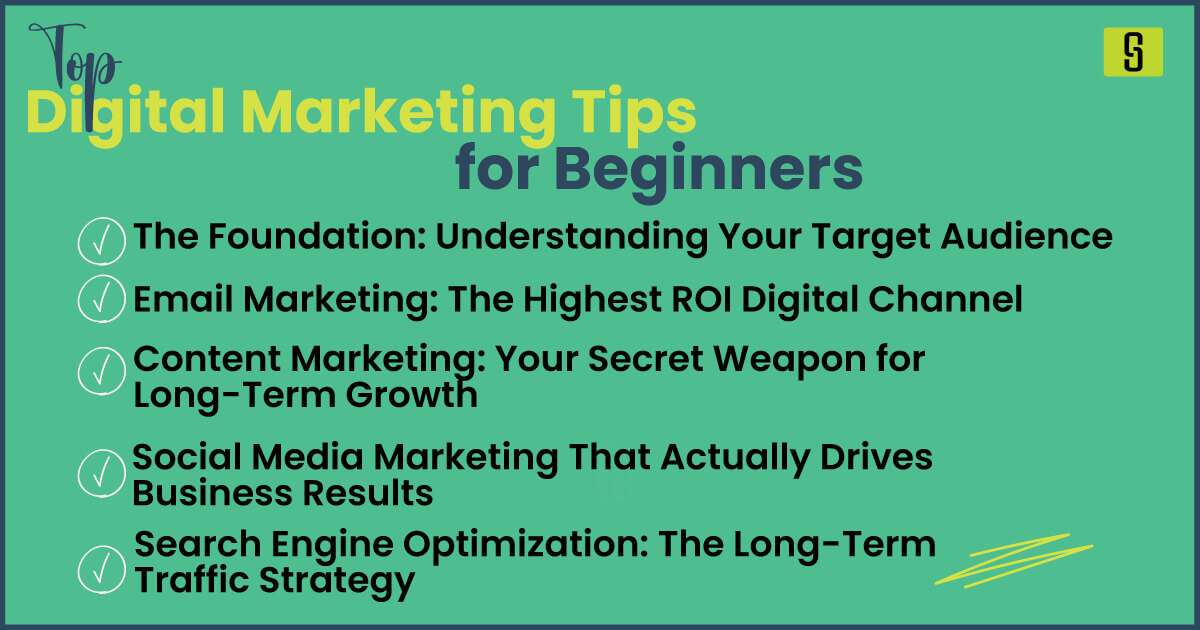
Starting your digital marketing journey? Here are my top five beginner-friendly tips to help you build a strong online presence and drive real results.
1. The Foundation: Understanding Your Target Audience
Before you create content or launch campaigns, you need to know who you’re talking to.
Your target audience isn’t everyone who might buy my product. It’s the specific group of people who have a problem your business solves and the means to pay for your solution.
Start by analyzing your current customer data:
- What demographics do your best customers share?
- Which social media platforms do they use most?
- What type of content do they engage with?
- When are they most active online?
- What problems are they trying to solve?
I use this data to create detailed customer profiles that guide every digital marketing strategy decision. When you know your audience this well, choosing the right marketing channels becomes obvious.
For example, if your target audience consists of busy professionals aged 35–50, LinkedIn might be more effective than TikTok. If you’re targeting college students, Instagram and Snapchat could be your primary channels.
2. Email Marketing: The Highest ROI Digital Channel
Despite what you might hear about new platforms, email marketing still delivers the best return on investment in digital marketing.
The numbers don’t lie:
- Email generates $42 for every $1 spent
- It’s 40x more effective at acquiring customers than Facebook or Twitter
- 91% of consumers check their email daily
But here’s what most digital marketing tips and tricks won’t tell you:
Success with email marketing isn’t about sending more emails. It’s about sending the right emails to the right people at the right time.
Here’s my approach to email marketing that actually works:
- Segment your list based on behavior. Don’t send the same email to everyone. Create different campaigns for new subscribers, repeat customers, and people who haven’t purchased yet.
- Focus on value, not sales. Every email should provide something useful—tips, insights, or solutions to problems your audience faces. Save the sales pitches for specific campaigns.
- Use automation to nurture leads. Set up automated sequences that guide subscribers from initial interest to purchase. This includes welcome series, educational content, and abandoned cart recovery.
- Test everything. Subject lines, send times, content length, and call-to-action buttons all impact your results. Small improvements in open rates and click-through rates compound over time.
3. Content Marketing: Your Secret Weapon for Long-Term Growth
Content creation remains one of the most effective digital marketing strategies for building authority and attracting customers.
But not all content is created equal.
The content that drives results answers specific questions your target audience is asking. It provides genuine value and positions your business as the solution to their problems.
Here’s how I approach content marketing for maximum impact:
- Start with keyword research. Use tools like Google Keyword Planner or Ahrefs to find what your audience is searching for. Focus on topics where you can provide unique insights or better information than existing content.
- Create comprehensive resources. Instead of surface-level blog posts, create in-depth guides that become the definitive resource on a topic. These pieces attract more backlinks and social shares.
- Repurpose content across channels. Turn a detailed blog post into social media posts, email newsletters, and video content. This maximizes your content investment and reaches people who prefer different formats.
- Optimize for search engines. Follow SEO best practices to help your content rank higher in Google. This includes using relevant keywords naturally, optimizing meta descriptions, and building internal links between related articles.
The businesses that succeed with content marketing treat it as a long-term investment, not a quick fix. They consistently publish valuable content and gradually build authority in their industry.
4. Social Media Marketing That Actually Drives Business Results
Social media platforms offer incredible opportunities to connect with your audience, but only if you use them strategically.
Most businesses make the mistake of trying to be everywhere at once. They spread their efforts across Facebook, Instagram, Twitter, LinkedIn, and TikTok without a clear plan for any of them.
Here’s a better approach:
- Choose 2–3 platforms where your audience is most active. Focus your efforts on doing these well rather than maintaining a mediocre presence everywhere.
- Create platform-specific content. What works on LinkedIn won’t necessarily work on Instagram. Adapt your messaging and format to fit each platform’s culture and user expectations.
- Engage authentically with your community. Social media marketing isn’t just broadcasting your message. Respond to comments, join conversations, and build real relationships with your followers.
- Use social media to drive traffic to your website. The goal isn’t just likes and follows—it’s converting social media engagement into email subscribers and customers.
- Track the right metrics. Vanity metrics like follower count don’t matter if they’re not driving business results. Focus on engagement rates, click-through rates, and conversions.
To understand which channel delivers better ROI for your specific business, read our comprehensive guide on SEO vs SMM.
5. Search Engine Optimization: The Long-Term Traffic Strategy
SEO might not provide instant results, but it’s one of the most valuable digital marketing investments you can make.
When done correctly, SEO drives consistent, high-quality traffic to your website for years without ongoing advertising costs.
Here are the SEO fundamentals every business should implement:
- Optimize your website for mobile users. Google prioritizes mobile-friendly websites in search results. Make sure your site loads quickly and looks good on smartphones and tablets.
- Create valuable, original content regularly. Search engines reward websites that consistently publish helpful, relevant content. This also gives you more opportunities to rank for different keywords.
- Build high-quality backlinks. Links from reputable websites signal to Google that your content is trustworthy and valuable. Focus on creating content worth linking to and building relationships with other websites in your industry.
- Optimize your Google Business Profile. For local businesses, this is crucial for appearing in local search results. Keep your information updated, collect positive reviews, and post regular updates.
- Use analytics tools to track performance. Monitor your search rankings, organic traffic, and conversion rates. This data helps you identify what’s working and where to focus your efforts.
The businesses that succeed with SEO as a marketing channel think long-term. They consistently work on improving their website and creating valuable content, knowing that the results compound over time.
My Personal Experience: What I’ve Learned After 10 Years in Digital Marketing
After a decade of helping businesses grow online, I’ve seen patterns in what separates successful companies from those that struggle.
The biggest difference isn’t budget or industry—it’s approach.
Successful businesses treat digital marketing as an integrated system where each channel supports the others. Their email marketing drives traffic to their website, their content marketing supports their SEO efforts, and their social media engagement builds their email list.
They also understand that digital marketing is about building relationships, not just generating immediate sales. They focus on providing value first, knowing that trust leads to long-term customer relationships and higher lifetime value.
The businesses that fail try to find shortcuts. They want instant results without putting in the consistent effort required to build a strong online presence. They jump from tactic to tactic without giving any strategy enough time to work.
My advice:
Pick a few channels that align with your audience and business goals. Execute them well consistently for at least six months before evaluating results. Digital marketing rewards patience and consistency more than clever tactics.
Measuring Success: Analytics and Optimization
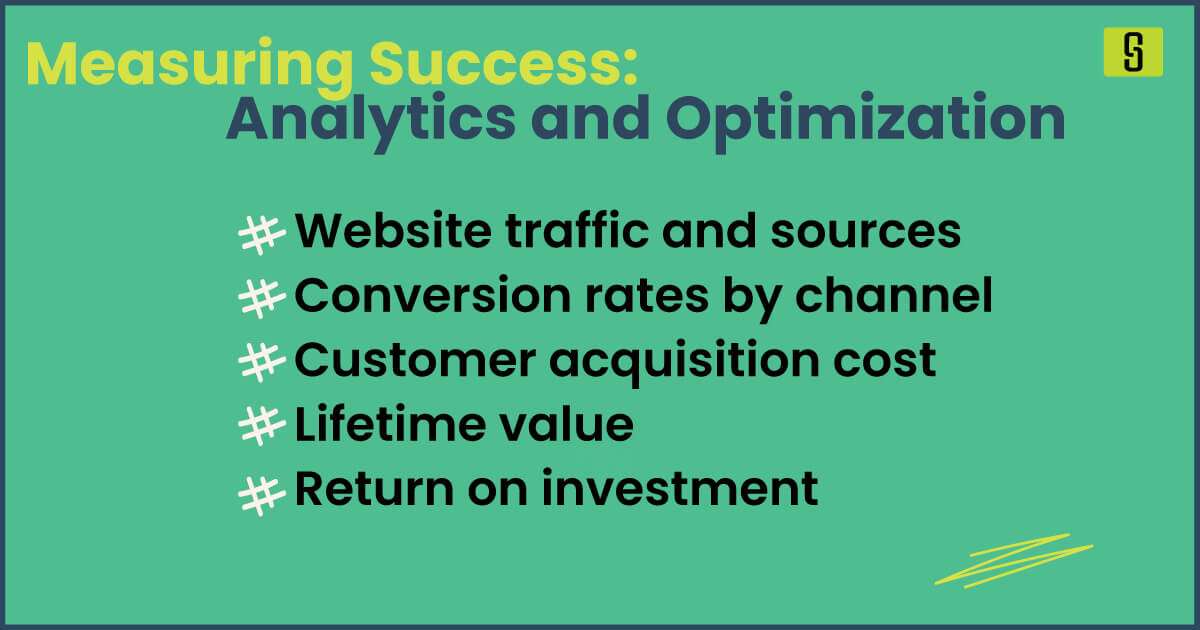
You can’t improve what you don’t measure.
The most successful businesses I work with are obsessive about tracking their digital marketing performance. They know exactly which channels drive the most valuable customers and allocate their resources accordingly.
Here’s what you should be measuring:
- Website traffic and sources. Use Google Analytics to understand where your visitors come from and which pages they engage with most.
- Conversion rates by channel. Track how many visitors from each marketing channel actually become customers. This helps you focus on the most profitable activities.
- Customer acquisition cost. Calculate how much you spend to acquire each new customer through different channels. This ensures your marketing campaigns remain profitable.
- Lifetime value. Understand how much revenue each customer generates over time. This helps you determine how much you can afford to spend on acquisition.
- Return on investment. For every dollar you spend on digital marketing, how much revenue do you generate? This is the ultimate measure of success.
Use this data to continuously optimize your campaigns. Double down on what’s working and eliminate what isn’t delivering results.
Avoiding Common Digital Marketing Mistakes
Even experienced marketers make mistakes that hurt their results. Here are the most common ones I see:
- Trying to be everywhere at once. It’s better to excel on two platforms than to be mediocre on five. Focus your efforts where they’ll have the most impact.
- Ignoring mobile users. More than half of web traffic comes from mobile devices. If your website isn’t mobile-friendly, you’re losing potential customers.
- Not testing different approaches. What works for one business might not work for yours. Test different headlines, images, and calls-to-action to find what resonates with your audience.
- Focusing only on acquisition. It’s cheaper to retain existing customers than acquire new ones. Don’t neglect email marketing to your current customer base.
- Not having clear goals. Every marketing campaign should have specific, measurable objectives. Without clear goals, you can’t determine if your efforts are successful.
Wrap Up
Effective digital marketing tips aren’t about following the latest trends or using every available platform. They’re about understanding your audience, choosing the right channels, and executing consistently with a focus on providing value.
The businesses that succeed online build integrated marketing strategies that work together to attract, engage, and convert customers. They measure their results, optimize based on data, and maintain a long-term perspective on growth.
Start with the fundamentals: know your audience, create valuable content, and choose the channels where your customers spend their time. Execute these basics well, and you’ll see better results than businesses trying to do everything at once.
FAQ
What’s the most effective digital marketing strategy for small businesses?
Email marketing combined with content marketing provides the best ROI for most small businesses. Focus on building an email list through valuable content, then nurture those leads with helpful emails that build trust and drive sales.
How much should I spend on digital marketing?
Most successful businesses spend 7–10% of their revenue on marketing. Start with a smaller budget and increase it as you identify which channels deliver the best return on investment for your specific business.
Which social media platform should I focus on first?
Choose the platform where your target audience is most active. LinkedIn works well for B2B companies, Instagram for visual brands targeting younger demographics, and Facebook for local businesses serving diverse age groups.
How long does it take to see results from digital marketing?
SEO and content marketing typically take 3–6 months to show significant results. Email marketing and paid advertising can generate results within weeks. Social media marketing falls somewhere in between, usually showing engagement within a month.
Should I hire an agency or do digital marketing in-house?
This depends on your budget, expertise, and time availability. Agencies bring specialized knowledge and can execute faster, while in-house teams understand your business better. Many successful businesses start in-house and add agency support for specialized areas like SEO or paid advertising.


