

Integrated digital marketing is a strategic approach that coordinates all your digital channels (content, social media, SEO, email, and paid ads) to deliver one consistent brand message and customer experience.
After a decade in SEO and digital marketing, I’ve seen businesses triple their engagement and cut acquisition costs by 40% simply by making their channels work together instead of operating in isolation.
Most companies waste money running disconnected campaigns. Your social media says one thing. Your website says another. Your email campaigns tell a different story. Customers get confused, trust erodes, and conversions tank.
But when you align everything, magic happens. Your content marketing fuels your social media. Your SEO supports your paid ads. Your email campaigns reinforce your brand identity. Every touchpoint builds on the last, creating momentum that isolated tactics can’t match.
Ready to stop wasting budget on disconnected campaigns? Let me show you how to integrate your digital marketing channels and create a customer experience that converts.
Highlights
- Integrated marketing aligns all channels to deliver one consistent brand message
- Companies see 3x higher engagement when campaigns work across platforms
- Data-driven coordination cuts cost per acquisition by up to 40%
- Customer lifecycle management improves when touchpoints connect seamlessly
- Unified strategies build stronger brand awareness than isolated tactics
What Is Integrated Digital Marketing and Why It Matters?
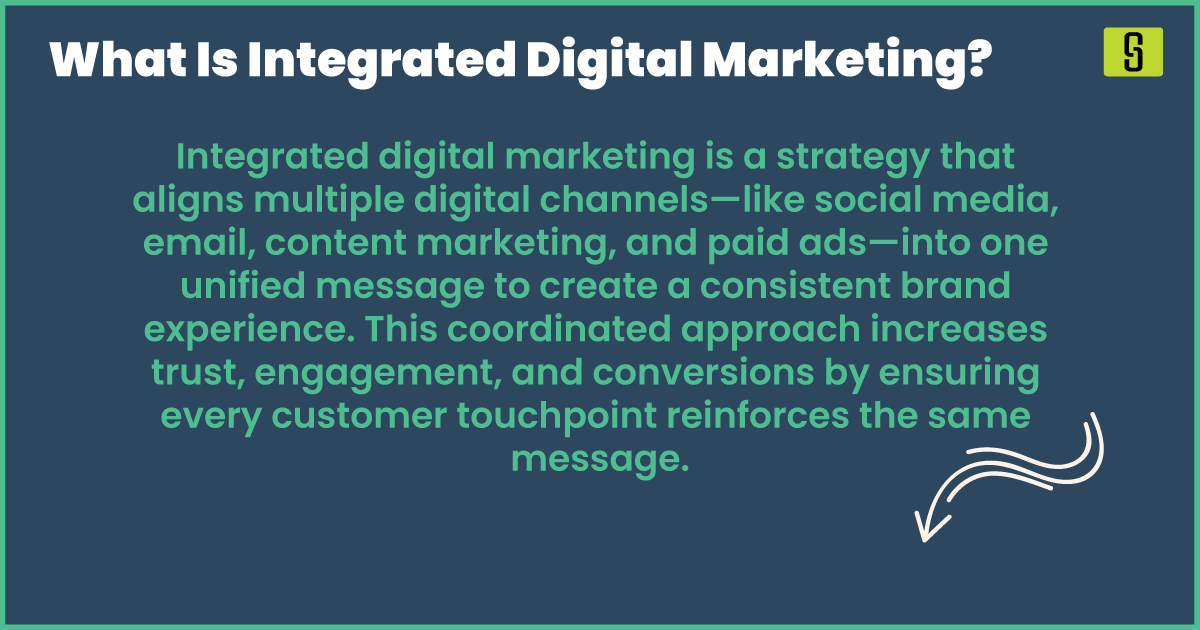
Integrated digital marketing combines multiple digital marketing channels into one cohesive strategy. Instead of running separate campaigns on social media, email, content marketing, and paid ads, you synchronize them to reinforce each other.
Think of it like an orchestra. Each instrument (channel) plays its part, but the magic happens when they all follow the same score. Your social media marketing echoes your content marketing. Your email campaigns reference your blog posts. Your paid ads align with your organic social media content.
The numbers don’t lie. Businesses using integrated marketing communications see significantly higher brand awareness and customer engagement.
Why?
Because customers encounter your brand identity consistently across every platform they use.
Here’s what happens without integration:
Your customer sees a Facebook ad about your premium service. They click through, but your landing page talks about budget options. They check your Instagram, and the messaging is completely different. Confused, they leave. You just lost a sale because your channels weren’t speaking the same language.
Now picture this instead:
That same customer sees your Facebook ad. They visit your website and find the exact message reinforced. Your email follow-up continues the conversation. Your blog post answers their specific questions. Your social media platforms showcase real results. Every touchpoint builds trust and moves them closer to conversion.
That’s the power of digital integrated marketing.
The Core Components of an Integrated Digital Marketing Strategy
After working with dozens of clients, I’ve identified the essential elements that make integration work.
Content Marketing as Your Foundation
Content is the fuel that powers every other channel. Your blog posts, videos, infographics, and guides give your social media something to share, your email campaigns something to deliver, and your SEO strategy something to rank.
I always start with content because it addresses what your audience actually searches for. When you create valuable content that solves real problems, you build authority and trust. Then you distribute that content across all your digital marketing channels to maximize reach.
Social Media Integration
Social media isn’t just about posting pretty pictures. It’s about creating conversations that support your broader marketing strategy. Your social media channels should amplify your content, engage your audience, and drive traffic back to your owned properties.
The key?
Consistency. Your brand voice, visual identity, and messaging should feel identical whether someone finds you on LinkedIn, Instagram, or Twitter. But adapt the format to each platform’s strengths. LinkedIn gets professional insights. Instagram gets visual storytelling. Twitter gets quick tips and engagement.
SEO and Organic Search
Search engine optimization isn’t separate from your marketing—it’s woven through everything. Your content marketing needs SEO to get found. Your social media marketing benefits from SEO-optimized profiles. Even your paid campaigns perform better when supported by strong organic rankings.
I’ve seen businesses rank for competitive keywords by coordinating their content calendar with their link building efforts and social promotion. When you publish a comprehensive guide, promote it across social media platforms, earn backlinks, and optimize for search intent, you create momentum that isolated tactics can’t match.
Email Marketing Integration
Email remains one of the highest-ROI channels when integrated properly. Your email campaigns should reference your latest blog posts, promote your social media content, and guide subscribers through personalized journeys based on their behavior.
Segmentation is crucial here. Not everyone in your audience is at the same stage of the customer lifecycle. New subscribers need educational content. Engaged readers need deeper resources. Ready-to-buy prospects need case studies and demos.
Paid Advertising Coordination
Paid ads work exponentially better when they’re part of an integrated approach. Your paid search campaigns should align with your organic content. Your social media ads should retarget website visitors. Your display advertising should reinforce messages from other channels.
I’ve managed campaigns where we reduced cost per acquisition by 40% simply by coordinating ad messaging with content marketing and email follow-ups. When customers see consistent messages across paid and organic touchpoints, conversion rates soar.
Building Your Integrated Digital Marketing Campaign
Let’s get practical. Here’s how to build an integrated digital marketing campaign that actually works:
Step 1: Define Your Core Message
Everything starts with clarity. What’s the one thing you want your audience to understand about your brand? This becomes your north star—every channel, every piece of content, every ad should support this central message.
I worked with a B2B SaaS company that was drowning in inconsistent messaging. Their ads talked about innovation. Their website emphasized affordability. Their content focused on features. Customers were confused, and conversions were low.
We simplified everything to one core message: “Make data-driven decisions faster.” Suddenly, every channel reinforced this benefit. Within three months, their conversion rate increased by 67%.
Step 2: Map Your Customer Journey
Understanding how customers move from awareness to purchase is critical. Map out every touchpoint:
- How do they first discover you? (Organic search, social media, referrals?)
- What questions do they have at each stage?
- Which channels do they prefer for different types of information?
- What objections prevent them from buying?
Your integrated digital marketing plan should address each stage with coordinated tactics.
- Awareness stage? Focus on educational content distributed across social media and SEO.
- Consideration stage? Deploy case studies, comparison guides, and email nurture sequences.
- Decision stage? Use retargeting ads, testimonials, and direct marketing.
Step 3: Create a Unified Content Calendar
This is where integration becomes operational. Your content calendar should show:
- What content is published and when
- Which channels promote each piece
- How messages connect across platforms
- When email campaigns deploy
- When paid campaigns launch
The goal is coordination. When you publish a comprehensive guide on your blog, your social media marketing promotes it, your email campaign features it, and your paid ads drive traffic to it. Everything works together.
For more insights on coordinating your efforts, check out these digital marketing tips that complement integrated strategies.
Step 4: Establish Brand Guidelines
Consistency requires documentation. Create clear guidelines for:
- Visual identity (logos, colors, fonts, imagery style)
- Brand voice and tone
- Messaging frameworks
- Channel-specific best practices
Every team member and contractor should have access to these guidelines. When everyone understands how to represent your brand, maintaining consistency across channels becomes automatic.
Step 5: Implement Cross-Channel Analytics
You can’t improve what you don’t measure. Set up tracking that shows how channels work together:
- Multi-touch attribution (which channels contribute to conversions)
- Cross-device tracking (how customers move between devices)
- Customer lifecycle metrics (time from awareness to purchase)
- Channel interaction data (which combinations perform best)
Tools like Google Analytics 4, HubSpot, or Salesforce can track these interactions. The insights reveal which channel combinations drive the best results, allowing you to optimize your integrated marketing strategy based on real data.
Integrated Digital Marketing Examples That Drive Results
Let me share some real-world integrated digital marketing examples from my experience:
Example 1: SaaS Company Launch Campaign
A client launching a project management tool needed to break into a crowded market. I built an integrated campaign:
- Published an ultimate guide to project management (content marketing)
- Created a video series breaking down each chapter (video content)
- Promoted videos across social media platforms (social media marketing)
- Ran LinkedIn ads targeting project managers (paid advertising)
- Sent email sequences to guide downloads (email marketing)
- Built backlinks to the guide (SEO and link building)
Every channel reinforced the others. The guide ranked #3 for “project management best practices” within four months. The video series generated 50,000 views. Email subscribers converted at 12%, and the campaign generated 50 qualified leads.
Example 2: eCommerce Brand Awareness Campaign
An online retailer wanted to increase brand awareness during Q4. Their integrated marketing campaign included:
- Lifestyle blog content featuring products in real scenarios
- Instagram and Pinterest content showcasing the same lifestyle imagery
- Email campaigns featuring blog content and exclusive offers
- Retargeting ads for website visitors across multiple platforms
- Influencer partnerships that shared blog content
- SEO optimization for seasonal keywords
The result? A 200% increase in organic traffic, 150% growth in social media engagement, and their best sales quarter ever. The key was consistent messaging and visual identity across every touchpoint.
Example 3: B2B Lead Generation
A consulting firm needed high-quality leads. I developed an integrated approach:
- Published industry research report (content marketing)
- Created infographics summarizing key findings (visual content)
- Launched LinkedIn thought leadership campaign (social media)
- Ran targeted ads promoting the report download (paid media)
- Deployed nurture email sequences for downloads (email marketing)
- Pitched findings to industry publications (digital PR)
The research report earned coverage in three major industry publications, generated 120 downloads, and produced 39 qualified leads. The integrated approach amplified reach far beyond what any single channel could achieve.
For more campaign ideas, explore these marketing strategies for listicles that work well in integrated plans.
How I’ve Seen Integrated Strategies Transform Businesses
Here’s the truth from my experience:
Most businesses I consult with start with channel silos. The social media team doesn’t talk to the content team. The paid ads manager doesn’t coordinate with SEO. Everyone’s working hard, but they’re pulling in different directions.
The transformation happens when leadership commits to integration. I remember working with a mid-sized B2B company spending $10,000 monthly across various digital marketing channels with mediocre results. Their marketing communications were fragmented, and their brand message was diluted.
I didn’t increase their budget. I integrated it.
I aligned their content calendar with product launches. I coordinated social media marketing with blog publishing. I timed email campaigns to support paid advertising. I optimized everything for search while maintaining consistent brand identity.
Within six months:
- Organic traffic increased 180%
- Social media engagement tripled
- Email open rates jumped from 18% to 31%
- Cost per acquisition dropped 45%
- Revenue from digital channels doubled
The budget stayed the same. The strategy changed everything.
That’s when I became a true believer in integrated digital marketing management. It’s not about doing more—it’s about making everything you’re already doing work together.
The Benefits of Integrated Digital Marketing
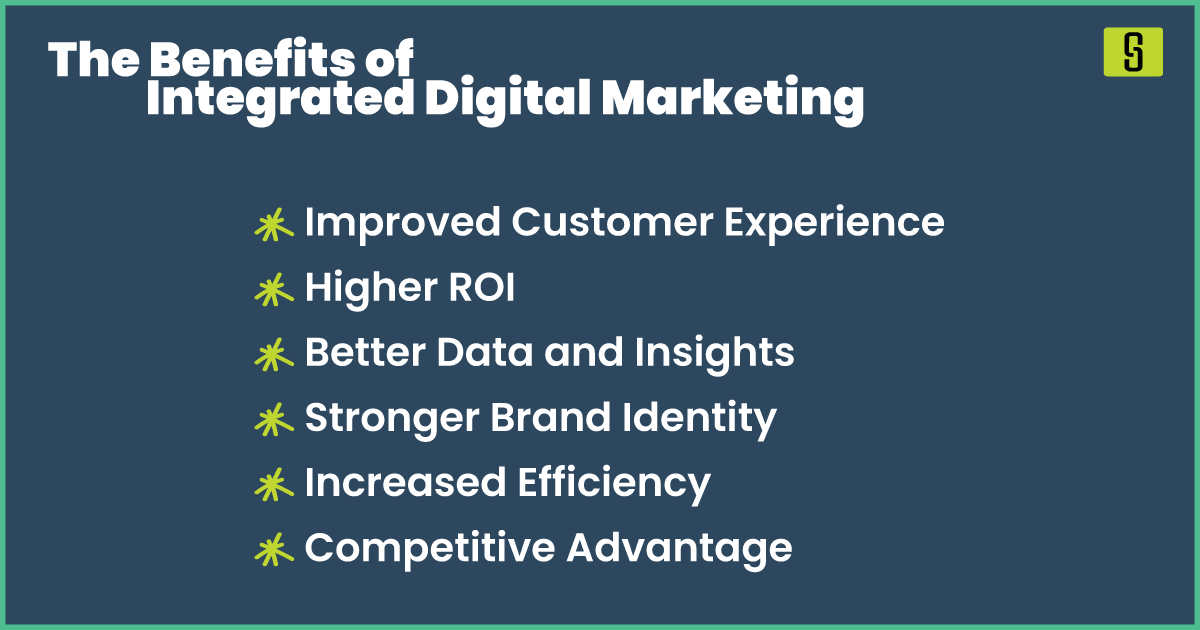
Let me lay out the concrete benefits of integrated digital marketing I’ve witnessed:
Improved Customer Experience
When your messaging is consistent across channels, customers have a smoother journey. They don’t encounter conflicting information or disconnected experiences. This builds trust and reduces friction in the buying process.
Higher ROI
Integration eliminates waste. Instead of duplicating efforts or running contradictory campaigns, every dollar works harder. Channels amplify each other, creating compound effects that isolated tactics can’t achieve.
Better Data and Insights
When channels connect, your data becomes more valuable. You see how customers actually move through your funnel. You understand which channel combinations work best. You can make data driven decisions based on complete customer journeys, not isolated interactions.
Stronger Brand Identity
Consistency builds recognition. When customers encounter your brand across multiple media platforms with the same look, feel, and message, you become memorable. Brand awareness grows faster because every exposure reinforces previous ones.
Increased Efficiency
Integrated teams work smarter. Content created for your blog can be repurposed for social media, email, and paid campaigns. Research done for one channel informs strategy for others. You get more mileage from every asset you create.
Competitive Advantage
Most businesses still operate in silos. When you integrate, you immediately stand out. Your marketing feels more professional, more cohesive, and more trustworthy than competitors running disconnected campaigns.
Common Challenges and How to Overcome Them
Building integrated digital marketing solutions isn’t without obstacles. Here’s what I’ve encountered and how to address each challenge:
Challenge 1: Organizational Silos
Different teams own different channels, and they don’t communicate.
Solution? Establish regular cross-functional meetings. Create shared goals that require collaboration. Use project management tools that give everyone visibility into the broader marketing strategy.
Challenge 2: Technology Fragmentation
Your email platform doesn’t talk to your CRM. Your social media tools don’t connect to your analytics.
Solution? Invest in integrated marketing platforms or use APIs to connect your tools. The upfront work pays off in streamlined workflows and better data.
Challenge 3: Inconsistent Messaging
Without clear guidelines, different team members create different messages.
Solution? Develop comprehensive brand guidelines and messaging frameworks. Create templates and approval processes that ensure consistency before content goes live.
Challenge 4: Attribution Complexity
When channels work together, figuring out what drives results gets complicated.
Solution? Implement multi-touch attribution models. Focus on overall business metrics rather than getting lost in channel-specific vanity metrics.
Challenge 5: Resource Constraints
Integration requires coordination, which takes time and people.
Solution? Start small. Integrate two or three channels first, prove the value, then expand. You don’t need to integrate everything simultaneously.
For small businesses facing resource challenges, these content marketing strategies for small businesscan help you start integrating effectively.
The Future: AI Integrated Digital Marketing
The landscape is evolving rapidly. AI integrated digital marketing is changing how we coordinate channels and personalize experiences.
AI tools now help with:
- Content creation at scale while maintaining brand voice
- Predictive analytics that forecast which channel combinations will perform best
- Automated personalization across email, ads, and website experiences
- Real-time optimization of campaigns based on performance data
- Chatbots that provide consistent customer service across platforms
I’m currently testing AI tools that analyze customer behavior across channels and automatically adjust messaging to match where each person is in their journey. The results are impressive—personalization at a scale that was impossible just two years ago.
But here’s my take: AI is a tool for better integration, not a replacement for strategic thinking. You still need to understand your audience, define your core message, and make strategic decisions. AI just helps you execute faster and more precisely.
Creating Your Integrated Digital Marketing Report
Measuring success requires comprehensive reporting. Your integrated digital marketing report should track:
1. Overall Business Metrics
- Total revenue from digital channels
- Customer acquisition cost across all channels
- Customer lifetime value
- Return on marketing investment
2. Channel Performance
- Traffic and engagement by channel
- Conversion rates for each platform
- Cost per acquisition by channel
3. Integration Metrics
- Multi-touch conversion paths (which channel combinations convert best)
- Cross-channel engagement (how many touchpoints before conversion)
- Message consistency scores
- Brand awareness lift
4. Customer Journey Analytics
- Average time from first touch to conversion
- Most common paths to purchase
- Drop-off points in the funnel
I recommend monthly integrated reports that show how channels work together, not just individual channel performance. This keeps your team focused on the bigger picture rather than optimizing channels in isolation.
Wrap Up
Integrated digital marketing is the difference between scattered efforts and strategic growth. When you coordinate your content marketing, social media, SEO, email, and paid advertising into one unified strategy, you create a customer experience that builds trust and drives conversions.
The businesses winning today aren’t necessarily spending more. They’re spending smarter by making every channel work together. Start with your core message, map your customer journey, coordinate your content calendar, and measure how channels amplify each other. The results will speak for themselves.
FAQ
How long does it take to see results from an integrated digital marketing campaign?
Most businesses start seeing improved metrics within 60–90 days of implementing integrated strategies. However, significant results like doubled traffic or major revenue increases typically take 6–12 months as all channels gain momentum and work together. The key is consistency—keep all channels aligned and give them time to compound each other’s effects.
What’s the difference between integrated digital marketing and multi-channel marketing?
Multi-channel marketing means you’re present on multiple platforms, but they might operate independently with different messages. Integrated digital marketing coordinates all channels to deliver one consistent message and strategy. It’s the difference between having five people shouting different things and having five people singing the same song in harmony.
How much should a small business budget for integrated digital marketing?
Rather than focusing on a specific dollar amount, allocate 7–12% of your revenue to marketing, then distribute that budget across integrated channels. Start with organic channels like content marketing and SEO that build long-term value, then add paid advertising to accelerate results. The key is coordination, not just spending more.
Can I integrate digital marketing if my team is small?
Absolutely. Small teams often integrate more easily because there are fewer silos to break down. Focus on integrating 2–3 core channels first—typically content marketing, social media, and email. Use tools that automate coordination, like social media schedulers that pull from your blog automatically. Quality integration beats quantity of channels every time.
What tools are essential for managing integrated digital marketing campaigns?
You need three categories of tools: a project management platform (like Asana or Monday) to coordinate across teams, an analytics platform (like Google Analytics 4 or HubSpot) to track cross-channel performance, and a content management system that connects to your other channels. Many all-in-one platforms like HubSpot or Salesforce Marketing Cloud can handle multiple functions, reducing the need for separate tools.


