Modern bookstores face a clear challenge: standing out in a digital-first world where readers discover books online before visiting physical shops. Relying on foot traffic or local ads isn’t enough—you need a strategy that connects with literary communities and earns trust through credible online visibility.
Today’s readers turn to search engines, social media, and book blogs to guide their purchases. That means your digital presence must reflect authority and authenticity. Generic retail tactics won’t resonate; your audience values expertise and genuine engagement.
Search engines reward that credibility. When respected literary sites, local authors, or niche book clubs reference your store, it signals authority and relevance. Successful bookstores use this to their advantage—building partnerships, curating thoughtful recommendations, and hosting community events that naturally generate digital buzz.
Highlights
- Literary audiences demand specialized outreach beyond standard retail methods
- Online research habits make SEO authority critical for physical stores
- Quality backlinks from book-related sites boost search visibility
- Digital-savvy readers prioritize peer reviews and expert endorsements
- Success requires blending content creation with community engagement
Introduction to the Importance of Link Building for Bookstores
Imagine your store appearing when readers search for “best mystery novels” or “local author events.” That’s the power of strategic online partnerships. Search engines treat recommendations from trusted sources like gold – and they’ll reward your visibility accordingly.
Credibility Through Collaboration
When literary blogs or niche forums mention your store, it’s like getting a vote of confidence. Google sees these connections as proof you’re an expert worth highlighting. Over 65% of SEO professionals predict this system will grow even more influential within five years.
| High-Quality Links | Low-Value Links |
| Come from reputable book blogs | Appear on irrelevant directories |
| Mention specific genres/events | Use generic anchor text |
| Drive engaged readers | Generate minimal traffic |
Turning Visibility Into Sales
Here’s what strong partnerships do for you:
- Position your shop as the destination for rare editions or regional writers
- Send visitors already interested in buying – no cold leads
- Help you outrank big-box retailers in local searches
I’ve seen stores triple their event attendance within months by focusing on meaningful connections rather than chasing every possible mention. Start small – one genuine partnership often sparks others as your reputation grows.
Understanding the Impact of Quality Backlinks
Effective online visibility for bookstores hinges on the caliber of digital endorsements they secure. Google’s algorithm treats recommendations from trusted sources as proof of expertise – but only when those connections align with strict quality standards. Let’s explore what makes certain endorsements more valuable than others.
What Google Looks For in Backlinks
Search engines prioritize three key factors when assessing your store’s digital reputation:
| High-Value Links | Risk-Prone Links |
| Come from literary journals or educational sites | Appear on generic business directories |
| Mention specific book collections | Use vague phrases like “click here” |
| Generate readers who convert | Attract irrelevant traffic |
Google’s guidelines explicitly warn against shortcuts. Paid endorsements or forced exchanges often lead to penalties. I’ve helped stores recover from ranking drops caused by well-meaning but misguided attempts to “game” the system.
Here’s how to stay safe while boosting your authority:
- Prioritize editorial mentions from sites discussing books or local culture
- Analyze a website’s domain authority before pursuing partnerships
- Create resources bloggers genuinely want to share – think rare book guides
Link Building Strategies for Bookstores
What separates thriving stores from those struggling online? It’s not just about creating content – it’s about crafting resources so valuable they become must-share assets in literary circles. The Skyscraper technique transforms this idea into action by identifying top-performing articles and enhancing them with deeper insights or richer visuals.
The Role of Relevance and Authority in Link Building
Targeting the right platforms matters more than volume. A children’s bookstore gains little from a tech blog’s endorsement, even if that site has high traffic. Focus on partners whose audiences overlap with yours:
| High-Authority Sources | Low-Impact Sources |
| Literary podcasts discussing new releases | Generic business directories |
| University reading lists | Irrelevant guest post farms |
| Local event calendars | Spammy forum comments |
I helped a mystery-focused shop dominate search results by creating an interactive “Whodunit Timeline” tool. Book bloggers linked to it organically because it solved a problem their readers faced – keeping track of complex plots.
Three steps to apply this strategy:
- Research popular guides in your specialty (e.g., “Best Gothic Novels”)
- Add exclusive interviews, annotated maps, or video discussions
- Promote your upgraded resource to sites that referenced weaker versions
Local partnerships amplify this approach. A client partnered with a historical society to create walking tours based on classic novels. Libraries and schools linked to their site as a community resource – no direct requests needed.
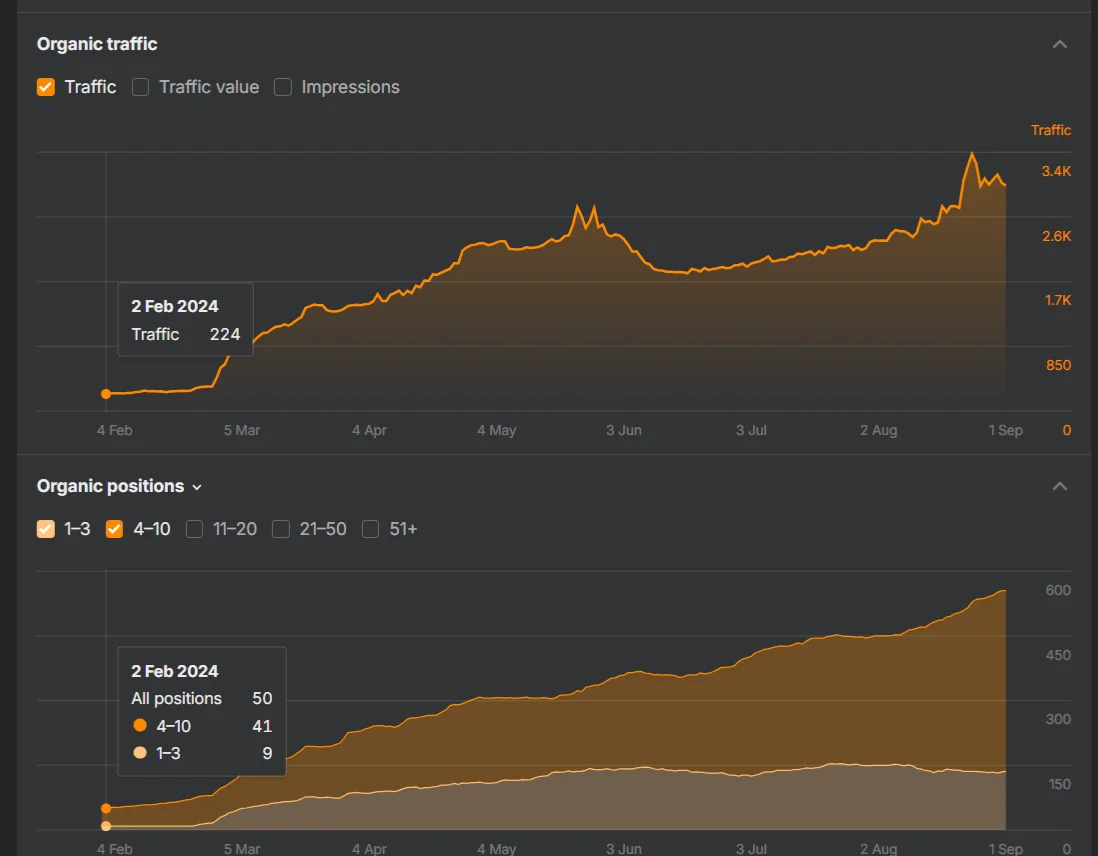
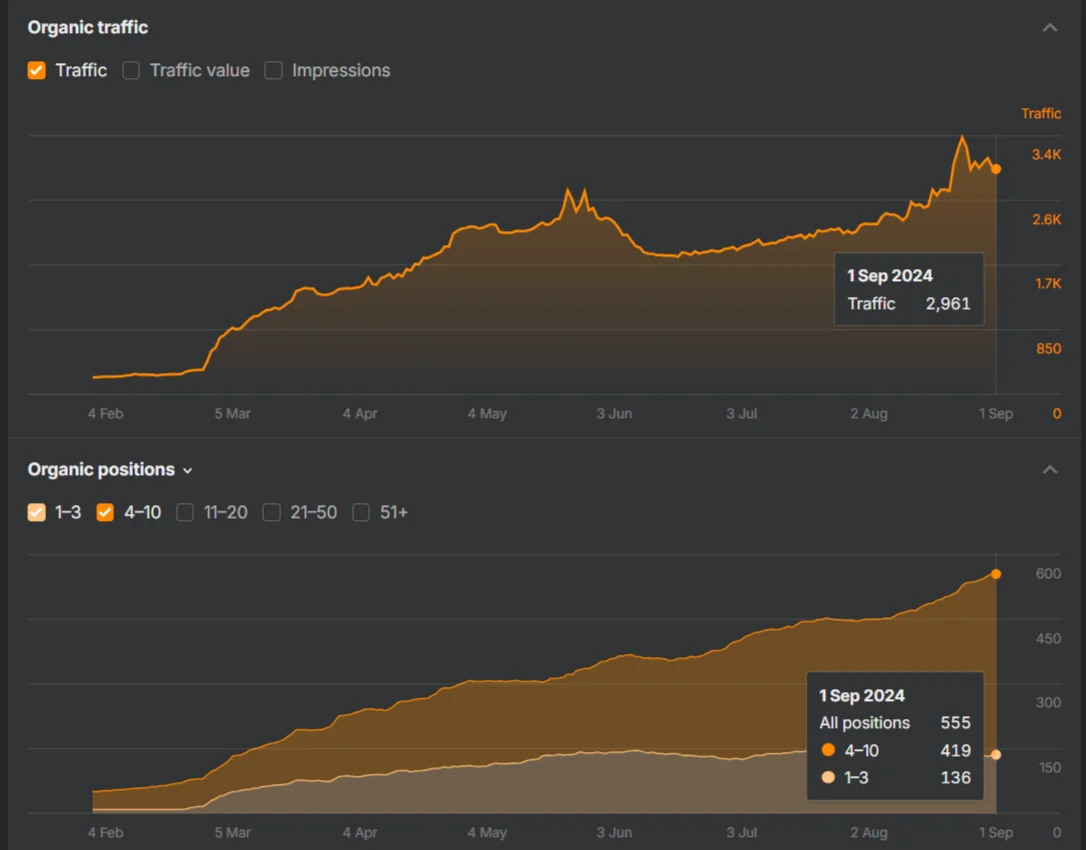
Book Shop Case Study: 1,222% Organic Traffic Growth in 6 Months
A personalized book shop started the campaign with only 224 monthly organic visitors and wanted to build search visibility quickly. SERPsGrowth developed a focused link-building campaign designed to strengthen the site’s authority and accelerate keyword growth.
In six months, SERPsGrowth earned 48 backlinks, averaging eight per month. Organic traffic increased from 224 to 2,961 monthly visitors, representing a 1,222% increase.
During the same period, top-three rankings grew from 9 to 136 keywords, while positions 4–7 increased from 41 to 419 keywords. The results show how a consistent, high-quality link-building strategy can drive rapid organic growth when executed with a clear focus on authority.
Leveraging Blogger Outreach to Enhance Visibility
The right blogger partnership acts like a trusted book recommendation between friends. Over 68% of PR specialists say this approach outperforms traditional advertising for niche audiences. Tools like BuzzSumo help pinpoint blogs discussing your genres, while Similarweb reveals which platforms drive engaged readers.
Identifying Influential Bloggers in the Niche
Look beyond follower counts. A blogger with 1,000 active commenters often delivers better results than one with 10,000 passive followers. Check their last three posts – consistent interaction signals real influence.
Focus on three metrics:
- Audience demographics matching your ideal customers
- Content themes aligning with your specialties
- Posting frequency indicating active community building
Crafting Personalized Outreach Emails
Generic requests get deleted. Start by referencing their recent article on “Underrated Mystery Writers” before suggesting collaboration. Offer resources they can’t easily replicate:
| High-Value Offer | Low-Impact Pitch |
| Advance copies of signed editions | “Feature our store” requests |
| Curated lists for holiday gift guides | Template emails |
| Exclusive author Q&As | Vague partnership proposals |
One client increased response rates by using this subject line structure: “Love your [specific post] – thought you’d enjoy [unique resource]”. Always position your store as a solution to their content needs, not vice versa.
Maximizing Local Directories and Alumni Listings
Your bookstore’s connection to the community can unlock hidden opportunities in local search results. While big retailers dominate generic listings, niche platforms reward specialized businesses with stronger digital authority. Let’s explore how to turn your location and background into search engine advantages.
By leveraging local SEO strategies for bookstores, you can enhance your visibility and reach more customers who are searching for literary treasures in your area. Engaging with community events and collaborating with local authors not only fosters relationships but also boosts your online presence. Additionally, optimizing your website and social media channels for local search can lead to increased foot traffic and sales, making your bookstore a beloved local destination.
Start with alumni networks. Most colleges list graduate businesses on their websites – especially if you studied literature or business. These credibility-boosting links signal expertise to both customers and algorithms.
| High-Impact Directories | Low-Value Options |
| Chamber of Commerce sites | Generic business hubs |
| Independent bookstore alliances | Paid directory services |
| Regional literary associations | International listing platforms |
Local chambers often provide free business profiles. Ensure yours highlights specialty genres or signed editions. I helped a store in Portland triple their click-through rate by adding “Pacific Northwest authors” to their chamber listing description.
Follow these steps to optimize directory presence:
- Update contact details across all platforms monthly
- Use keywords like “rare books” or “author events” naturally
- Include photos of your store’s unique sections
Niche directories demand specificity. A mystery-focused shop might target crime fiction forums or podcast databases. These curated platforms drive targeted visitors who convert faster than random clicks. Regular updates keep your listings fresh – search engines notice when information stays current.
Utilizing Guest Posting for Organic Growth
In a crowded digital marketplace, guest contributions remain valuable currency for bookstores that prioritize relevance over reach. While search algorithms have evolved, strategic placements on respected platforms still drive discovery among serious readers. The key lies in selective partnerships that align with your literary expertise.
Choosing the Right Guest Platforms
Focus on websites where your knowledge shines naturally. A children’s bookstore gains little from tech blogs, even high-traffic ones. Instead, target platforms discussing your specialty genres or regional literary culture.
| High-Impact Platforms | Low-Impact Platforms |
| Literary journals with editorial reviews | Content mills accepting all submissions |
| Author interview sites | Generic “write for us” blogs |
| Local library resource pages | International publishing hubs |
Three rules for effective guest content:
- Analyze a site’s existing articles – do they cite credible sources?
- Match their submission guidelines exactly
- Track reader comments to gauge true engagement
Create resources editors can’t refuse. One client developed a “Forgotten Classics” series featuring out-of-print titles they stock. Five niche sites published it with natural links to their inventory page.
Remember: guest posting works best when supporting broader visibility efforts. Pair it with local events or curated reading lists to multiply its impact.
Engaging Social Media and Influencer Mentions
Your bookstore’s social media presence can become a bridge between literary passion and customer action. Readers increasingly discover new titles through platforms like Instagram Reels showcasing “shelf tours” or TikTok reviews highlighting underrated authors. Authentic relationships with content creators amplify your reach far beyond standard posts.
Building Trust Through Shared Interests
Start by identifying micro-influencers (5K-50K followers) who specialize in your genres. These individuals often have highly engaged audiences – perfect for niche bookstores. A romance-focused shop might collaborate with accounts dissecting tropes in historical fiction.
Partnering with these micro-influencers can enhance your presence on social media and foster a community around your bookstore. By leveraging their unique insights and personal touch, you can develop marketing strategies for bookstores that resonate deeply with your target audience. Additionally, hosting events or promotions in collaboration with these influencers can drive traffic and encourage more footfall in your shop.
| High-Impact Collaborations | Low-Impact Approaches |
| Co-host live Q&As with local authors | Paying for generic shoutouts |
| Share behind-the-scenes curation videos | Copy-pasting promotional scripts |
| Create challenge tags (#ReadLocal2025) | Ignoring follower interactions |
Engage before asking for favors. Comment on their posts about recent reads or share their content with personalized insights.
Track what resonates using platform analytics. Short videos showing book repair techniques or shelf organization tips often outperform sales-focused posts. Pair these with content marketing strategies that highlight your unique expertise.
Remember: consistency builds community. Post weekly updates about new arrivals or host monthly “blind date with a book” giveaways. These efforts turn casual scrollers into loyal patrons who organically share your brand.
Capitalizing on Crowdsourced Content and Resource Pages
Crowdsourced content acts like a literary potluck – everyone brings their expertise to create something greater. When book blogs or reading communities ask for input, your insights position your store as a go-to authority.
High-impact resource pages often hide in plain sight. Libraries and universities maintain curated lists for researchers and enthusiasts. For example, a store specializing in Civil War history secured three backlinks from college history departments by sharing rare primary source guides.
Here’s how to stand out:
- Create definitive guides (e.g., “Decoding Postmodern Poetry”) that solve specific reader challenges
- Monitor hashtags like #BookCommunityRequests to find real-time collaboration chances
- Offer exclusive data – 78% of editors prefer original research over generic advice
When responding to crowdsourced queries, lead with value. Instead of “Check our blog,” say: “Your readers might appreciate our map of Hemingway’s Paris haunts – includes unpublished photos.”
Proactive outreach works best when you identify gaps. If a library’s mystery novel list lacks regional authors, propose your curated Pacific Northwest thriller guide. Linkable assets help package your knowledge into shareable formats editors crave.
Remember: quality trumps speed. One detailed response to a niche query often outperforms twenty rushed submissions. Track which resources get shared most – then double down on creating similar content.
Turning Broken Links into Opportunities
Digital shelves gather dust too – outdated pages with dead connections frustrate readers and hurt website credibility. But these gaps become your advantage when approached strategically. Broken link building lets you rescue lost traffic while strengthening your store’s authority.
Link building services for bookstores can help establish connections with relevant literary websites, driving traffic and increasing visibility. By enhancing your online presence through effective link building, you attract a community of book lovers eager to discover what your store has to offer. This strategy not only boosts SEO but also fosters relationships within the literary world, creating valuable partnerships.
Using Tools to Identify Broken Backlinks
Free browser extensions like Check My Links scan sites in seconds, highlighting 404 errors. For larger projects, platforms like Ahrefs track broken connections across entire domains. Focus on literary hubs – book blogs, library resource pages, or author sites often link to outdated guides or event calendars.
Implementing Effective Link Replacements
When contacting webmasters, lead with solutions. Example: “Noticed your guide to indie mystery writers links to a defunct page – our updated list includes 12 new Pacific Northwest authors with signed copies available.” Pair this with link acquisition strategies that prioritize relevance over quantity.
Successful fixes require content matching the original intent. A broken “rare book care guide” needs deeper expertise than a generic blog post. Offer replacement resources that solve problems better than the dead link did. Track repaired connections monthly – they often spark new partnerships.
FAQ
How do backlinks improve my bookstore’s online visibility?
Backlinks act like endorsements from other sites, signaling to search engines that your content is valuable. This boosts your site’s authority, helping it rank higher in search results and driving more organic traffic. For bookstores, this means increased visibility among readers searching for niche genres or local shops.
What types of websites should I target for guest posts?
Focus on platforms with strong domain authority in the literary space, like Book Riot or Literary Hub. These sites attract engaged readers, and contributing expert-driven content (e.g., “How Independent Bookstores Thrive in the Digital Age”) builds credibility while earning high-quality links.
Can local directories really help my bookstore’s SEO?
Absolutely. Listing your store on platforms like Google Business Profile or local alumni directories (e.g., university pages) strengthens local SEO. These listings often rank well for “bookstore near me” searches, connecting you directly to nearby customers.
How do I find broken links to repurpose for my site?
Tools like Ahrefs or Check My Links scan websites for broken URLs. Reach out to site owners with a friendly email offering your relevant content (e.g., a curated reading list) as a replacement. This builds relationships while securing backlinks.
Why should bookstores collaborate with influencers?
Influencers in the book community (like BookTok creators or book bloggers) have loyal audiences. A shoutout or review from them can drive traffic and earn contextual links. Start by sending free advance copies or inviting them to host virtual events.
What’s the best way to approach bloggers for partnerships?
Personalize your outreach using tools like BuzzStream. Mention specific articles they’ve written and propose collaboration ideas, like featuring their favorite indie titles in your store. Offer mutual value—for example, promoting their blog in exchange for a link.
How can crowdsourced content benefit my link profile?
Create resource pages like “Top 20 Mystery Novels Recommended by Librarians” and invite experts to contribute. Contributors often share the piece with their networks, earning you natural backlinks and social media mentions. Platforms like SurveyMonkey simplify gathering input.